Resource Recycling
  • The Latest
  • Analysis
    • All
    • Certification Scorecard
    • Industry Announcements
    • Opinion
    Our top stories from June 2022

    e-Stewards adds RGX as enterprise partner

    MP Materials breaks ground on rare earth magnet campus in North Texas

    How critical mineral alliances aim to shape the future of e-scrap metals

    Certification Scorecard — Week of May 18, 2026

    Aurubis: Thefts involved scrap sample manipulation

    Metals and electronics recyclers report growth

    Plastic packaging

    Why SB 54 source reduction planning is becoming the industry’s most challenging EPR test

    Recycler cites market pressure in short-term closure

    AI, data anxiety push enterprises to destroy working devices: report

  • Conferences
    • Resource Recycling Conference
    • Plastics Recycling Conference
    • E-Scrap: The Longevity Conference
    • Textiles Recovery Summit
  • Publications
    • E-Scrap News
    • Plastics Recycling Update
    • Policy Now
    • Resource Recycling
    • Other Topics
      • Brand Owners
      • Critical Minerals
      • Glass
      • Grant Watch
      • Markets
      • Organics
      • Packaging
      • Research
      • Technology
      • Textiles
      • All Topics
Subscribe
No Result
View All Result
Resource Recycling
  • The Latest
  • Analysis
    • All
    • Certification Scorecard
    • Industry Announcements
    • Opinion
    Our top stories from June 2022

    e-Stewards adds RGX as enterprise partner

    MP Materials breaks ground on rare earth magnet campus in North Texas

    How critical mineral alliances aim to shape the future of e-scrap metals

    Certification Scorecard — Week of May 18, 2026

    Aurubis: Thefts involved scrap sample manipulation

    Metals and electronics recyclers report growth

    Plastic packaging

    Why SB 54 source reduction planning is becoming the industry’s most challenging EPR test

    Recycler cites market pressure in short-term closure

    AI, data anxiety push enterprises to destroy working devices: report

  • Conferences
    • Resource Recycling Conference
    • Plastics Recycling Conference
    • E-Scrap: The Longevity Conference
    • Textiles Recovery Summit
  • Publications
    • E-Scrap News
    • Plastics Recycling Update
    • Policy Now
    • Resource Recycling
    • Other Topics
      • Brand Owners
      • Critical Minerals
      • Glass
      • Grant Watch
      • Markets
      • Organics
      • Packaging
      • Research
      • Technology
      • Textiles
      • All Topics
Subscribe
No Result
View All Result
Resource Recycling
No Result
View All Result
Home Plastics

APR: ‘There is no sustainability without recycling’

Colin StaubbyColin Staub
November 14, 2018
in Plastics

The head of the Association of Plastic Recyclers (APR) recently voiced concerns that plastics recovery progress could get dampened by stakeholders’ transition to more holistic approaches to materials management.

During a recent webinar, Steve Alexander of APR and an official from the U.S. Environmental Protection Agency discussed the evolution of  sustainable materials management and what it means for the plastics recycling industry.

Under a sustainable materials management approach, managing a product at end of life becomes just one component of reducing that product’s environmental impact. It’s not necessarily about lessening the importance of recycling, but introducing new factors into the discussion. It’s a concept being embraced by the U.S. EPA as well as states, waste companies and others.

But APR wants to make sure the work being done by the plastics recycling sector is not forgotten as the dialogue develops.

“Recycling is at the base of any sustainability movement,” said Steve Alexander, executive director of APR. “Frankly, there is no sustainability without recycling.”

What is the new approach?

During the Nov. 6 webinar, Ron Vance, chief of the resource conservation branch in the U.S. EPA’s Office of Land and Emergency Management, gave an overview of the sustainable materials management concept. It was developed as part of the EPA’s evolving work on solid waste management and materials use.

“We’re trying to look at materials at large and really trying to understand where they come from, where they go and everything that’s embedded within them,” Vance said.

That means considering the impacts from raw material sourcing through manufacturing, delivery to market, use by the consumer and end of life. This way of thinking moves beyond the original EPA areas of interest, which focused on landfill and disposal regulations. It even moves beyond the concept of “integrated waste management,” which emerged in the 1990s, Vance said.

The EPA’s version of sustainable materials management considers end-of-life management but also includes five earlier areas of focus throughout a product’s life.

“It’s not always about end of life,” Vance said. “It’s really understanding what happens across the life cycle, where those impacts occur and where the opportunities throughout the life cycle are to mitigate some of those impacts.”

And during the end-of-life management phase, Vance said, “reuse, recycling and whatnot come in as key roles in keeping that material in cycle, but it’s not the end-all, be-all of minimizing all of those impacts.”

‘Don’t want to de-emphasize recycling’

The plastics recycling industry has a “fundamental belief” that recycling must be a key component of sustainable materials management, Alexander said.

He pointed to the trend of major brand owners making recycling-related commitments, whether they’re pledges to use more recycled content, to make more recyclable products or other similar goals. Amid this rising interest, “the last thing we want to do is discourage companies from recycling,” Alexander said. “Not that EPA is doing that, but I think it’s important to highlight the role that recycling must continue to play within this sustainable materials management conundrum.”

One of the key concerns is that consumers and companies alike begin to place less focus on recycling, believing that the other pillars of sustainable materials management eclipse recycling in importance. It was a concern Alexander expressed in 2017, as well, after attending a plastic sustainability meeting that drew consumer product brand owners.

“We want people to continue to be more cognizant. We want companies and consumer brands to continue their commitment to utilizing recycling,” Alexander said.

He identified several strengths of recycling within the life cycle discussion, including that recycling facilitates a consumer connection to sustainability efforts.

“If you look at the other components of sustainable materials management, it’s about someone else doing something,” Alexander said. Recycling, on the other hand, engages the consumer.

“One of the most critical actions that people take is the decision that they make with that container in their hand, and do they put that in their trash or do they put that in their recycling bin.”

Another reason recycling is essential is that it will likely always have a role to play, according to APR. Manufacturers can work on source reduction, packaging innovation, life cycle analysis and reducing greenhouse gas emissions, but “at the end of the day, you’re still left with a product that has to be recycled,” Alexander said.

He indicated that the plastics recycling industry is not opposed to the factors a sustainable materials management approach promotes, such as examining greenhouse gas emissions for various materials. This year, APR completed a life cycle inventory analysis for using recycled resin versus virgin resin. The report, which is the first of its kind and will be released in the near future, highlights significant energy savings in transportation, resource consumption, emissions and other fields.

“I think that sometimes people miss how much contribution, from a life cycle and a greenhouse gas emission reduction [perspective], that using recycled resin contributes to sustainable materials management as well as sustainability in total,” Alexander said.

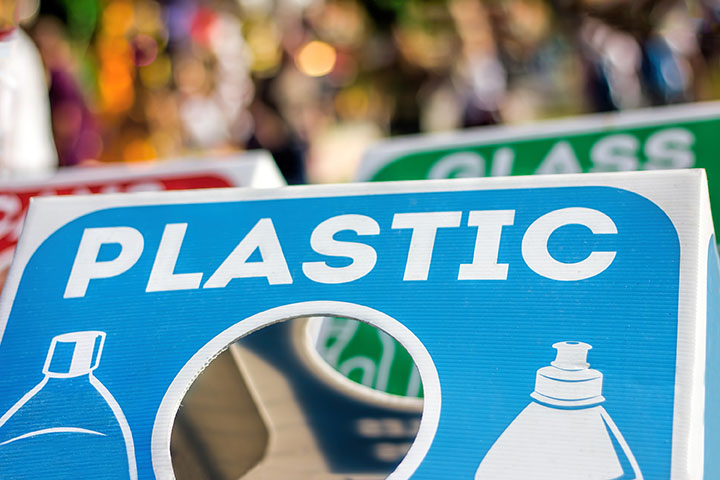
Photo credit: jgolby/Shutterstock

 

Tags: Industry Groups
TweetShare
Colin Staub

Colin Staub

Colin Staub was a reporter and associate editor at Resource Recycling until August 2025.

Related Posts

EPR rules take shape in Oregon, as first test

Oregon OKs end-market verification from CAA

byStefanie Valentic
May 20, 2026

The state's Department of Environmental Quality has given the stamp of approval on CAA's Responsible End Markets program plan amendment.

Industry descends on DC to fight for PET

Industry descends on DC to fight for PET

byAntoinette Smith
May 13, 2026

Amid numerous recent hits to the common packaging plastic, a stakeholder coalition is engaging with policy makers to encourage policy...

SWANA hires new executive director

APR, RecyClass wrap up third year of collaboration

byAntoinette Smith
May 12, 2026

The North American and EU organizations are working together to harmonize global recyclability standards.

APR, industry groups testify on overcapacity

APR, industry groups testify on overcapacity

byAntoinette Smith
May 8, 2026

Steve Alexander, CEO of APR, pointed to China as driving global oversupply despite fluctuating PET imports to the US and...

Lawsuits hover days after SB 54 approval

Lawsuits hover days after SB 54 approval

byStefanie Valentic
May 6, 2026

NRDC and Californians Against Waste are suing CalRecycle over finalized EPR regulations they say unlawfully allow chemical recycling and other...

Lithium-ion battery recycler to build New York facility

Why battery EPR doesn’t have a packaging problem

byStefanie Valentic
May 4, 2026

While packaging EPR fights injunctions, battery EPR has achieved a mostly harmonized legal framework across nearly every state that has...

Load More
Next Post

Certification scorecard: Nov. 15, 2018

More Posts

Bottle bill backers see opportunity for action

PET collapse exposes gaps in US recycling infrastructure

May 15, 2026
Revised CA budget includes $200m for recycling

Revised CA budget includes $200m for recycling

May 20, 2026
Federal PACK Act aims to preempt ‘patchwork’ of state laws

House advances Recycling Infrastructure and Accessibility Act

May 21, 2026
Plastic packaging

Why SB 54 source reduction planning is becoming the industry’s most challenging EPR test

May 19, 2026
Niagara acquires rPlanet Earth assets in California

Niagara acquires rPlanet Earth assets in California

May 15, 2026

Before the Bin: America’s textile waste problem starts in your closet

May 19, 2026
Extruder pushes out natural HDPE pellets at KW Plastics in Troy, Alabama.

Rare look inside the world’s largest plastics recycler

May 13, 2026
Industry descends on DC to fight for PET

Industry descends on DC to fight for PET

May 13, 2026
Aurubis: Thefts involved scrap sample manipulation

Metals and electronics recyclers report growth

May 20, 2026
Retail aisle with paper and plastic packaging.

Loblaw’s recyclability push could reshape packaging design across North America

May 14, 2026
Load More

About & Publications

About Us

Staff

Archive

Magazine

Work With Us

Advertise
Jobs
Contact
Terms and Privacy

Newsletter

Get the latest recycling news and analysis delivered to your inbox every week. Stay ahead on industry trends, policy updates, and insights from programs, processors, and innovators.

Subscribe

Welcome Back!

Login to your account below

Forgotten Password?

Retrieve your password

Please enter your username or email address to reset your password.

Log In

Add New Playlist

No Result
View All Result
  • The Latest
  • Analysis
  • Recycling
  • E-Scrap
  • Plastics
  • Policy Now
  • Conferences
    • E-Scrap Conference
    • Plastics Recycling Conference
    • Resource Recycling Conference
    • Textiles Recovery Summit
  • Magazine
  • About Us
  • Advertise
  • Archive
  • Jobs
  • Staff
Subscribe
This website uses cookies. By continuing to use this website you are giving consent to cookies being used. Visit our Privacy and Cookie Policy.