



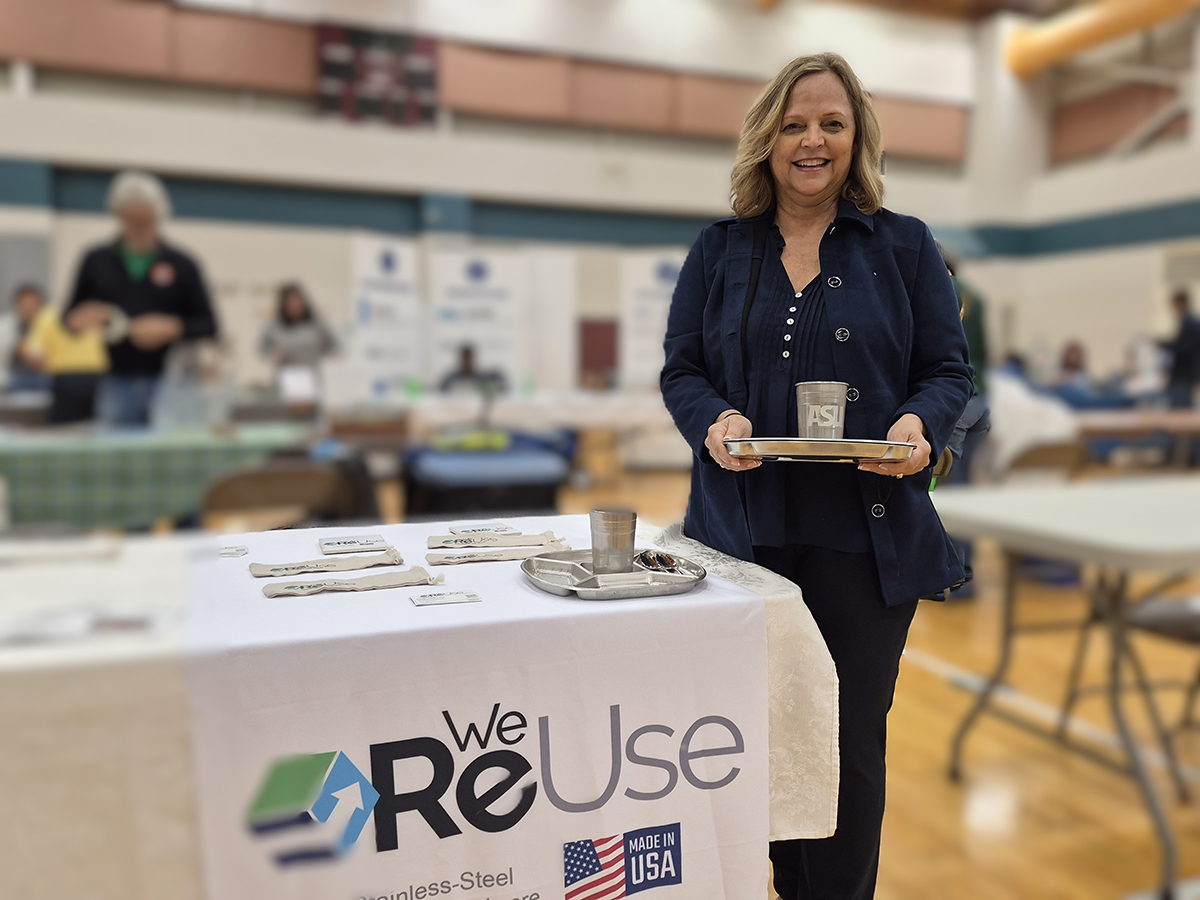
A warm welcome back to “Women in Circularity”, where we shine a light on women moving us toward a circular economy. This month, I was pleased to connect with an innovative sustainability leader: Connie Lilley. Connie is the Michigan Territory Director of We ReUse, a veteran‑ and woman‑owned company that designs, sources and distributes stainless‑steel foodware that is manufactured in the United States. With more than two decades of experience in high‑performance buildings, energy efficiency and corporate sustainability, Connie brings systems‑level thinking to the reuse movement. She helps organizations transition from waste‑intensive food-service models to practical, scalable solutions that reduce emissions, landfill and operating costs.
What motivated your transition from high‑performance buildings to co‑founding a reuse company like We ReUse?
While working within the built environment, it wasn’t hard to see the amount of waste organizations create. Since I am passionate about environmental stewardship, helping organizations in Michigan reduce waste seemed like a great fit. Over time, I began to see clear parallels between high‑performance buildings and food‑service operations—both rely on systems thinking, lifecycle cost analysis and behavior change to drive meaningful impact.
The reuse industry allowed me to apply those principles beyond buildings and into everyday operational decisions that people engage with multiple times a day. At We ReUse, I’ve helped organizations reduce upstream waste, lower operating costs and visibly live their sustainability commitments in ways that are practical, scalable and community-focused.
What skill has proven most essential in helping your clients successfully move from single‑use foodware to durable, reuse systems?
Passion drives my work, but what matters most is meeting people where they are. Each of us is at a different stage in our environmental journey and recognizing that creates space for meaningful learning and positive change.
My understanding of the circular economy, and its importance, has been a key motivator in my career. I have spent many years educating students about environmental issues, including the growing scale of our landfills. When I discovered the impact and potential of reuse, pursuing work in this field became a natural choice.
I am also personally committed to reducing exposure to harmful forever chemicals. Having seen people close to me affected by cancer, this issue is especially meaningful. What I have learned about the risks associated with plastics has only strengthened my commitment to advocating for safer, more sustainable alternatives.
Is there a recent partnership that best illustrates the environmental and operational impact We ReUse is achieving?
That would be our partnership with the State of Michigan, Environment, Great Lakes and Energy, which is so important to us. They helped us get started with a Circular Economy Grant, and we are very grateful for their partnership. This collaboration helped validate reuse as both an environmental and operational strategy.
The partnership demonstrated that reuse solutions can succeed at scale and within public‑sector institutions, not just niche settings. It also highlighted the critical role state‑level leadership plays in advancing circular economy practices that reduce waste, support domestic manufacturing and accelerate innovation.
What circular economy trend—across food service, manufacturing or the built environment—do you see having the greatest potential to accelerate reuse adoption?
Education is essential. Reusable foodware isn’t just an environmental choice—it’s a financial and public‑health one. By helping people understand the real health risks of eating off plastic and the long‑term benefits of reuse, we empower people to make decisions that protect both their well-being and the planet. We share several of these transition stories on our website.
As education grows, we’re also seeing increased momentum around durable, domestically manufactured products designed for long life and recovery. When clear data, real‑world examples and systems‑level thinking come together, reuse becomes easier to justify and easier to implement—shifting it from an ideal to a smart, accessible investment.
What resource would you recommend for those looking to better understand the climate, water and waste benefits of reuse systems?
Upstream Solutions offers really good supporting evidence on why reuse is so important. They do an excellent job translating complex research into clear, actionable insights. Their work helps organizations understand the full lifecycle impacts of single‑use products compared to reuse systems. Having access to credible, data‑driven resources is essential for circular economy leaders who want to make informed decisions that drive meaningful, long‑term change.