



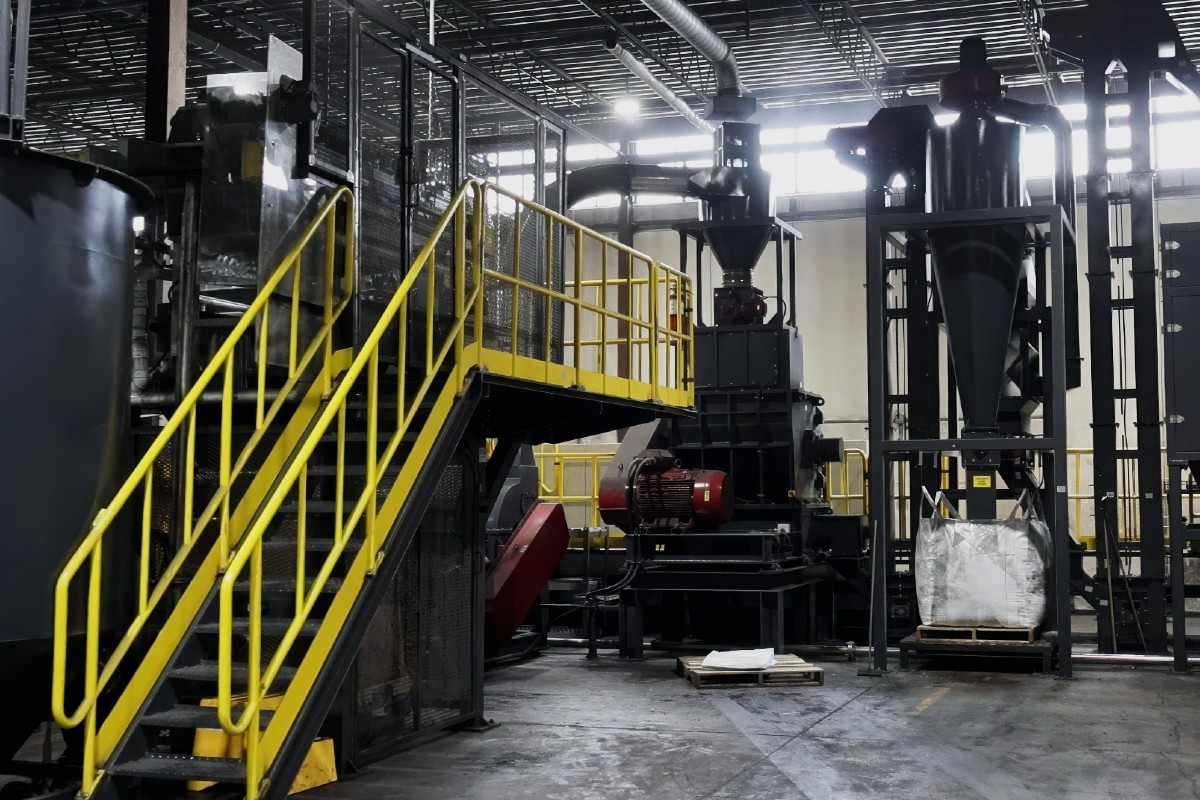
A multi-million-dollar investment will enable a Canadian electronics recycling company to put end-of-life plastics back to use.
Toronto-based Quantum Lifecycle Partners cut the ribbon on its advanced plastics recovery line April 28. The $4 million system integrates into the company’s $10 million electronics infrastructure to allow for mixed polymer recycling of hard-to-recycle plastics found in casings, housing and components recovered from consumer electronics.
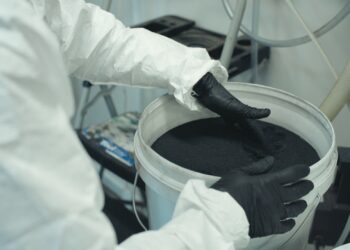
The recovery line uses float-sink technology to recycle complex mixed plastics, according to Clayton Miller, the company’s vice president for recycling. The system shreds items and strips materials of bromine and impurities, leaving pure polymers that are converted into e-plastic flake that performs comparably to flakes from virgin feedstock.
“When it comes to end-of-life recycling, one of the more challenging pieces has always been plastics,” Miller said. “We were growing concerned and took steps to mitigate it.”
Making the flake contaminant-free was a key part of that process, he said. Removing brominated flame retardants that are used in some electronics ensures the product complies with standards set by the Basel Convention, which restricts the international transport of potentially hazardous materials; bromine falls onto that list due to its health and environmental impacts. That allows companies to buy the flake, pelletize and convert it into products of their choosing without worry, keeping more materials out of landfills.
Quantum’s feedstock comes from across Canada, as the company partners with municipalities and businesses to obtain electronics. The line has enough capacity to handle all the plastic Quantum generates internally, Miller said, and the company is buying shred outputs from other e-recyclers, allowing Quantum to upgrade its commodity output and act as a downstream processor.
The system can process around 4 metric tons an hour. It’s been operational for around three months without issue, Miller said, and is scalable to meet growing demand amid Ontario’s extended producer responsibility framework, which will require more manufacturers to seek domestic processing options.
“This investment reflects our confidence in Ontario’s approach to electronics recycling – a competitive framework that rewards operators who perform, invest and innovate,” said Gary Diamond, Quantum president.
But the potential reach extends beyond Canada, Miller said. The company is looking to get a test load from a New York state-based company to see how international processing goes.
“We see this as a North American solution,” said Miller, who noted the system can help producers close the loop on their materials. “It’s the kind of infrastructure that makes a genuinely circular economy for electronics more than an aspiration.”
The new line also helps Quantum live up to its sustainability goals. Calling Quantum a life cycle services company, Miller said it’s reusing and refurbishing more devices than it recycles, but there’s room to do more on all fronts – especially with e-recycling, a segment in which the U.S. Environmental Protection Agency estimates only 24% of materials are recycled; plastics from electronic items are recycled at roughly a 6% rate.
“Part of our evolution is to be more than a recycler. We want to help producers and companies navigate the entire life cycle. This is just another piece in that journey,” he said. “We think this plastics line is another example of us doing what we say we are going to do.”