
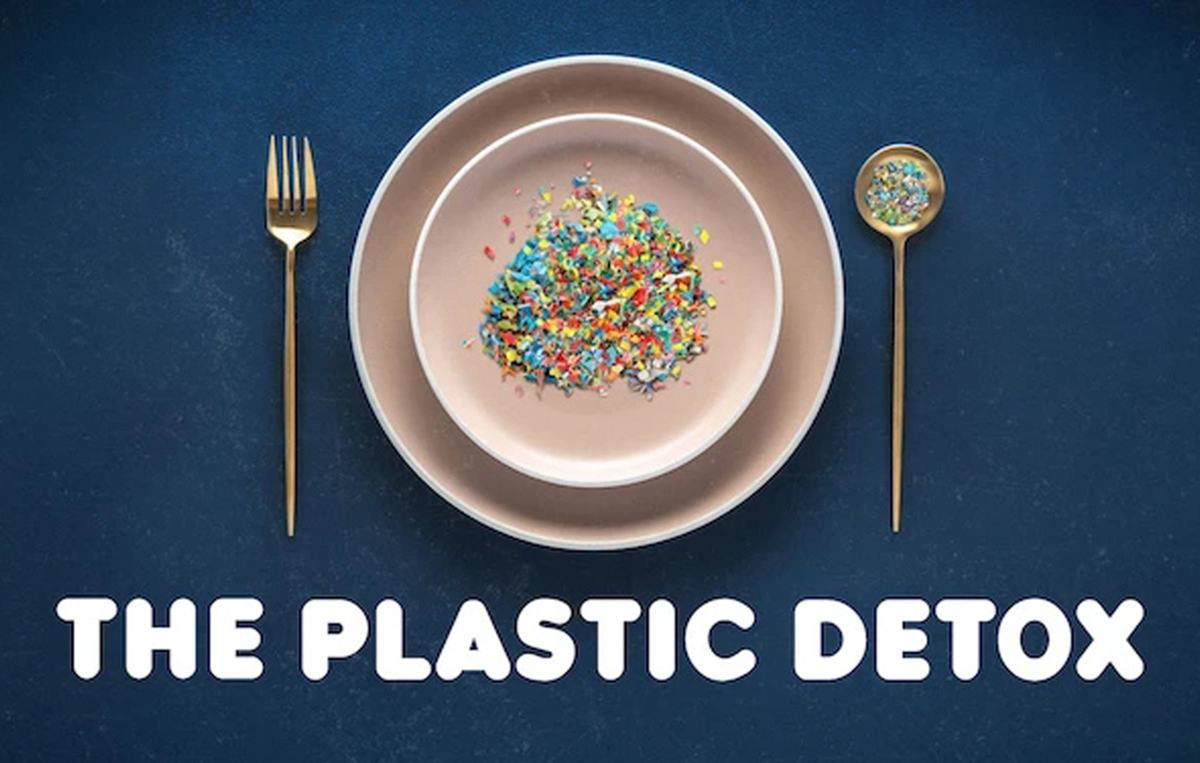
The Netflix documentary The Plastic Detox, which follows six couples with unexplained infertility as they lower their exposure to plastics in hopes of helping them conceive, is fast becoming one of the most talked-about entries in the ongoing conversation around plastics, human health and environmental impact.
Since its release in March, the film has struck a chord with audiences and sparked debate among scientists, advocates and industry leaders over what it gets right and where it may go too far with its message.
Judith Enck is president of Beyond Plastics, a nationwide anti-plastics movement based at Bennington College in Vermont and driven by environmental policy experts, students and advocates. She said the film arrives at a moment when concern about microplastics and chemical exposure is rapidly gaining traction among both researchers and the public.
“There is growing concern about the presence of microplastics in the human body,” she said. “Small pieces of microplastics have been found in different parts of the human body—our lungs, our blood, our brain, human placenta, testicles—all documented in peer-reviewed studies.”
The documentary seems to connect those findings to broader health concerns tied to the chemical makeup of plastics.
“There’s kind of the physicality of the presence of foreign objects in your body, but also all plastic contains toxic chemicals,” Enck said. “Some of those chemicals are reproductive toxins.”
From her perspective, the film succeeds in translating complex science into something accessible to a wider audience, without sacrificing accuracy.
“I did not see one factual mistake in the movie,” Enck said. “I think the movie is very effective and I think it is going to reach a more mainstream audience.”
Science vs. storytelling
While some advocates see the documentary as a clear-eyed look at emerging risks, many scientists and other industry voices believe its conclusions require more nuance, particularly when distinguishing between plastics and broader chemical exposure.
Jennifer Brandon, Ph.D., a microplastics expert and climate scientist with Wild Beacon Consulting, noted the film generally reflects the current state of knowledge of what researchers understand and what remains uncertain.
“It’s a pretty accurate description of what we know and what we don’t know,” she said. “We are finding these microplastics throughout the body, and more importantly, we are finding these microplastics-associated chemicals throughout the body.”
The documentary, she added, effectively illustrates how these materials enter everyday life.
“The film does a good job showing many of the pathways that these plastics and chemicals enter our homes, food and bodies,” Brandon said.
At the same time, she cautioned that the film minimizes the challenge of reducing exposure, particularly given how pervasive these materials have become.
“It oversimplifies how easy it is to get rid of them in your life,” Brandon said. “Do not expect to have such an easy transition to limiting your plastic load, because we live in a plastic world.”
She also pointed out that the film sometimes conflates plastics with a broader class of chemicals found in many consumer products.
“The movie also oversimplifies that all of these chemicals are coming from plastics,” Brandon said. “They’re not. In some ways the movie should be called the PFAS and Phthalates Detox. These chemicals are in much more than plastics.”
Scott Trenor, PhD, technical director of the Association of Plastic Recyclers, noted the film’s framing does not fully capture the scope of the intervention depicted.
“It gets right the pervasiveness of chemicals in our daily life, but what it gets wrong is the title,” he said. “It was really like an overall chemical detox, not just a plastic detox.”
He added that in the film, participants changed a wide range of behaviors beyond plastics, including personal care products and household chemicals.
“They tried to avoid fragrances and moved to natural products,” he said. “So the intervention was much broader than just plastics. There’s no way to really tell whether the changes led to the three out of eight becoming pregnant or not. It continues the loose correlation between effects but not really showing the causation.”
APR owns Resource Recycling, Inc., publisher of Plastics Recycling Update.
Clinical reality underscores uncertainty
From a clinical point of view, many fertility experts believe the science remains incomplete, even as concern grows.
For instance, Botros Rizk, MD, a reproductive endocrinologist at HRC Fertility Pasadena, noted microplastics are increasingly being detected in human tissues, but their direct impact on fertility has not been established.
“Microplastics have been detected in the blood, heart, lungs and liver,” he said. “However, there is currently no clear evidence establishing a direct causal relationship with infertility.”
He added that while some biological mechanisms are plausible, the evidence is still developing.
“Their direct impact on hormone balance, egg quality, sperm health and fertility outcomes remains unclear,” Rizk said. “At this time, there is limited evidence to suggest that these changes directly improve fertility outcomes.”
Conflicting interpretations of the evidence
The debate becomes even more contentious when viewers look at how the documentary interprets existing research, particularly around chemicals such as BPA and phthalates and their relationship to plastics.
A recent report from the Plastics Research Council argues that while the film raises valid concerns, it misattributes the sources of exposure and overstates the role of plastics.
“While some statements made are accurate, others are without evidence or outright scientifically incorrect,” said Chris DeArmitt, PhD, founder and president of the Plastics Research Council.
The analysis emphasizes that although endocrine-disrupting chemicals are an area of active research, their sources are often unrelated to plastics themselves.
“It is well documented that perfumes contain high levels of phthalates sprayed directly onto bare skin and then absorbed into the body,” the report noted, pointing out that participants in the film were instructed to avoid such products.
For that reason, DeArmitt believes reductions in chemical exposure observed in the documentary may be tied more to eliminating cosmetics and fragrances than to removing plastics.
“That is the reason that their phthalate exposure decreased, instead falsely laying the blame solely on plastics,” he said. “I did not find any peer-reviewed human study that proves exposure to plastics itself causes infertility.”
According to Brandon the distinction between plastics as materials and the chemicals associated with them is one of the most misunderstood aspects of the issue.
“Microplastics are virtually never just plastic,” she said. “They almost always have these chemicals in them. But are the health effects from the chemicals, the particles themselves, or both? We don’t fully know yet.”
Awareness vs. oversimplification
Despite some differing opinions on the science, most agree the documentary has succeeded in bringing the issue into the mainstream, even if that means the sudden visibility has some trade-offs.
Brandon noted the film stands out among similar efforts for its ability to communicate complex science to a broad audience.
“There are many plastic documentaries out there and this is one of the best ones in terms of portraying the science,” she said.
Enck sees the film as a catalyst for broader awareness and policy momentum.
“The plastics and health message is breaking through, and people want to know what to do,” she said.
Still, Trenor noted the impact of such messaging ultimately depends on how it is interpreted by consumers and policymakers.
“I think it’s somewhere in the middle,” he said. “Awareness is important, but we have to be careful about how we interpret the results.”