






The global market for post-consumer recycled (PCR) plastic packaging is at a crossroads. Growing steadily but falling short of legislative demands, the industry faces a defining decade.
With binding targets looming in Europe and beyond, “The Future of PCR Packaging to 2031,” published by the Smithers consultancy in 2026, maps the road ahead. Smithers has distilled the key findings from the report into five trends every brand owner, packaging professional and investor needs to understand.
1. Recyclate shortages a defining problem
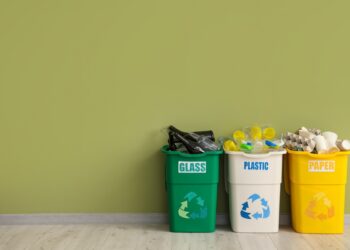
The lack of sufficient recyclate is the central challenge facing the sector, and it is self-reinforcing. PCR currently costs around a third more than virgin polymer: This dampens demand, which in turn discourages investment in recycling infrastructure, keeping supply tight and prices high.
The scale of the underlying problem is stark. A study by the Organisation for Economic Co-operation and Development (OECD) found that global plastic waste more than doubled between 2000 and 2019, reaching 353 million metric tons. Yet in 2019, only 9% of that waste was actually recycled. Half was landfilled, a fifth incinerated, and roughly a fifth was mismanaged entirely, ending up in uncontrolled dumpsites or burned in the open. Until collection and sorting infrastructure catches up with ambition, the feedstock for PCR packaging will remain scarce.
European recycling capacity growth has already slowed sharply, from 17% in 2021 to just 6% in 2023, according to the European Commission. Many major brands missed their own 2025 PCR targets. Without a significant shift, the 2030 legislative deadlines will be equally challenging.
2. Legislation is tightening, but enforcement remains uneven
The regulatory landscape has never been more demanding. Europe’s Packaging and Packaging Waste Regulation (PPWR) and the Single-Use Plastics Directive (SUPD) set binding PCR content requirements for plastic packaging by 2030. Extended producer responsibility (EPR) schemes are taking hold across Asia and on a state-by-state basis in North America. India mandated a minimum 30% recycled content in PET bottles in April 2025, with a 60% target set for 2029. Japan has imposed recycled content targets of up to 60% for cosmetics packaging.
The problem, as the Smithers report notes, is enforcement. In many jurisdictions, producers calculate that paying non-compliance fees is cheaper than meeting targets. The political climate in the United States has made things harder still: Federal support for environmental programs has weakened, and EPR currently exists in only seven US states, with no federal harmonization in sight. Europe is better placed, but even there, complexity across national and regional schemes creates compliance headaches.
Harmonization of EPR rules, tracking requirements such as QR codes on packaging, and the gradual alignment of reporting standards will all push compliance higher over the coming years.
3. Mechanical recycling remains the backbone, but needs investment
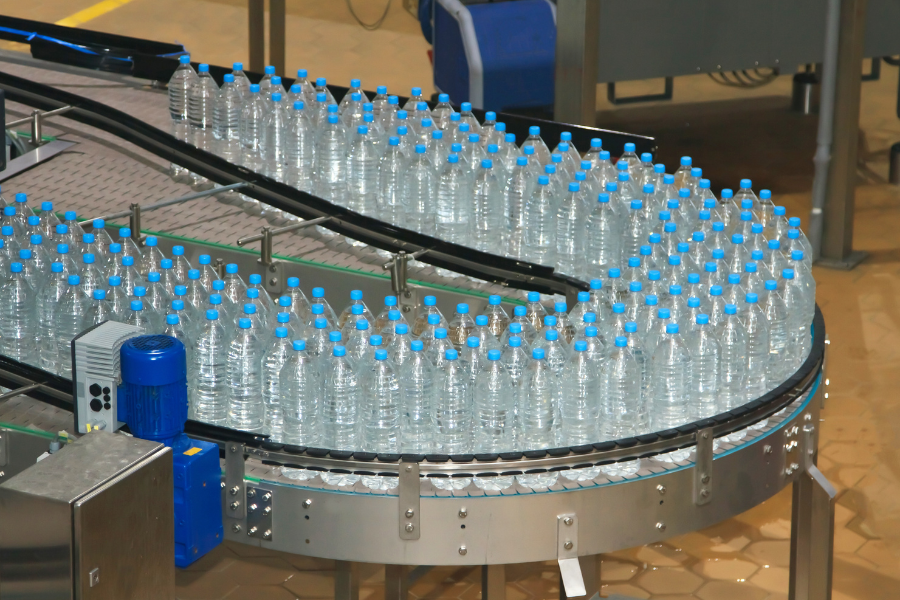
Mechanical recycling accounts for the vast majority of PCR content in packaging today, and it will continue to do so through 2031. The largest volume PCR polymer is RPET, primarily sourced from beverage bottles, and this segment is forecast to grow at 6.1% annually over the next five years. PE and PP are also seeing investment in sorting and processing technology.
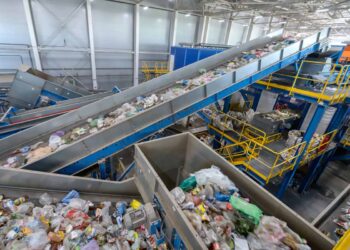
Technology is transforming mechanical recycling output. Robotics deployed in recycling facilities can increase the supply of clean RPET by up to 25% and cut contamination by up to 60%, according to the Smithers report. Artificial intelligence is being applied to sorting systems to improve accuracy and throughput, although the significant water demands of some AI-enabled processes remain a concern that the industry will need to address.
Closed-loop recycling systems, where plastic-to-plastic recycling is handled locally, sometimes at the same site and with a limited number of participants, are gaining traction. These systems improve efficiency, reduce contamination risk and make it far easier to trace the origin and quality of recycled material, which is increasingly demanded by regulators and brand owners alike.
Deposit return schemes (DRS) are another powerful lever. By improving the collection rate for beverage containers and other packaging, they directly increase the availability of clean, high-quality recyclate. Expanding DRS coverage is widely seen as one of the most effective near-term steps available to policymakers.
4. Chemical recycling offers promise, with important caveats
Only around half of plastic waste is suitable for mechanical recycling. The rest, including flexible films, multi-layer structures and contaminated packaging, requires either different approaches or ends up unrecycled. Chemical recycling, which breaks plastics back down into their molecular building blocks, has long been proposed as the solution for this harder-to-recycle fraction.
Progress is being made. TotalEnergies launched France’s first advanced plastics recycling plant in early 2026, capable of processing 15,000 metric tons of waste plastic annually into pyrolysis oil for use as a petrochemical feedstock. The European Commission updated its rules to cover chemically recycled content in PET beverage bottles, a move ratified in February 2026, which opens the door to wider commercialization.
Yet significant challenges remain. The most widely used chemical recycling process produces pyrolysis oil rather than directly yielding a recycled polymer, and the conversion is less efficient and more energy-intensive than mechanical recycling. There are concerns that some pyrolysis oil is diverted to fuel use rather than being converted back into plastic. And with chemical recycling plants taking around three years to build, the window for new facilities to contribute meaningfully before 2030 is narrow. In the United States, federal funding withdrawals have stalled at least one major project. Chemical recycling is a genuine part of the answer, but not a silver bullet.
5. Growth will outpace GDP, but collaboration is essential
Despite every challenge, the market outlook for PCR packaging is positive. Smithers projects global PCR packaging consumption to grow at around 5.7% CAGR (compound annual growth rate) between 2026 and 2031, rising from approximately 4.9 billion metric tons to 6.48 billion metric tons. That rate comfortably exceeds the IMF’s forecast for global GDP growth of 3.2% in 2027. Europe will remain the largest and fastest-growing market, driven by PPWR obligations. Asia will see strong growth too, propelled by ambitious national targets. North America will lag, weighed down by political and regulatory uncertainty.
Unlocking this growth will require the industry to move beyond individual company action. Without greater public participation in recycling, there is simply no feedstock for the PCR economy. Eco-modulation is emerging as an important commercial incentive; this allows packaging producers to reduce their EPR costs by incorporating multiple sustainability measures including PCR content, lightweighting and reusability.
The bottom line
The trajectory for PCR packaging is one of genuine, if hard-won, growth. The combination of tightening legislation, advancing technology, growing consumer awareness and rising investment means the market will expand substantially over the next five years. Whether it expands fast enough to meet the ambitious targets set by governments in Europe, Asia and beyond is a different question, and one that depends on all parts of the supply chain, from waste collectors to brand owners, pulling in the same direction.
This article is based on the findings of a newly published report from Smithers, The Future of PCR Packaging to 2031. This comprehensive new study takes a deep dive into the global PCR packaging market. It provides granular segmentation, regional breakdowns, and forward-looking forecasts; and explores compliance gaps, growth opportunities, and strategies to meet sustainability targets across Europe, Asia and North America.Find out more at smithers.com.