Resource Recycling
  • The Latest
  • Analysis
    • All
    • Certification Scorecard
    • Industry Announcements
    • Opinion

    AI and the changing economics of retired hardware

    Certification Scorecard — Week of June 8, 2026

    ITAD is moving past its adolescent phase: beyond end-of-life

    Rainforest

    Inside the Circle: What the rainforest can teach us about EPR

    Closeup of a printed circuitboard

    Hardware demand puts new focus on parts harvesting

    Rare look inside the world’s largest plastics recycler

    Mass balance matters: Why different rules can lead to different outcomes 

  • Conferences
    • Resource Recycling Conference
    • Plastics Recycling Conference
    • E-Scrap: The Longevity Conference
    • Textiles Recovery Summit
  • Publications
    • E-Scrap News
    • Plastics Recycling Update
    • Policy Now
    • Resource Recycling
    • Other Topics
      • All Topics
      • Brand Owners
      • Critical Minerals
      • Glass
      • Grant Watch / RFPs
      • Markets
      • Organics
      • Packaging
      • Research
      • Technology
      • Textiles
Subscribe
No Result
View All Result
Resource Recycling
  • The Latest
  • Analysis
    • All
    • Certification Scorecard
    • Industry Announcements
    • Opinion

    AI and the changing economics of retired hardware

    Certification Scorecard — Week of June 8, 2026

    ITAD is moving past its adolescent phase: beyond end-of-life

    Rainforest

    Inside the Circle: What the rainforest can teach us about EPR

    Closeup of a printed circuitboard

    Hardware demand puts new focus on parts harvesting

    Rare look inside the world’s largest plastics recycler

    Mass balance matters: Why different rules can lead to different outcomes 

  • Conferences
    • Resource Recycling Conference
    • Plastics Recycling Conference
    • E-Scrap: The Longevity Conference
    • Textiles Recovery Summit
  • Publications
    • E-Scrap News
    • Plastics Recycling Update
    • Policy Now
    • Resource Recycling
    • Other Topics
      • All Topics
      • Brand Owners
      • Critical Minerals
      • Glass
      • Grant Watch / RFPs
      • Markets
      • Organics
      • Packaging
      • Research
      • Technology
      • Textiles
Subscribe
No Result
View All Result
Resource Recycling
No Result
View All Result
Home Plastics

Calif. subsidy hike could stem bottle bill ‘crisis’

Colin StaubbyColin Staub
November 15, 2017
in Plastics
Calif. subsidy hike could stem bottle bill ‘crisis’

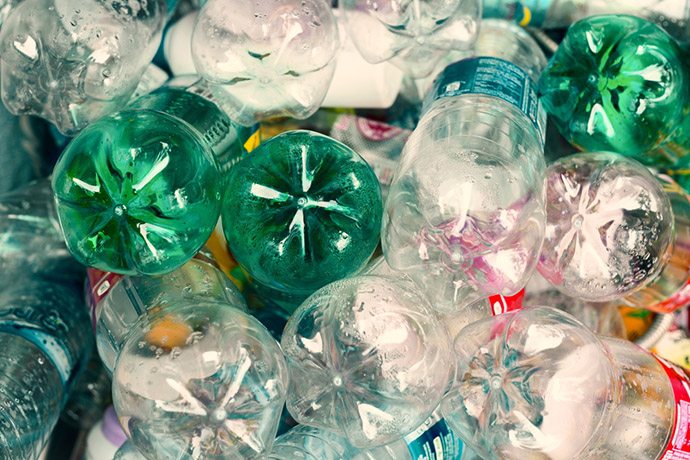
Redemption center closures continue to plague California, leaving fewer convenient options for beverage container returns and contributing to a decrease in the state’s redemption rate.

In September, the last remaining redemption center in a Northern California county closed up shop, said Tedd Ward, director of the Del Norte Solid Waste Management Authority.

“At this point in time, for folks in Del Norte County who buy beverage containers, the closest place they can get their nickel back is McKinleyville, which is 70 miles to the south,” Ward said.

Del Norte isn’t the only locale confronting the issue. As of last week, 1,622 container redemption centers were operating in the Golden State. CalRecycle Deputy Director James Nachbaur said that number represents a net loss of about 17 percent of redemption centers since 2016.

The closures were discussed during a Nov. 8 webinar hosted by the Container Recycling Institute (CRI), a nonprofit advocacy organization. Also last week, the California Department of Resources Recycling and Recovery (CalRecycle) released new redemption rate data. The figures show the 12-month period ending in June 2017 saw a redemption rate of 77.4 percent, down from 81.3 percent during the previous year. During that period, nearly 8.6 billion PET containers and more than 149 million HDPE containers were collected for recycling through the system.

The closures, described during the webinar as a “crisis,” led CalRecycle to propose regulatory changes that would alter the formula for calculating state subsidies to private redemption centers.

One in five containers recycled in the country are collected in California, according to Susan Collins, president of CRI. Impacts to California’s recycling system, therefore, have a ripple impact in national recycling trends.

Downward economics

Several financial factors contributed to the closure trend, Nachbaur said. The price of aluminum has dropped significantly, and the relative deposit value itself has dropped over the years because it hasn’t been adjusted for inflation. Both have created negative pressure for redemption centers, he said.

Lighter-weight containers, as well as a shift from aluminum to plastic in some drink packaging, have impacted the economics of operating a redemption center. “The value of a typical mix of containers has also fallen over time,” Nachbaur said.

Redemption centers make their money through sales of recovered containers and processing payments from CalRecycle. The payments are calculated based on the difference between the value of the recyclables and the cost to collect and process those materials.

Because of how the formula is crafted, when redemption centers take cost-saving measures within their own operations, it has the effect of lowering the subsidies they receive from the state. When they are struggling, this can create a downward spiral.

The subsidies are also based on what is calculated to be a “reasonable financial return” for redemption centers. CalRecycle determines this by looking at the financial returns for comparable businesses. This year, for the first time, the formula produced a negative return, because many in the scrap industry have experienced losses in recent years. That means it assumed redemption centers should expect a 5.85 percent loss, and it lowered the processing payments accordingly. Next year, if the formula is calculated the same way, that payment trend would continue.

“We definitely don’t consider a negative return a reasonable value for 2018,” Nachbaur said.

Formula for change

CalRecycle is proposing a regulatory package that would set the calculation of a “reasonable return” at a fixed rate. Under the proposal, rural redemption centers are considered to have a 16.6 percent reasonable financial return, and all other centers are set at 11.5 percent. The difference is due to rural centers having higher operating costs.

Nachbaur said that change “should have a big impact” as it would raise processing payments, perhaps stemming the tide of center closures. It would also increase the processing fee paid by beverage distributors, as well as the portion of the processing payment CalRecycle provides. According to a fiscal impact statement, the proposal would have CalRecycle paying $10.8 million more out of the beverage container recycling fund next year to partially cover the processing payment increases.

California’s governor also recently signed into law Senate Bill 458, which creates five pilot projects to explore increased flexibility in the redemption center regulations as a way to increase container recovery.

Collins told Resource Recycling she believes the processing fee system has a number of formula flaws. Beyond the reasonable return formula issue, Collins pointed to the way per-container processing payments are calculated. According to CalRecycle, the department uses a rolling average of scrap values over the prior 12 months, adjusted quarterly. As scrap values declined substantially beginning in 2013, the formula has not kept up with the market shifts and is looking too far in the past, she said. It functioned when scrap values went up and down more regularly but has contributed to a gulf between processing payments and real business conditions.

“That constant gap was not trivial,” she said.
SDS Logistics

Tags: CaliforniaContainer DepositsLocal Programs
TweetShare
Colin Staub

Colin Staub

Colin Staub was a reporter and associate editor at Resource Recycling until August 2025.

Related Posts

Goodwill, WM partner for textile recycling pilot

CiCLO co-creator helps forge path to sustainability

byPaul Lane
June 11, 2026

Andrea Ferris says her additives, which can make synthetic fabrics biodegradable, can help companies improve their environmental footprints while meeting...

NYC, Mack Trucks unveil winning artwork

NYC, Mack Trucks unveil winning artwork

byAntoinette Smith
June 4, 2026

The five new hand-painted waste collection trucks feature themes of honor, resilience and care, and will operate in the city's...

Revised CA budget includes $200m for recycling

Revised CA budget includes $200m for recycling

byAntoinette Smith
May 20, 2026

Stakeholders applauded the additional allocations proposed, but would like to see distribution re-formulated to more effectively address market realities.

Plastic packaging

Why SB 54 source reduction planning is becoming the industry’s most challenging EPR test

byDave Ford
May 19, 2026

Ahead of critical August deadlines, producers, packaging manufacturers and experts must decode SB 54's toughest requirement.

Extruder pushes out natural HDPE pellets at KW Plastics in Troy, Alabama.

Rare look inside the world’s largest plastics recycler

byBrian Clark Howard
May 13, 2026

KW Plastics in Troy, Alabama is a leading recycler of PP and HDPE—here’s a glimpse behind the gates.

Orange County landfill fees to spike 53%

Orange County landfill fees to spike 53%

byBrian Clark Howard
May 11, 2026

The rate increase goes into effect July 1 and is the result of a convergence of factors.

Load More
Next Post

Mixed pricing news for recovered plastics

More Posts

House resolution aims to make recyclability central to product design

NY EPR bill fails to advance after third try

June 8, 2026
Various PET thermoform containers.

Thermoform recovery soars, PCR content falls

June 10, 2026
CalRecycle withdraws proposed regs for SB 54

Oceana, NRDC, CAW sue CalRecycle over SB 54 regs

June 5, 2026

Three-bill package aims to revamp Michigan’s bottle return system

June 9, 2026
Circular Materials to supply PlasCred chem recycling plant

Circular Materials to supply PlasCred chem recycling plant

June 4, 2026
Rare look inside the world’s largest plastics recycler

Mass balance matters: Why different rules can lead to different outcomes 

June 5, 2026

Battery fires still a major risk to recyclers: report

June 9, 2026
Recycling industry addresses Beyond Plastics report

Recycling industry addresses Beyond Plastics report

May 26, 2026
Rainforest

Inside the Circle: What the rainforest can teach us about EPR

June 8, 2026
How electronics legislation fared this legislative season

NY sends repairability labeling bill to governor

June 8, 2026
Load More

About & Publications

About Us

Staff

Archive

Magazine

Work With Us

Advertise
Jobs
Contact
Terms and Privacy

Newsletter

Get the latest recycling news and analysis delivered to your inbox every week. Stay ahead on industry trends, policy updates, and insights from programs, processors, and innovators.

Subscribe

Welcome Back!

Login to your account below

Forgotten Password?

Retrieve your password

Please enter your username or email address to reset your password.

Log In

Add New Playlist

No Result
View All Result
  • The Latest
  • Analysis
  • Recycling
  • E-Scrap
  • Plastics
  • Policy Now
  • Conferences
    • E-Scrap Conference
    • Plastics Recycling Conference
    • Resource Recycling Conference
    • Textiles Recovery Summit
  • Magazine
  • About Us
  • Advertise
  • Archive
  • Jobs
  • Staff
Subscribe
This website uses cookies. By continuing to use this website you are giving consent to cookies being used. Visit our Privacy and Cookie Policy.