
Resource Recycling
  • The Latest
  • Analysis
    • All
    • Certification Scorecard
    • Industry Announcements
    • Opinion
    Closeup of a printed circuitboard

    Can modular metals recovery challenge the smelter model?

    Intel sign outside of company building.

    What Intel’s blockbuster quarter means for ITAD

    Feds to develop repairable computer donation program

    The whitebox blind spot in PC recycling

    Analysis: circular design still elusive in laptops

    PC shipments grew in Q1, but questions remain

    The independent ITAD at a crossroads

    The independent ITAD at a crossroads

    Certification Scorecard — Week of April 20, 2026

    Apple Watch on product box.

    Wearables are coming and ITAD isn’t ready

    Certification Scorecard — Week of April 13, 2026

    EV Battery Pack - Sergii Chernov-Shutterstock

    Redwood, Rivian deal fuels US infrastructure plans

  • Conferences
  • Publications

    Other Topics

    Textiles
    Organics
    Packaging
    Glass
    Brand Owners

    Metals
    Technology
    Research
    Markets
    Grant Watch

    All Topics

Subscribe
No Result
View All Result
Resource Recycling
  • The Latest
  • Analysis
    • All
    • Certification Scorecard
    • Industry Announcements
    • Opinion
    Closeup of a printed circuitboard

    Can modular metals recovery challenge the smelter model?

    Intel sign outside of company building.

    What Intel’s blockbuster quarter means for ITAD

    Feds to develop repairable computer donation program

    The whitebox blind spot in PC recycling

    Analysis: circular design still elusive in laptops

    PC shipments grew in Q1, but questions remain

    The independent ITAD at a crossroads

    The independent ITAD at a crossroads

    Certification Scorecard — Week of April 20, 2026

    Apple Watch on product box.

    Wearables are coming and ITAD isn’t ready

    Certification Scorecard — Week of April 13, 2026

    EV Battery Pack - Sergii Chernov-Shutterstock

    Redwood, Rivian deal fuels US infrastructure plans

  • Conferences
  • Publications

    Other Topics

    Textiles
    Organics
    Packaging
    Glass
    Brand Owners

    Metals
    Technology
    Research
    Markets
    Grant Watch

    All Topics

Subscribe
No Result
View All Result
Resource Recycling
No Result
View All Result
Home Plastics

Analysis shines spotlight on New Jersey bag ban

Antoinette SmithbyAntoinette Smith
July 16, 2025
in Plastics
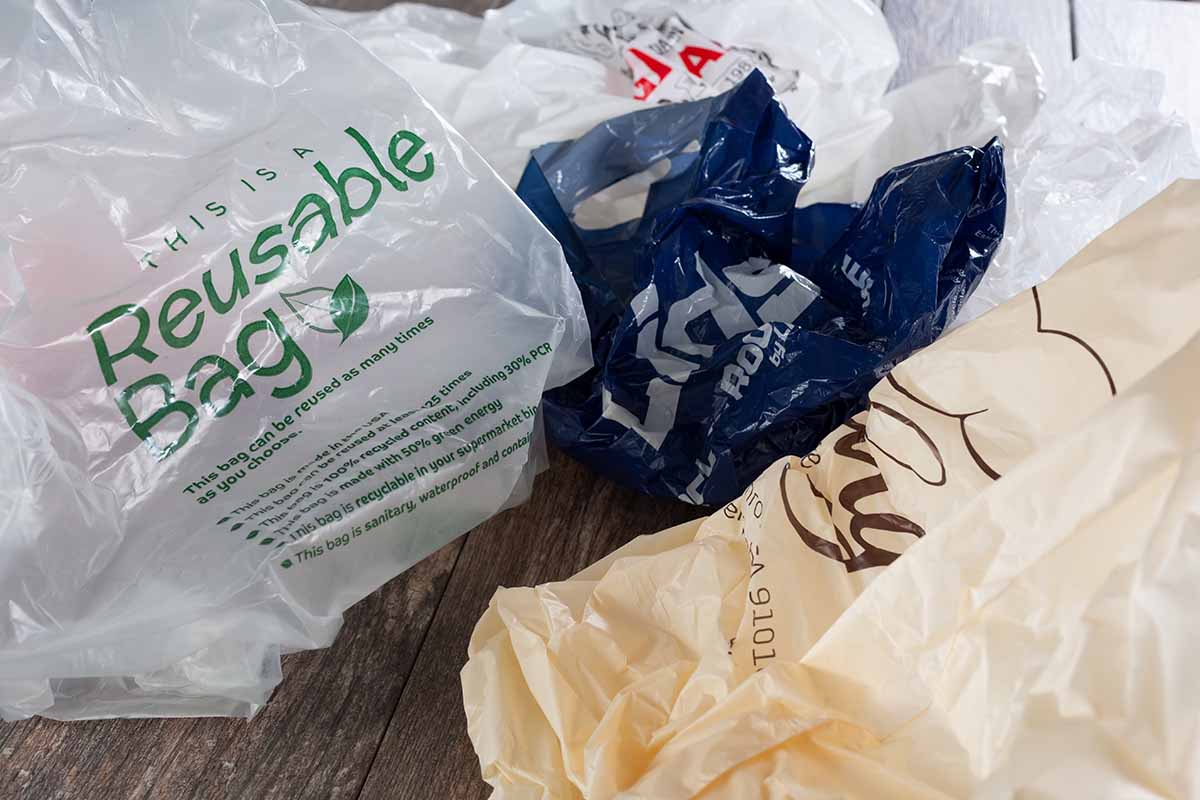
Analysis from a Closed Loop consortium studied numerous state-level methods for reducing bag waste and informed considerations for policymakers. | The Image Party/Shutterstock

A new report on state-level single-use bag laws indicates that New Jersey’s ban has had numerous effects, both positive and negative. 

The Consortium to Reinvent the Retail Bag studied various legislative means of reducing bag waste and how bag fees and bans affected waste and consumer behavior. The group is managed by Closed Loop Partners’ Center for the Circular Economy. 

So far, 12 states have implemented bans on single-use plastic bags: California, Colorado, Connecticut, Delaware, Hawai’i, Maine, New Jersey, New York, Oregon, Rhode Island, Vermont and Washington. In addition, numerous municipalities have banned and/or imposed fees for bag use, including Chicago, New York City and Los Angeles. 

The New Jersey law took effect in May 2022. As the most restrictive U.S. legislation, it prohibits distribution of single-use bags, regardless of material, though it does allow smaller grocers to offer paper bags. While the new analysis shows a significant reduction in consumption of single-use bags, regardless of material, it also indicates that more customers are accumulating too many reusable bags. 

Using the study results, the Consortium also provides a list of policy considerations for reducing waste, environmental impact and costs associated with bags. Among these considerations is enabling customers to bring their own bags or do without. In addition, the group asserts that bag bans alone do not ensure behavior change or reduced environmental impact, and that bag fees are the only legislative tool guaranteed to decrease single-use bag consumption.

Customers amass reusable bags in first year of ban 

Over the first year of the ban, the Consortium sent four surveys to state residents to gauge awareness, understanding and other measures surrounding single-use bags, and received a total of 2,600 responses. The group also analyzed two years of store data — one year before and one year after the ban was implemented — on procurement and sales of single-use bags, as well as for reusable bags of various materials.  

The primary findings were that:

  • Stores gave out 96% fewer bags per week, or about 90 million fewer across 33 stores.
  • During the first four months of the ban, customers were adapting behavior to the new law and sales of reusable bags rose.
  • A year after the ban, nearly all respondents said they owned enough or too many reusable bags; those with too many who wished to dispose of them rose significantly too.

A year after the ban took effect, 91% of those surveyed reported owning enough or too many reusable bags — an increase from 75% at implementation. Further, 16% indicated they had too many reusable bags and wanted to dispose of them, a rise of 11 points from a year earlier.  

The method of shopping also influenced bag use. Online item ordering used a disproportionate number of bags, with curbside pickup and similar methods representing only 6% of average grocery store sales but 32% of reusable bag use. 

Throughout the course of the survey, customer sentiment remained mostly unchanged, with 41% of respondents happy with the legislation a year after implementation, compared to 43% in May 2022. Those expressing confusion about the law dropped by 4 points to 10% over the year. Other emotions expressed were:

  • Frustration: 35%, up 3 points.
  • Anger: 23%, up 1 point.
  • Indifference: 22%, unchanged.

Policy considerations

The survey reinforced the notion that helping customers bring their own bags or go without is the best approach, a key consideration for regulators and policymakers charged with addressing bag waste. Other considerations the Consortium provided include:

  • Create uniform state- or regional-level legislation for a consistent customer experience, to reinforce behavior and ease the burden of retailer compliance.
  • Develop zero- or lower-waste alternatives for pickup and delivery channels.
  • Implement recovery and recycling systems for any bags used, including reusable options.
  • Consider socioeconomic impacts of proposed legislation, including that bag fees disproportionately affect lower income individuals.

Coming soon: New consumer campaign 

To accompany the study, the Consortium plans to launch a new consumer-facing campaign this summer, with details expected within the next month, according to a press release. 

In 2023, the Consortium conducted a three-month pilot project tracking the effects of store signage and employee training on consumer behavior. The project showed a nearly 4.8% decrease in single-use bags across the two studied markets — Denver and Tucson — and a 11.7% reduction in Denver, which has a 10-cent fee on single-use bags.  

Tags: Film & FlexiblesPolicy Now
TweetShare
Antoinette Smith

Antoinette Smith

Antoinette Smith has been at Resource Recycling Inc., since June 2024, after several years of covering commodity plastics and supply chains, with a special focus on economic impacts. She can be contacted at [email protected].

Related Posts

Oregon’s battery EPR bill officially charged for implementation

byStefanie Valentic
April 10, 2026

Oregon Governor Tina Kotek signed HB 4144 into law on April 7, setting into motion the mechanics for an extended...

AF&PA states disappointment over Oregon EPR decision

byStefanie Valentic
April 8, 2026

The American Forest & Paper Association is responding after a federal judge blocked the trade group's bid to intervene in...

MRF equipment firm Machinex wins patent fight with rival

Judge blocks four groups from joining Oregon Recycling Act injunction

byStefanie Valentic
April 7, 2026

A judge has shut the door on four industry groups seeking to join NAW's Oregon EPR injunction and clarified who's...

UBC stakeholders report on recycling progress

Trump’s Section 232 tariff overhaul provides mixed results for recycling industry

byStefanie Valentic
April 7, 2026

A sweeping overhaul of the Section 232 steel and aluminum derivatives tariff program took effect April 6, slashing duty rates...

Wineries help create model for film recycling

Wineries help create model for film recycling

byAntoinette Smith
April 7, 2026

A collaboration between California wineries and the recycling value chain has provided a closed-loop model the partners aim to see...

Oregon’s Recycling Modernization Act faces injunction

Why EPR’s biggest obstacle might not be legislation

byStefanie Valentic
April 6, 2026

A miscommunication around the Oregon injunction has some of the industry operating on bad information, and it's raising bigger questions...

Load More
Next Post

Plastic bale prices fall in July

More Posts

Birch Plastics gets FDA green-light for post-industrial PP

LyondellBasell upgrade to PreZero assets on hold

April 23, 2026
The independent ITAD at a crossroads

The independent ITAD at a crossroads

April 22, 2026
EPR fees are a market signal. Here’s what they’re telling you.

Oregon DEQ flags 250 producers for RMA noncompliance

April 21, 2026

What Netflix’s ‘Plastic Detox’ gets wrong – and right

April 23, 2026

Google pilots reuse kits to extend device life

April 21, 2026
What is EPR and why it matters

What is EPR and why it matters

April 22, 2026
Earth Day

Happy Earth Day. Here’s how to celebrate

April 22, 2026
Growth challenges drive M&A for packaging

Growth challenges drive M&A for packaging

April 20, 2026
EPR fees are a market signal. Here’s what they’re telling you.

EPR fees are a market signal. Here’s what they’re telling you.

April 10, 2026
Prescription drug bottles

National Prescription Drug Take Back Day is Saturday

April 24, 2026
Load More

About & Publications

About Us

Staff

Archive

Magazine

Work With Us

Advertise
Jobs
Contact
Terms and Privacy

Newsletter

Get the latest recycling news and analysis delivered to your inbox every week. Stay ahead on industry trends, policy updates, and insights from programs, processors, and innovators.

Subscribe

Welcome Back!

Login to your account below

Forgotten Password?

Retrieve your password

Please enter your username or email address to reset your password.

Log In

Add New Playlist

No Result
View All Result
  • The Latest
  • Analysis
  • Recycling
  • E-Scrap
  • Plastics
  • Policy Now
  • Conferences
    • E-Scrap Conference
    • Plastics Recycling Conference
    • Resource Recycling Conference
    • Textiles Recovery Summit
  • Magazine
  • About Us
  • Advertise
  • Archive
  • Jobs
  • Staff
Subscribe
This website uses cookies. By continuing to use this website you are giving consent to cookies being used. Visit our Privacy and Cookie Policy.