Resource Recycling
  • The Latest
  • Analysis
    • All
    • Certification Scorecard
    • Industry Announcements
    • Opinion
    From claims to custody: PCR procurement grows up

    Certification Scorecard — Week of August 10, 2026

    Sorted: Country roads, take my recycling

    State program revamp proposal advances in Oregon

    Oregon EPR ruling looms: what legal experts think

    Triple-digit revenue gains propel ABTC’s expansion

    LFP batteries gain acceptance. Can they be recycled?

    May pricing bullish for most bales

    August pricing bearish for plastic bales

    End markets, policy key to RPET viability

    PET in focus: Is help on the way?

  • Conferences
    • Resource Recycling Conference
    • Plastics Recycling Conference
    • E-Scrap: The Longevity Conference
    • Textiles Recovery Summit
  • Publications
    • E-Scrap News
    • Plastics Recycling Update
    • Policy Now
    • Resource Recycling
    • Other Topics
      • All Topics
      • Brand Owners
      • Critical Minerals
      • Glass
      • Grant Watch / RFPs
      • Markets
      • Organics
      • Packaging
      • Research
      • Technology
      • Textiles
Subscribe
No Result
View All Result
Resource Recycling
  • The Latest
  • Analysis
    • All
    • Certification Scorecard
    • Industry Announcements
    • Opinion
    From claims to custody: PCR procurement grows up

    Certification Scorecard — Week of August 10, 2026

    Sorted: Country roads, take my recycling

    State program revamp proposal advances in Oregon

    Oregon EPR ruling looms: what legal experts think

    Triple-digit revenue gains propel ABTC’s expansion

    LFP batteries gain acceptance. Can they be recycled?

    May pricing bullish for most bales

    August pricing bearish for plastic bales

    End markets, policy key to RPET viability

    PET in focus: Is help on the way?

  • Conferences
    • Resource Recycling Conference
    • Plastics Recycling Conference
    • E-Scrap: The Longevity Conference
    • Textiles Recovery Summit
  • Publications
    • E-Scrap News
    • Plastics Recycling Update
    • Policy Now
    • Resource Recycling
    • Other Topics
      • All Topics
      • Brand Owners
      • Critical Minerals
      • Glass
      • Grant Watch / RFPs
      • Markets
      • Organics
      • Packaging
      • Research
      • Technology
      • Textiles
Subscribe
No Result
View All Result
Resource Recycling
No Result
View All Result
Home Plastics

Startup scales up process to break down PET

byJared Paben
November 2, 2016
in Plastics
Startup scales up process to break down PET

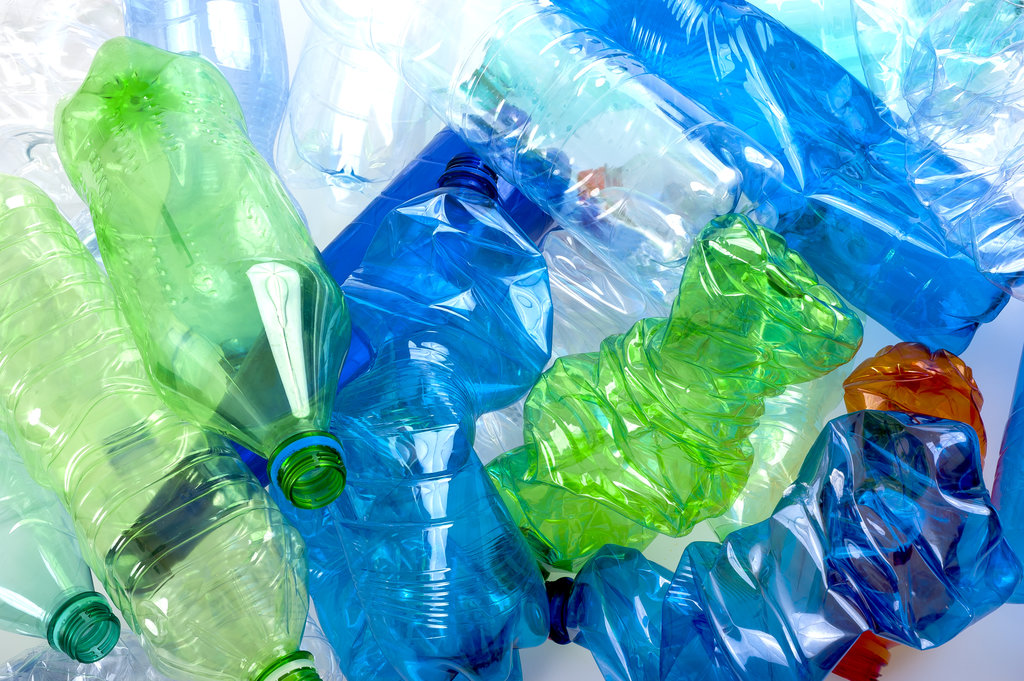
Montreal-based Loop Industries is working to commercialize its heatless, pressureless PET depolymerization technology after raising millions of dollars from investors earlier this year.

The company has started buying equipment for a full-scale production facility capable of depolymerizing 3,000 metric tons per year of PET. The facility is scheduled to come on-line in the fourth quarter of 2017.

Loop’s technology uses a heatless, pressureless approach to break PET down into its component monomers, purified terephthalic acid (PTA) and monoethylene glycol (MEG), which can then be used to create new PET.

“The power of our technology is allowing PET to be ‘upscaled,'” said Daniel Solomita, company founder, president and CEO. “We can take an old polyester sweater that’s ready to be thrown out and upgrade it into a water bottle.”

Loop’s 6,000-square-foot pilot facility in Montreal, Canada is currently capable of producing up to 2.5 metric tons per day of PTA and MEG.

The company was featured in Plastics Recycling Update: Technology Edition, sister publication to Plastics Recycling Update, in March.

Benefits of the technology

First purchased from Hatem Essaddam in Oct. 2014, the technology that Loop employs uses ambient temperatures and atmospheric pressure during depolymerization, reducing costs compared to processes using heat and pressure as catalysts.

In the recycling process, PET bottles are shredded into 5-millimeter pieces and placed into a reactor where chemicals are added. The PET molecular chain begins to break down in 20 minutes. Using a combination of centrifugation and distillation, the PTA, which is solid, and the MEG, which is liquid, are separated from each other and a mother liquid. The mother liquid is reintroduced in the reactor to be reused and the PTA and MEG are processed and packaged.

The approach removes all color and other additives, substances that can inhibit mechanical recycling, Solomita said. In July, the company announced a regulatory law firm found the process meets U.S. Food and Drug Administration standards for food- and drink-contact packaging.

The company, now with 20 full-time employees, is researching using the depolymerization technology on polyamide. In addition, it is exploring ways of making a 100 percent bio-derived PET, something buyers say they’d love to see to match Loop’s recycling technology, Solomita said.

Scaling up the approach

Loop earlier this year sold common shares to raise nearly $4 million, according to the publicly traded company’s 10-Q filing with the U.S. Securities and Exchange Commission (SEC). The money was to support ongoing operations and to upgrade its pilot facility to the production-scale one, Solomita said.

Solomita noted the power of the technology has resonated with investors and brand owners, allowing the company to raise funds when needed. As of Aug. 31, it had $2.2 million in cash on hand, according to the SEC filing.

“We’re not in a tough financial situation, by any stretch,” Solomita said.

In 2017, Loop plans to launch a Loop-branded PET resin by establishing co-marketing and co-branding agreements with potential clients. Solomita said the goal and value of the brand will be about educating the consumer on the importance of recycling their packaging.

A pre-revenue company, Loop is negotiating both with brand owners and PET manufacturers. Initially, Loop envisions selling recycled material for molding of products with less-than-100-percent recycled content to get more market penetration, later working up to 100 percent.

The ultimate goal is to make a difference in the world by recycling large enough volumes of low-grade, mixed-color, contaminated PET, Solomita said.

Ettlinger

Tags: Chemical RecyclingPETTechnology
TweetShare
Jared Paben

Jared Paben

Related Posts

Google explores how to capture 4.5 billion tons of plastic

Bale pricing diverges for August

byRecyclingMarkets.net Staff
August 18, 2026

Pricing for post-consumer plastics dropped while paper fiber prices rose and UBCs remained steady.

End markets, policy key to RPET viability

PET in focus: Is help on the way?

byAntoinette Smith
August 17, 2026

California market payments progress State-level PCR mandates too new to evaluate India may provide look at future  The past few...

May pricing bullish for most bales

August pricing bearish for plastic bales

byAntoinette Smith
August 17, 2026

War-related peaks for post-consumer bale pricing have largely eased, despite continued volatility in crude oil.

Indorama leans into ‘local for local’ strategy

Indorama leans into ‘local for local’ strategy

byAntoinette Smith
August 14, 2026

The Thailand-based PET producer saw "exceptionally strong" results amid war-related supply chain constraints that were particularly pronounced in the region.

PureCycle sees easing headwinds to R-PP adoption

PureCycle says H2 outlook already playing out 

byAntoinette Smith
August 13, 2026

The company said momentum is accelerating amid regulatory developments and the promise of a consistent, streamlined supply chain.

Sabic launches engineered plastic with 75% PCR

Sabic launches engineered plastic with 75% PCR

byAntoinette Smith
August 11, 2026

A new compound from the Saudi materials science giant uses post-consumer polycarbonate from wastewater bottles and compact discs, and PCR...

Load More
Next Post
EPS recycling coming to Northern California city

EPS recycling coming to Northern California city

2026 Buyers’ Guide

Equipment, services and technology suppliers serving the recycling industry.

Browse the Guide

More Posts

PureCycle sees easing headwinds to R-PP adoption

PureCycle says H2 outlook already playing out 

August 13, 2026

Two pilot programs in CA recycle commercial film

August 10, 2026
State program revamp proposal advances in Oregon

Oregon EPR ruling looms: what legal experts think

August 17, 2026

What nine years of acquisitions taught Coastal Waste’s CEO

August 12, 2026
End markets, policy key to RPET viability

PET in focus: Is help on the way?

August 17, 2026
Sabic launches engineered plastic with 75% PCR

Sabic launches engineered plastic with 75% PCR

August 11, 2026
Re-Teck opens site in Southeast Asia

ERI expands global footprint into Vietnam

August 11, 2026
Europe’s recyclers miss most of the critical materials

Market surge expected for plastic from e-scrap

August 10, 2026
May pricing bullish for most bales

August pricing bearish for plastic bales

August 17, 2026
Google explores how to capture 4.5 billion tons of plastic

Bale pricing diverges for August

August 18, 2026
Load More

About & Publications

About Us

Staff

Archive

Magazine

Work With Us

Advertise
Jobs
Contact
Terms and Privacy

Newsletter

Get the latest recycling news and analysis delivered to your inbox every week. Stay ahead on industry trends, policy updates, and insights from programs, processors, and innovators.

Subscribe

Welcome Back!

Login to your account below

Forgotten Password?

Retrieve your password

Please enter your username or email address to reset your password.

Log In

Add New Playlist

No Result
View All Result
  • The Latest
  • Analysis
  • Recycling
  • E-Scrap
  • Plastics
  • Policy Now
  • Conferences
    • E-Scrap Conference
    • Plastics Recycling Conference
    • Resource Recycling Conference
    • Textiles Recovery Summit
  • Magazine
  • About Us
  • Advertise
  • Archive
  • Jobs
  • Staff
Subscribe
This website uses cookies. By continuing to use this website you are giving consent to cookies being used. Visit our Privacy and Cookie Policy.