




Resource Recycling
  • The Latest
  • Analysis
    • All
    • Certification Scorecard
    • Industry Announcements
    • Opinion
    Rainforest

    Inside the Circle: What the rainforest can teach us about EPR

    Closeup of a printed circuitboard

    Hardware demand puts new focus on parts harvesting

    Rare look inside the world’s largest plastics recycler

    Mass balance matters: Why different rules can lead to different outcomes 

    Certification Scorecard — Week of June 1, 2026

    IT asset disposition and electronics recycling: Now and then

    $60 billion in AI servers will create an ITAD challenge

    The independent ITAD at a crossroads

    DMD acquires ITAD firm Lifespan, outlines acquisition strategy

  • Conferences
    • Resource Recycling Conference
    • Plastics Recycling Conference
    • E-Scrap: The Longevity Conference
    • Textiles Recovery Summit
  • Publications
    • E-Scrap News
    • Plastics Recycling Update
    • Policy Now
    • Resource Recycling
    • Other Topics
      • All Topics
      • Brand Owners
      • Critical Minerals
      • Glass
      • Grant Watch / RFPs
      • Markets
      • Organics
      • Packaging
      • Research
      • Technology
      • Textiles
Subscribe
No Result
View All Result
Resource Recycling
  • The Latest
  • Analysis
    • All
    • Certification Scorecard
    • Industry Announcements
    • Opinion
    Rainforest

    Inside the Circle: What the rainforest can teach us about EPR

    Closeup of a printed circuitboard

    Hardware demand puts new focus on parts harvesting

    Rare look inside the world’s largest plastics recycler

    Mass balance matters: Why different rules can lead to different outcomes 

    Certification Scorecard — Week of June 1, 2026

    IT asset disposition and electronics recycling: Now and then

    $60 billion in AI servers will create an ITAD challenge

    The independent ITAD at a crossroads

    DMD acquires ITAD firm Lifespan, outlines acquisition strategy

  • Conferences
    • Resource Recycling Conference
    • Plastics Recycling Conference
    • E-Scrap: The Longevity Conference
    • Textiles Recovery Summit
  • Publications
    • E-Scrap News
    • Plastics Recycling Update
    • Policy Now
    • Resource Recycling
    • Other Topics
      • All Topics
      • Brand Owners
      • Critical Minerals
      • Glass
      • Grant Watch / RFPs
      • Markets
      • Organics
      • Packaging
      • Research
      • Technology
      • Textiles
Subscribe
No Result
View All Result
Resource Recycling
No Result
View All Result
Home Plastics

California selects Landbell USA as PRO for textile EPR

Stefanie ValenticbyStefanie Valentic
March 2, 2026
in Plastics, Recycling

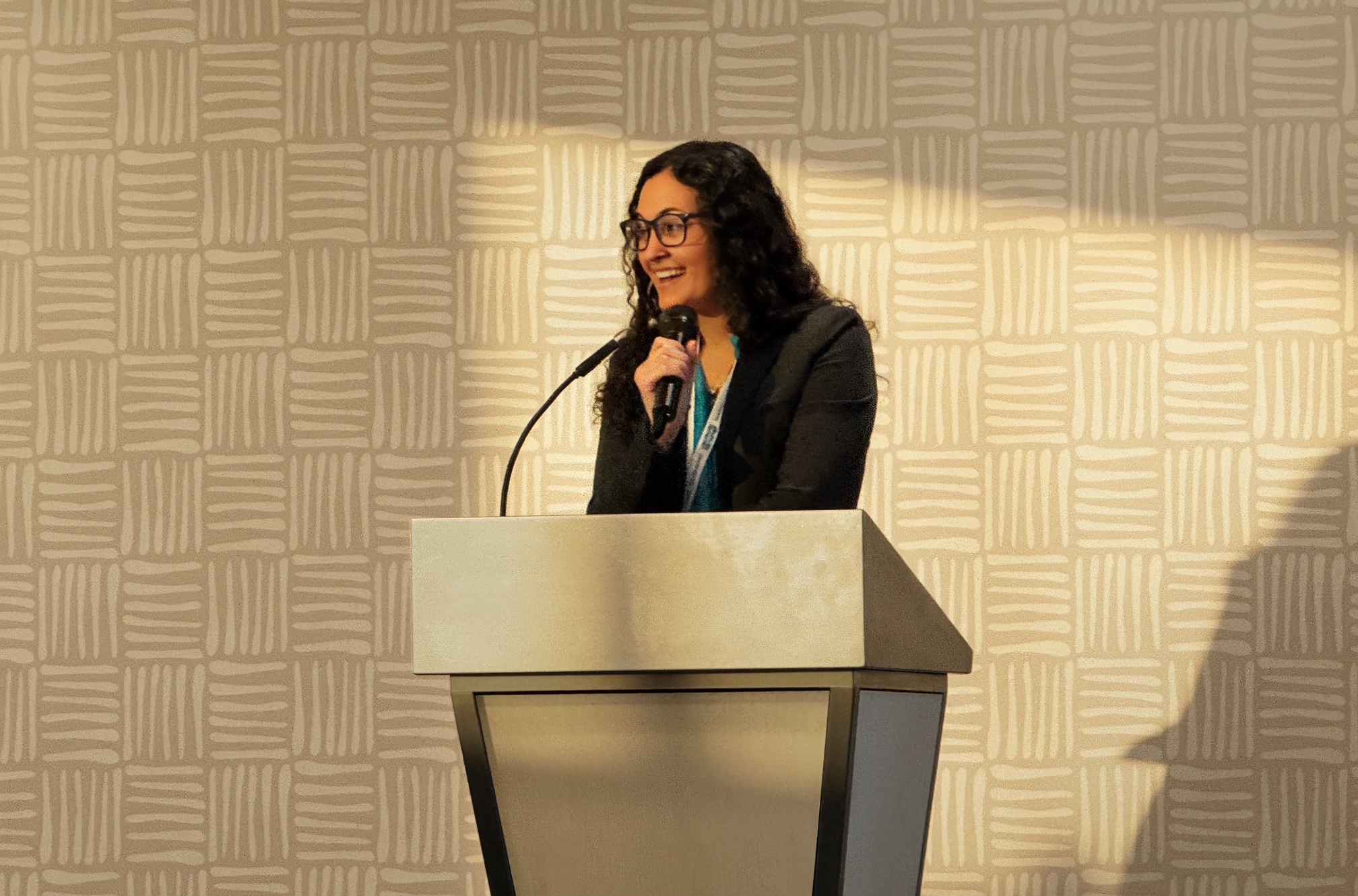
CalRecycle has tapped European recycling veteran Landbell USA to lead the nation's first textile EPR program. Allyson Williams of CalRecycle speaks to TRS attendees about the legislation. | Stefanie Valentic

Every second, a refuse truck’s worth of clothing is landfilled or burned. California’s SB 707 Responsible Textile Recovery Act is designed to close that gap and has recently, CalRecycle –  the state’s enforcement arm for waste management, recycling and environmental protection,– selected a producer responsibility organization (PRO) to lead the way.

On March 1, CalRecycle named Landbell USA to manage implementation of the legislation. Landbell USA is the New York-based subsidiary of the Landbell Group, which runs one of the first textile PRO entities through its European Recycling Platform in the Netherlands.

Allyson Williams, environmental program manager at CalRecycle spoke about the necessity of EPR legislation to mitigate the growing textile waste problem at the 2026 Textile Recovery Summit.

“Nationally, about 85% of our clothing is disposed of, although 95% of textiles are reusable or recyclable,” she said. “The Responsible Textile Recovery Act requires producers to form and join a producer responsibility organization to develop and operate an EPR program that facilitates the collection, transportation, sorting, reuse and recycling of textiles and apparel by responsible end markets.”

Paying into the program

SB 707 comes with a funding structure creating a chain of responsibility.

Gov. Gavin Newsom signed SB 707 into law in September 2024, designating California as the first state to pass EPR legislation for textiles and apparel. Three organizations submitted applications during the process including Landbell USA as well as the Circular Textile Alliance and the Textile Renewal Alliance, both based in Sacramento.

Producers of covered textiles and apparel are required to join the approved PRO by July 1, 2026. The PRO carries most of the program’s weight, with Landbell USA assuming responsibility for the funding and implementation.

CalRecycle serves as the oversight and enforcement arm of the program, responsible for reviewing stewardship plans, conducting audits and taking action against non-compliant entities. 

“We can inspect all sorts of regulated entities and conduct enforcement, which sometimes includes assessing penalties to ensure compliance,” Williams said.

SB 707 uses a tiered system to determine which producer or company in the supply chain is on the hook for compliance. 

Williams explained the fee structure, saying: “The per unit fee is required to reflect sales volumes, existing collection, repair, reuse and recycling programs of the producer, as well as the cost of reusing, repairing and managing their specific covered products” — intentionally rewarding better design and penalizing harder-to-manage materials.

At the top of the chain is the manufacturer who owns or licenses the brand. If that company has no presence in California, responsibility shifts to the brand owner. If the brand owner is also out of reach, it falls to the exclusive licensee. 

“If the manufacturer, the brand owner and the exclusive licensee are not in the state, then the producer would be the importer who’s selling or offering for sale the product into the state, and if none of them are in California, then it can go all the way down to the distributor, the wholesaler or the retailer level,” Williams said.

The structure is designed to ensure that someone is always accountable, regardless of where a product originates, she said.

There is some flexibility built in: Any entity in the supply chain can voluntarily step up and assume responsibility on behalf of others. A manufacturer, for instance, could choose to take on full compliance duties and formally relieve its importers and distributors of that obligation, Williams said.

When asked about pitfalls like California’s carpet recovery program, which experienced eco-modulated fee failures, Williams acknowledged some hurdles.

“The regulatory process for textiles is going to take in all of the stakeholder input and the lessons that we’ve all individually learned from the implementation of stewardship programs, and try to reflect that into implementing, interpreting and making specific this law,” she said.

“We need to do it right,” she added.

That process is already underway, and deadlines are looming.

The work ahead

Landbell USA takes the reins of a program with a tight road map and journey ahead.

The PRO must submit its first needs assessment to CalRecycle by March 1, 2027, giving the organization roughly a year to evaluate existing infrastructure, identify gaps in collection and recycling capacity and lay the groundwork for a statewide program. 

CalRecycle will then have 90 days to approve, conditionally approve or disapprove it.

Regulations are expected no earlier than July 2028, after which Landbell USA will have 12 months to submit a full stewardship plan. By July 1, 2030, an approved plan must be in place, or producers will be considered non-compliant.

The program will begin three months after the plan approval and must be fully implemented one year after plan approval.

 “Clothing and apparel are such an integral part of our daily experience that it’s really easy to overlook what problems they can cause in the environment. The way we design, manufacture and discard products has an impact,” Williams said.

Industry response

Industry groups and nonprofits are already signaling their support for the program and their active participation as stakeholders.

“Goodwill has spent decades keeping goods in use and out of landfills, but the scale of today’s textile waste crisis requires collective action,” said Nicole Suydam, president and CEO of Goodwill of Orange County and chair of the Association of California Goodwills, in a statement. “SB 707 is a critical step forward, and we look forward to partnering with CalRecycle and Landbell USA to expand reuse and recycling opportunities as well as workforce development across the state.”

The National Stewardship Action Council (NSAC) echoed Goodwill’s sentiments.

“The selection of a textile PRO represents a critical milestone in moving landmark policy into operational practice. Successful implementation of SB 707 will require collaboration, transparency, innovation, and strong stakeholder engagement across the textile value chain,” the organization said in a statement.

Heidi Sanborn, NSAC’s executive director and CEO, is a member of Landbell’s advisory committee, which brings together additional perspectives from policy and legislation, municipal outreach, eco-design and digital product passports, footwear deconstruction, academic curriculum reform, spinner innovation and community creative hubs, according to the organization.

Tags: EPRIndustry GroupsPolicy Now
TweetShare
Stefanie Valentic

Stefanie Valentic

Stefanie Valentic is an award-winning journalist who has covered the waste and recycling industry for more than five years. Throughout her career, she has led editorial teams and served as a keynote speaker, moderator and panelist at numerous trade shows and conferences.

Related Posts

Rainforest

Inside the Circle: What the rainforest can teach us about EPR

byBill Shireman
June 8, 2026

We have a lot to learn from jungles, particularly as we fight the thorny problem of plastic pollution.

CalRecycle withdraws proposed regs for SB 54

Oceana, NRDC, CAW sue CalRecycle over SB 54 regs

byStefanie Valentic
June 5, 2026

The groups allege that the new regulations have too many loopholes for packaging producers.

Rare look inside the world’s largest plastics recycler

Mass balance matters: Why different rules can lead to different outcomes 

bySarah Edwards, Eunomia
June 5, 2026

Mass balance is a critical piece of the recycling puzzle—and one that's important to get right.

Circular Materials to supply PlasCred chem recycling plant

Circular Materials to supply PlasCred chem recycling plant

byAntoinette Smith
June 4, 2026

The planned chemical recycling plant in Alberta, Canada, also has a five-year, fixed price offtake contract, ahead of reaching a...

In My Opinion: Comparing the nation’s first packaging EPR laws

What Maine’s vape EPR law means for recyclers

byStefanie Valentic
June 4, 2026

Maine is the first state to require vape manufacturers to fund end-of-life management for their products. Vape recycler Michael Duckworth...

Our top stories from June 2021

Colorado advances EV battery EPR law

byStefanie Valentic
June 3, 2026

Colorado, which passed its Battery Stewardship Act in 2025, is now looking to close the gap on large-format, EV batteries.

Load More
Next Post

Nova launches recycled PE grades from Indiana plant

More Posts

Recycling industry addresses Beyond Plastics report

Recycling industry addresses Beyond Plastics report

May 26, 2026
Machinex

Longview mill tragedy raises broader questions for fiber, recycling sectors

May 29, 2026
Fire at an EMR recycling facility in Camden, New Jersey May 29, 2026.

EMR faces shutdown calls after numerous fires

June 2, 2026
The independent ITAD at a crossroads

DMD acquires ITAD firm Lifespan, outlines acquisition strategy

June 2, 2026
IT asset disposition and electronics recycling: Now and then

$60 billion in AI servers will create an ITAD challenge

June 3, 2026
War, not demand driving polymer pricing

War, not demand driving polymer pricing

June 2, 2026
BASF, Encina expand circular feedstock partnership

BASF, Encina expand circular feedstock partnership

June 3, 2026
Our top stories from June 2021

Colorado advances EV battery EPR law

June 3, 2026
In My Opinion: Comparing the nation’s first packaging EPR laws

What Maine’s vape EPR law means for recyclers

June 4, 2026
California extends compostable labeling law

California bills crack down on false recycling, compostable claims

May 29, 2026
Load More

About & Publications

About Us

Staff

Archive

Magazine

Work With Us

Advertise
Jobs
Contact
Terms and Privacy

Newsletter

Get the latest recycling news and analysis delivered to your inbox every week. Stay ahead on industry trends, policy updates, and insights from programs, processors, and innovators.

Subscribe

Welcome Back!

Login to your account below

Forgotten Password?

Retrieve your password

Please enter your username or email address to reset your password.

Log In

Add New Playlist

No Result
View All Result
  • The Latest
  • Analysis
  • Recycling
  • E-Scrap
  • Plastics
  • Policy Now
  • Conferences
    • E-Scrap Conference
    • Plastics Recycling Conference
    • Resource Recycling Conference
    • Textiles Recovery Summit
  • Magazine
  • About Us
  • Advertise
  • Archive
  • Jobs
  • Staff
Subscribe
This website uses cookies. By continuing to use this website you are giving consent to cookies being used. Visit our Privacy and Cookie Policy.