





- Food-grade pellets to launch around H2 2026
- Company using virgin PE expertise to minimize gels
- Feedstock bale prices down 30% since autumn
With the launch of the first two grades of mechanically recycled PE from its new Indiana plant in late February, Nova Chemicals is optimistic about gaining traction in end markets, even as cheap and plentiful virgin PE continues to subdue demand for PCR.
The Canada-based company also expects to add two food-grade offerings to the Syndigo line of 100% PCR resins before the end of the year, Alan Schrob, director of mechanical recycling at Nova, said in an interview during the Plastics Recycling Conference in San Diego, Feb. 23-25. Operated by Novolex, the Connersville plant opened in 2025, and is expected to reach full annual production capacity of more than 100 million pounds this year.
Feedstock bale prices ease – enough to spur adoption?
For the past few years, cheap and overproduced virgin resin has decimated demand for recycled PE, with recyclers unable to compete.
Over the winter, pricing for A-grade LDPE film bales in the US dropped by 30% after more than a year of stability, according to RecyclingMarkets.Net data, following the closure of Natura PCR in Texas. Even so, the rapid drop had a negligible effect on demand for R-PE, Schrob said. “On one hand, lower bale prices allow us to get closer to virgin prices, but there’s still a big disparity between the two.”
Recyclers have fixed costs, including labor and energy, in addition to the variable price of feedstock bales, which typically have a strong correlation to R-PE pellet prices. “Producing virgin resins is very different from producing recycled resins,” he said. “So it’s not like we can dramatically reduce our prices as a result of lower bale prices, and there’s also a value and use component to the finished products that we’re making too that we want to make sure we maintain.”
The closure of a competing business was “unfortunate,” Schrob said, but “my fear is we’re going to see more of that happen in the next little while, as long as we have this gap in virgin pricing to recycled pricing, and we really don’t have the requirements and mandates for end users to incorporate recycled content. So those two things, I think for the next little while, are going to create a market that is going to be tougher for recyclers, for sure.”
Leveraging PE expertise to maintain consistent quality
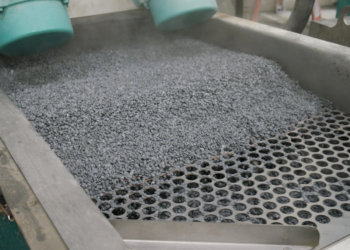
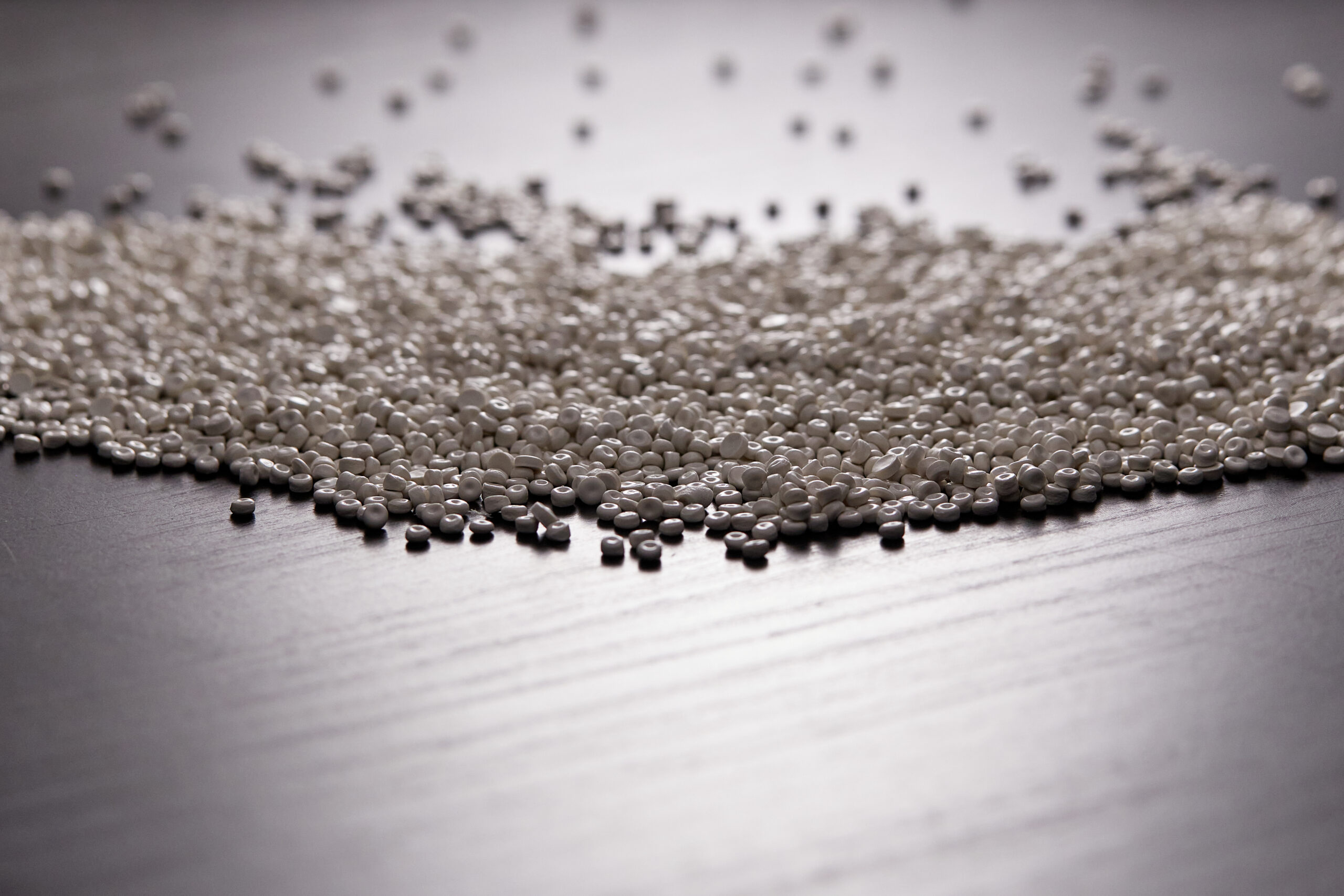
The new recycled linear low-density PE (LLDPE) grades were developed for such applications as can liners, carry-out bags, overwrap, shrink film and heavy-duty sacks. One of the resins, rPE-IN4, is made using a mixed retail film feedstock, resulting in a light gray pellet. The other, rPE-IN3, uses stretch film feedstock to produce a nearly clear pellet.
A common customer concern over incorporating recycled resin into plastic film is maintaining consistent quality amid variable inputs. The new resins have been exhibiting consistent performance, which Schrob said differentiates Nova’s product from competitors. “We’re providing the same kind of diligence that we would do to our virgin business, and I think customers see that as well.”
Until the resins launched this week, the two grades were marked as “X” or “experimental,” as Nova worked to ensure its process could deliver the consistent quality end users require. “As we sample customers and ramp up customers, they’re more than happy to take material that has that nomenclature on it, but after running for a long period of time, we’ve got very good data to suggest that we can continually make this product the way we designed it,” Schrob said.
The company previously launched a white recycled LLDPE resin for various film applications including protective packaging and carry-out bags, and a recycled HDPE resin for both food and non-food-contact applications.
Another issue specific to recycled plastic film is the tiny bubbles called gels, which cause both cosmetic and performance concerns. Nova’s converting process is designed to minimize the contaminants that cause gels, typically caused by residual plastics or paper fiber from labels on the feedstock film.
“The process we’ve designed is really there to eliminate or remove as much of that risk in terms of gel as we can, both on the fiber side and on the plastic material side.” The plant also has a gel camera in the lab that samples film every three minutes to measure the amount and size of gels. “So we have a really good understanding of our gel performance, and that also allows us to continually tweak our process to improve the gel performance.”
Looking ahead, Nova plans to launch food-grade resins later this year. The company received a no-objection letter (NOL or LNO) from the US FDA in 2024 for two grades: one is only for use conditions E-G, which cover some room temperature, refrigerated and frozen applications, and the other is a broader use in B-H, which is similar to applications for virgin resin, Schrob said. The latter covers varying conditions, from boiling water sterilization to frozen or refrigerated storage, including foods intended to be reheated in the same container.
The final step before marketing food-grade resin is the challenge test, in which feedstock material is soaked in a cocktail of chemicals, run through the processing system, then tested to see how much of the original cocktail remains at the end of the process. In the next few weeks, Nova will send material to the third-party lab Intertek, which Schrob called “the crown jewel” of materials testing.
Intertek will then determine whether the remaining contaminants meet established standards for food-contact resin.
Assuming the testing goes smoothly, as is expected, Nova plans to launch the narrower-spec resin at the end of the second quarter or early third quarter. For the broader-spec resin, the testing is more rigorous and takes longer, so plans are for the end of the third quarter or early fourth quarter, Schrob said.