



Editor’s note: Electronics recycling will be featured in sessions at the 2026 E-Scrap: The Longevity Conference in New Orleans October 26-28.
Your monthly guide to understanding the recycling system — no jargon, no guilt, just clear answers to the questions everyone has but rarely asks. From how materials markets work to what “wishful recycling” actually costs, Sorted makes the industry make sense.
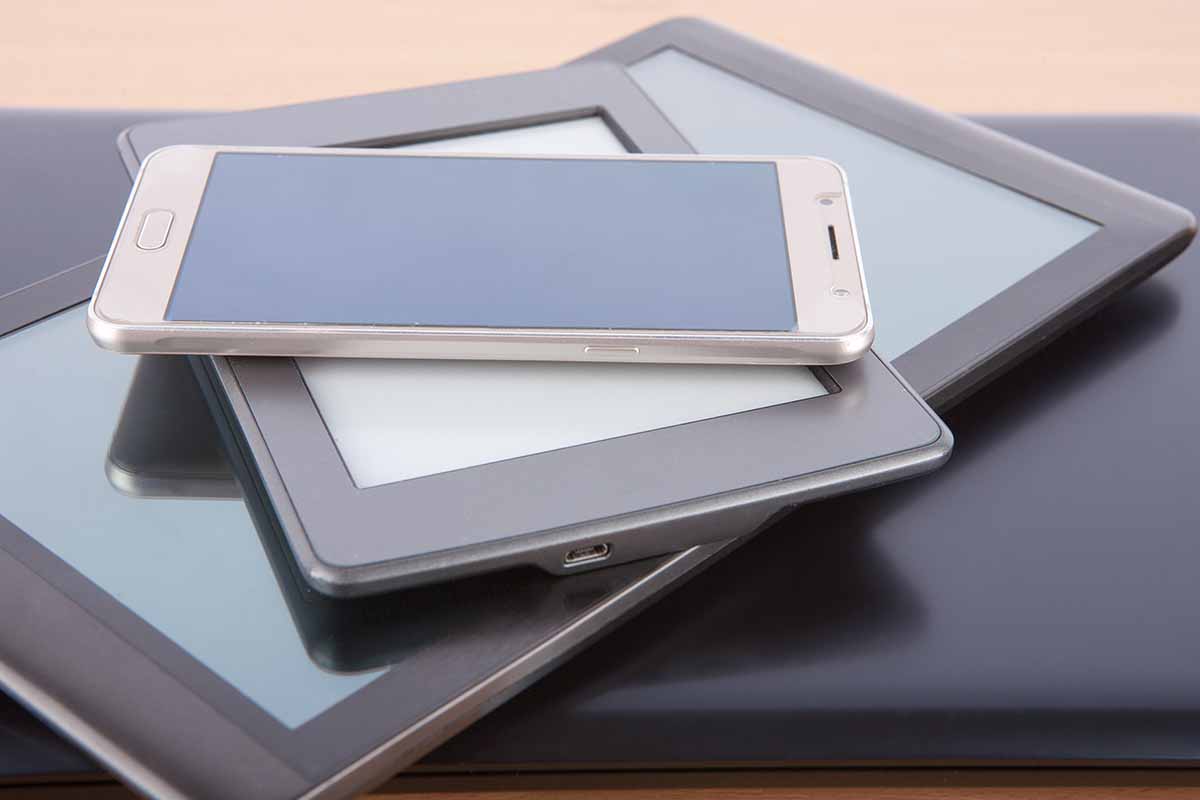
Everyone has a pile of used electronics sitting somewhere. Perhaps you keep yours in the kitchen junk drawer, or under your nightstand. Or maybe there’s a weathered box in the garage with a heavily faded “To donate” written on the side.
My used devices stayed in the basement, where I could conveniently keep them out of sight and not have to worry about their fate — at least, without throwing them out.
Until two weeks ago. A flood forced the issue to the top of mind, along with concepts like, “How can I get the rug up from underneath the exercise bike to wash it?” and, “Just how many cardboard boxes DID I keep down here?”
Like most people, I admittedly would have let the crate sit for a few more years until I got sick of it. I’d like to think I’d have at least recycled them, but a lot of people don’t know how to do so (or don’t want to put in the extra effort required) and too many of these device types end up in the trash.
The idea of getting used devices back into the supply chain was one of the main themes of the Mobile Disrupt conference earlier this month in Miami. Critical mineral shortages are driving up demand — and cost — for many of the elements that go into mobile devices, putting more pressure on players across the electronics industry.
Potential relief to that issue is sitting in crates like mine. Bob Lafon, president of Lafon & Associates consulting firm and co-founder of Mobile Disrupt, estimates there are 5 billion mobile devices in enterprise organizations alone, neither getting used nor harvested for minerals/refurbished; SellCell estimates nearly 90% of Americans have old electronics gathering dust at home.
Corporations, like people, don’t often know what to do with devices. They also have concerns about the data inside the devices, unaware or distrusting of programs like NAID AAA Certification that verify data is securely deleted.
“They think letting devices sit is a better solution from a data protection perspective,” he said.
Turning this trend around is among the reasons Lafon founded the Global Mobile Association (GMA) earlier this year. The group’s goal is to educate and fill gaps left by traditional organizations in the used mobile device world.
Getting these devices back into the supply stream requires education on a couple fronts, Lafon said. Urging manufacturers to change their behaviors and educate their customers may free up more devices. So could government intervention; the GMA will take part in lobbying this summer in Washington, DC, but Lafon cautioned that too much reach from legislators could unnecessarily complicate the matter.
Rather, informal policy combined with pressure and practice would more ideally shape future behaviors, he said. David Arredondo, CEO of Florida-based refurbisher Stone Group USA, likened the used device marketplace to what the used car marketplace was like decades ago. Buyers of used cars became accustomed to purchasing vehicles through time and education, he said, learning over the years what to expect and the condition of the vehicles (and accompanying warranties).
Such conditions exist in the used device marketplace, at least in the organized portion of it in which items are inspected and refurbished. But that marketplace is still dwarfed by its unorganized counterpart; twice as many used devices are sold in informal, as-is transactions in which buyers have no real guarantee what they’re getting, according to Simon Bryant, vice president of research at consultancy CCS Insight.
So bolstering the organized secondhand marketplace is a good way to build trust among buyers, reassuring them that “preowned” need not be a negative modifier. Such devices are more affordable, after all, and Bryant said the satisfaction rating among preowned buyers is actually higher than new buyers due to the additional research many of those buyers put into the process.
Boosting that marketplace would give buyers confidence, driving up demand for refurbished devices. But how do you get more devices into that marketplace?
That’s where pressure and practice re-enter the equation, Lafon said. Getting the point across to corporations that reuse is a viable option is easier said than done, but he said starting from there could create a cascade that results in devices getting out of junk drawers — and reused specifically, as shredding devices during recycling eliminates the ability to recover the minerals.
“Organizations don’t take a look at reuse,” he said. “We have critical mineral and memory shortages. Reuse would solve some of these problems.”
On the individual level, the process isn’t as laborious as some people might think. A simple online search yields several places to drop devices off for reuse; many municipalities and local businesses will accept items.
That’s where, amid the rushed cleanup of my basement flood, my electronics ended up. It represented a more responsible solution than adding them to the stacks of saturated cardboard and dissolved papers I had to dispose of.
To be honest, I still had the thought of just throwing these items out, giving myself one less chore in the cleanup process. But after it was over, I was only out a few minutes and a couple miles of wear and tear on the car tires. And I had more space along with a clearer conscience.
That, Lafon hopes, is what hoarders everywhere will strive for.
“We can’t be lazy about this,” he said. “It could be shoes, shirts, electronics. Keeping items out of landfills is the best option.”