Resource Recycling
  • The Latest
  • Analysis
    • All
    • Certification Scorecard
    • Industry Announcements
    • Opinion
    From claims to custody: PCR procurement grows up

    From claims to custody: PCR procurement grows up

    What the NAND flash crunch means for remarketing, refurbishment and residual values

    Telamon acquires ITAD consultancy Retire-IT

    Certification Scorecard — Week of July 6, 2026

    Tech giant pens detailed ‘plastic-free packaging’ guide

    What Google’s latest report means for ITAD

    Unpacking the Starbucks cup data

    Unpacking the Starbucks cup data

    Amazon cutting out more flexible packaging

    Amazon’s AWS hardware reuse is measured

  • Conferences
    • Resource Recycling Conference
    • Plastics Recycling Conference
    • E-Scrap: The Longevity Conference
    • Textiles Recovery Summit
  • Publications
    • E-Scrap News
    • Plastics Recycling Update
    • Policy Now
    • Resource Recycling
    • Other Topics
      • All Topics
      • Brand Owners
      • Critical Minerals
      • Glass
      • Grant Watch / RFPs
      • Markets
      • Organics
      • Packaging
      • Research
      • Technology
      • Textiles
Subscribe
No Result
View All Result
Resource Recycling
  • The Latest
  • Analysis
    • All
    • Certification Scorecard
    • Industry Announcements
    • Opinion
    From claims to custody: PCR procurement grows up

    From claims to custody: PCR procurement grows up

    What the NAND flash crunch means for remarketing, refurbishment and residual values

    Telamon acquires ITAD consultancy Retire-IT

    Certification Scorecard — Week of July 6, 2026

    Tech giant pens detailed ‘plastic-free packaging’ guide

    What Google’s latest report means for ITAD

    Unpacking the Starbucks cup data

    Unpacking the Starbucks cup data

    Amazon cutting out more flexible packaging

    Amazon’s AWS hardware reuse is measured

  • Conferences
    • Resource Recycling Conference
    • Plastics Recycling Conference
    • E-Scrap: The Longevity Conference
    • Textiles Recovery Summit
  • Publications
    • E-Scrap News
    • Plastics Recycling Update
    • Policy Now
    • Resource Recycling
    • Other Topics
      • All Topics
      • Brand Owners
      • Critical Minerals
      • Glass
      • Grant Watch / RFPs
      • Markets
      • Organics
      • Packaging
      • Research
      • Technology
      • Textiles
Subscribe
No Result
View All Result
Resource Recycling
No Result
View All Result
Home E-Scrap

AI can boost strength of secondhand device market

byPaul Lane
July 10, 2026
in E-Scrap
Auto Draft

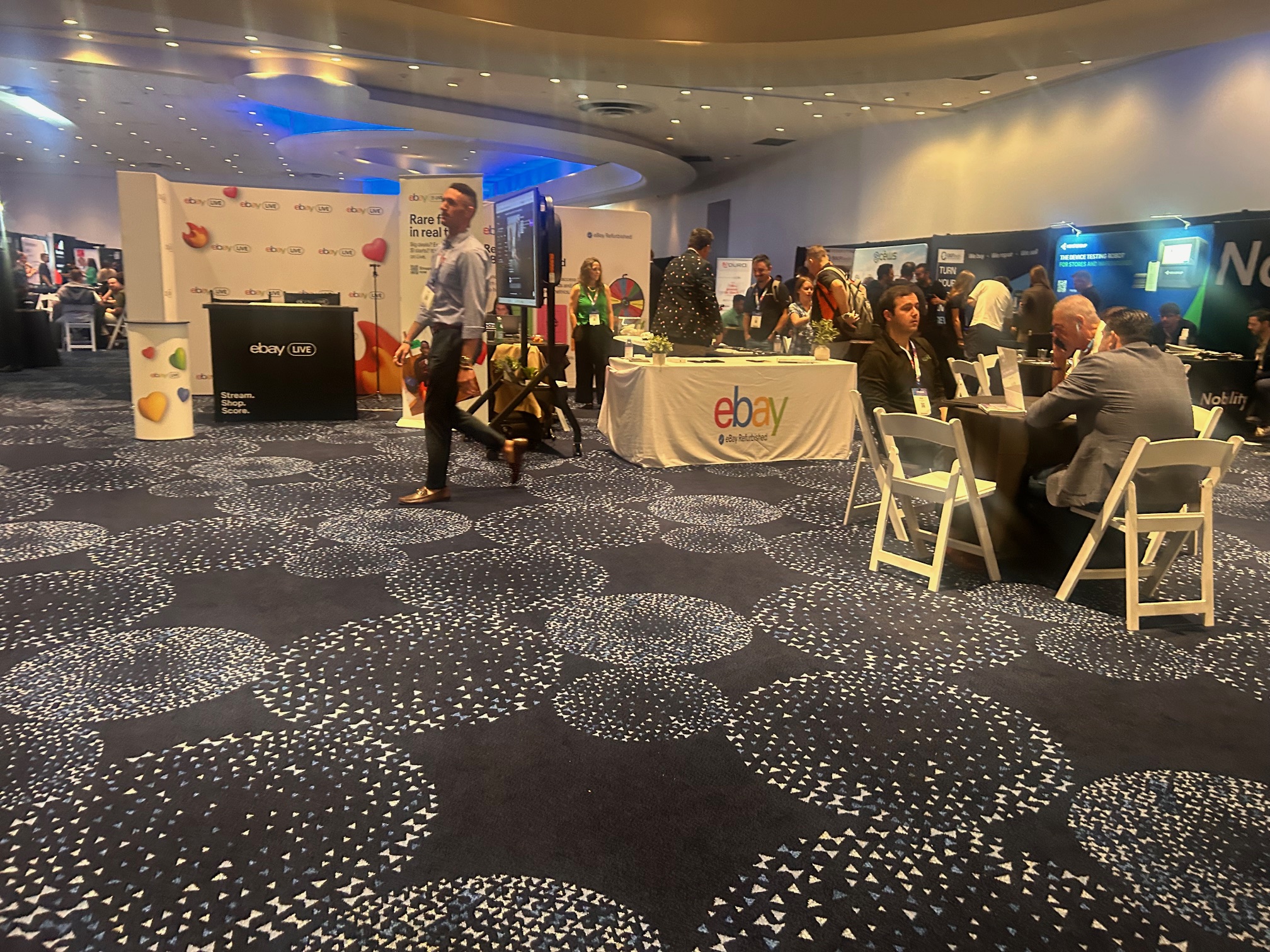
More than 1,000 attended the fifth annual Mobile Disrupt conference July 7-8 in Miami. | Paul Lane

Several speakers at the fifth annual Mobile Disrupt conference in Miami this week noted how much the mobile device landscape has already changed since the event started.

Numerous industry experts told the thousand-plus attendees that some of the ideas introduced during the inaugural expo have already gone the way of the Blackberry. They’re still around to discuss it, they said, because they were able to incorporate AI into their operations, change how critical minerals are recovered, and otherwise adapt to maximize output and revenue.

There’s always been money available for players in the used-device market, they said, but without reconsidering how that profit is made, the money will eventually dry up. Regulations around device history, increased focus on recovering the minerals in devices and more advanced data issues mean companies have to constantly look at ways to advance their methods.

“The consumer is getting so educated — not only the retailers, the insurance companies, the carriers, but also the end consumers,” said David Arredondo, CEO of Stone Group USA, a Florida-based phone repair and refurbishment company. 

“What got you here is not what’s going to get you the rest of the way. The industry is evolving,” said Bob Lafon, president of Lafon & Associates consulting firm and co-founder of Mobile Disrupt. “If you’re not willing to change with it, you’re going to go away.”

On a smaller scale, AI can enhance many individual business functions. Arredondo said his company created a nine-person AI department and uses it for inventory management, shipping and similar functions, completing them more quickly and accurately. 

Vitally, that includes used-device assessment, which many leaders agree remains too haphazard of a process. One company’s “A” or “excellent” grade could, using the exact same parameters, be another company’s “B” or “very good” grade. That almost by definition creates confusion and fuels distrust among customers.

Rectifying this could, according to Josh Beasley, CEO of Florida-based ITAD and refurbishment company Early Upgrade, create more value before devices even hit the market.

“Sometimes you don’t know what you have until the product is already in the facility. From a value chain standpoint, that’s too late,” said Beasley, who noted any initial investment companies make in bolstering their testing capabilities pays off later. “If you can spend 20 cents to make sure a product is how it’s supposed to be, you can prevent a $14 return cost.”

Chris Cornell, senior manager of strategy and operations at eBay, said items that aren’t as described create undue supply chain noise and deter repeat buyers. Using AI-assisted grading diagnostics creates consistency that keeps buyers coming back, he said.

“The buyer won’t be sure about buying refurbished again” with grading inconsistency, he said. “There’s a lot of value already in the supply chain that’s being lost, when you have to sell items at a lower grade. There’s value right there at your fingertips by improving grading consistency.”

AI can also help gather information and assess situations faster than any person could, said Kevin Dillon, co-founder and CMO/CSO of the California-based ITAD company Electronics Recycling International. That ultimately helps turn items around faster, preventing depreciation, and gets more devices out of the waste stream and back into reuse.

“From a data analytics standpoint, it’s priceless,” he said. “It’s allowing us to be fully integrated with clients. It makes communication of data for our front-end consumers more seamless.” 

Technology can also help re-engage with customers that got away, Lafon said. As one example, he said AI can be taught to perform follow-up calls with prospects who chose a rival company, gaining insight on what competitors are doing differently. 

“If you’re not taking advantage of those efficiencies, shame on you,” he said. 

From a broader point of view, AI should be treated more as a layer of your business, according to Jon Newman, CEO of PrologMoblie, which provides analytic tools for second-hand device companies. A more holistic incorporation of the technology will mitigate seismic shifts when the marketplace changes, he said. 

“It is touching everything,” he said. “If you feel like you’re not keeping up, there’s a reason. It’s because the ground is moving right beneath us.”

To keep up, Lafon suggests using AI to learn how to use AI. He’s had clients who, after feeding AI information about the company, its mission and other data points, got detailed instructions on how the platform could fill gaps and improve efficiencies.

That can include repositioning people within the company to do what they do most effectively, said Nik Raman, CEO of PhoneXHoldings, a SaaS provider for secondhand device companies.

“Can we enable the human to do exactly what they need to do to make more money?” he said. “AI is a force multiplier.”

Exponential multiplication will continue across the industry, said Jerry Abramov, founder and CEO of COS Phones, a used device redistribution company. This year alone, he’s seen technology reduce energy use and labor cost at his company, improve inventory systems and more efficiently use the software that’s already in place.

So learning where the curve is going and staying ahead of it is essential, he said. 

“What we learned 20 years ago is history,” he said. “What we’re going to learn today with AI will innovate in the next few years. You have to start feeling safe using AI in your industry, in your company.”
Tags: Conferences & EventsElectronicsRepair & Reuse
TweetShare
Paul Lane

Paul Lane

Paul Lane is an award-winning journalist who joined Resource Recycling in June 2026 after working for several years in corporate communications and at various local news outlets. He can be reached at paul.lane@resource-recycling.com.

Related Posts

Building trust, infrastructure key to survival in secondhand device market

Building trust, infrastructure key to survival in secondhand device market

byPaul Lane
July 9, 2026

Price, trust and supply issues will create the chasm that separates the next wave of players in the second-hand mobile...

What the NAND flash crunch means for remarketing, refurbishment and residual values

Telamon acquires ITAD consultancy Retire-IT

byDavid Daoud
July 9, 2026

Telamon will be retaining Retire-IT founder Kyle Marks, who built that business over 21 years.

Tech giant pens detailed ‘plastic-free packaging’ guide

What Google’s latest report means for ITAD

byDavid Daoud
July 8, 2026

The centerpiece is Google's Reverse Supply Chain program, which the company says harvested more than 7.5 million components from decommissioned...

Auto Draft

Digital product passports offer gateway into secondary market

byPaul Lane
July 7, 2026

Industry leaders say buyers and sellers of used mobile devices would benefit from standardized rules for how to treat second-hand...

Amazon cutting out more flexible packaging

Amazon’s AWS hardware reuse is measured

byDavid Daoud
July 7, 2026

The numbers are significant, but retail electronics are still missing from the ledger.

Metallium makes progress in advanced metal recovery tech

byPaul Lane
June 24, 2026

The company is working to make its electrical pulse-based technology commercially viable.

Load More

More Posts

Oregon’s Recycling Modernization Act faces injunction

Oregon’s EPR program posts first-year results

July 6, 2026
Two recycled-content bills gain approval in California

California agriculture seeks SB 54 repeal

July 7, 2026
Unpacking the Starbucks cup data

Unpacking the Starbucks cup data

July 8, 2026
In Our Opinion: Coalitions: The EPR Differentiator

Inside NAW’s constitutional case against packaging EPR

July 6, 2026
Tech giant pens detailed ‘plastic-free packaging’ guide

What Google’s latest report means for ITAD

July 8, 2026
EPR fees are a market signal. Here’s what they’re telling you.

Building the infrastructure behind EPR

July 6, 2026
SB 54 draft rules generate debate on rates, review

California increases PET market payments

July 7, 2026
MP Materials breaks ground on rare earth magnet campus in North Texas

ERI confirms ITAD shift toward minerals

July 3, 2026
ITAD firm wins spot for NASA purchasing

ITAD firm wins spot for NASA purchasing

July 6, 2026
Auto Draft

Digital product passports offer gateway into secondary market

July 7, 2026
Load More

About & Publications

About Us

Staff

Archive

Magazine

Work With Us

Advertise
Jobs
Contact
Terms and Privacy

Newsletter

Get the latest recycling news and analysis delivered to your inbox every week. Stay ahead on industry trends, policy updates, and insights from programs, processors, and innovators.

Subscribe

Welcome Back!

Login to your account below

Forgotten Password?

Retrieve your password

Please enter your username or email address to reset your password.

Log In

Add New Playlist

No Result
View All Result
  • The Latest
  • Analysis
  • Recycling
  • E-Scrap
  • Plastics
  • Policy Now
  • Conferences
    • E-Scrap Conference
    • Plastics Recycling Conference
    • Resource Recycling Conference
    • Textiles Recovery Summit
  • Magazine
  • About Us
  • Advertise
  • Archive
  • Jobs
  • Staff
Subscribe
This website uses cookies. By continuing to use this website you are giving consent to cookies being used. Visit our Privacy and Cookie Policy.