






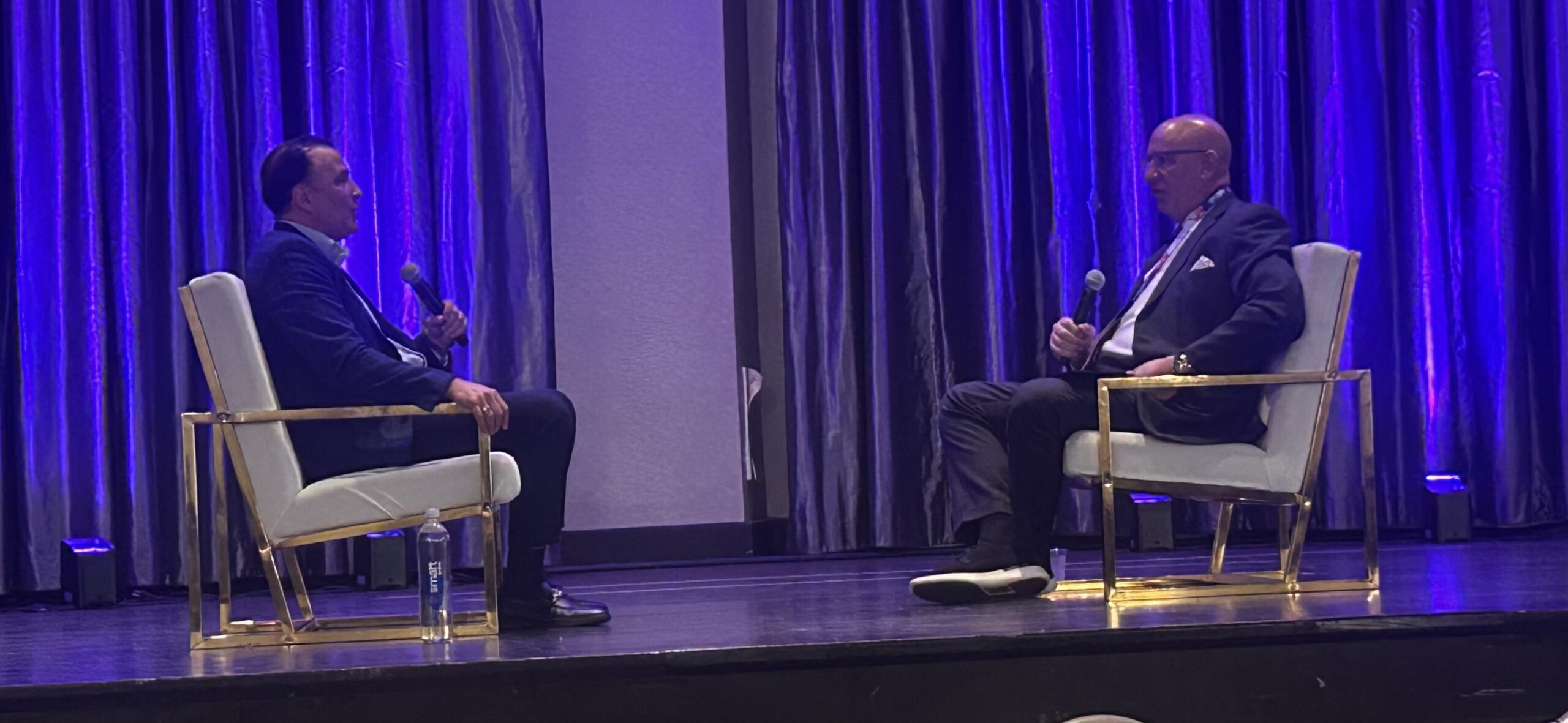
Even in a sector like mobile technology that sees continual advancement, price and demand concerns have created more change than many stakeholders are used to. Several speakers during day two of the Mobile Disrupt conference in Miami said a shifting environment has created a lot of opportunities for players in the used device marketplace who can adapt and hazards for those who can’t.
Used smartphones have, in some cases, climbed in price by nearly 25% since spring; those increases have hit other products across the electronics spectrum, as well. Among the drivers are shortages of the minerals needed to make memory components for devices, as well as inflation.
But at the same time, many Americans haven’t seriously considered a used product, even those that are refurbished and warrantied.
“It’s taken 25 years to get to a point where 33% of Americans have used at least one used cell phone,” said Bob Lafon, president of Lafon & Associates consulting firm and co-founder of Mobile Disrupt. “But we can’t wait another 25 years to get another 33%.”
Companies that can increase consumer confidence can bolster second-hand device sales in general while boosting their sales, he said. That begins with leaders aligning their companies with trusted partners who can consistently deliver quality refurbishments, leaving little doubt as to the quality of products touching consumers’ hands.
“The market now is not only price driven. It’s a quality-driven market,” said David Arredondo, CEO of Stone Group USA, a Florida-based phone repair and refurbishment company. “Consistency is the biggest challenge to companies buying refurbished products. If they don’t have a consistent supply, and they have to switch vendors, the quality can change between vendors.”
Regulation — not laws, but guideposts that could apply pressure to companies — could help with that, Lafon said. He’s planning a trip to Washington, DC, later this summer to push for regulation with government leaders.
That could help nudge manufacturers toward educating their buyers on the used device marketplace, which Arredondo compared to the earlier days of the used-car marketplace.
“Thirty years ago, buying used cars was kind of embarrassing. You had to go to a tiny corner lot tucked away,” he said. “When the brands got behind certified preowned cars, people knew what they were getting. OEMs need to make sure the public understands it’s OK to buy used devices.”
Lafon emphasized that it’s also OK to turn in used devices, which would reduce the mineral shortage. Many companies won’t trade in old devices because of privacy concerns; some estimates say 5 billion mobile devices are in storage across all businesses. And many businesses that do dispose of old devices opt for shredding, which Lafon said not only removes the minerals from circulation but ensures more discarded electronics end up in landfills.
“They think that’s the better solution from a data protection perspective,” he said. “They don’t understand how data is handled, how companies wipe devices clean.”
So companies that can navigate that educational space and bring more devices back into the circular economy of mobile devices are poised to profit. So are those that are ready to react to what current conditions expose.
“Supply is starting to level out and even shrink. Think of it like water. When the water level shrinks, the rocks start to show,” said Nic Raman, CEO of PhoneX Holdings, a North Carolina-based software provider for preowned device distributors. “The rocks are inefficiencies in how you do business. If you want to survive in that environment, you’re going to have to adapt and execute better.”
Bolstering excellence of execution is among the reasons Lafon launched the Global Mobile Association (GMA) earlier this year. That industry group can help members fill the gaps Lafon said exist among traditional industry players and educate everyone in the value chain.
Whether it’s pointing out to buyers that refurbished devices often provide more value than new ones because of their superior warranties, or urging refurbishers to invest in automation for long-term revenue that far exceeds initial investment, Lafon said GMA works to help everyone get the most from their part of the circle in the used-device circular economy.
That, Arredondo said, will only lift all of the boats in the rising tide of the modern device market.
“The companies that are only focusing on flipping inventories of used devices face extinction in three or four years. That’s just a fact,” he said. “You want to make sure the lifecycle of the device is extended. Refurbishment is part of that. It enables items to be used as long as possible. And it reduces the price. For buyers who can’t afford the latest product, you can then sell them an aspirational device at a lower price.”