
Resource Recycling
  • The Latest
  • Analysis
    • All
    • Certification Scorecard
    • Industry Announcements
    • Opinion
    Colorado regulators suggest mid-range EPR scenario

    Why collaboration on plastic waste still matters

    Battery processors lay out latest moves

    Battery recycler Ascend Elements files for bankruptcy

    EPR fees are a market signal. Here’s what they’re telling you.

    EPR fees are a market signal. Here’s what they’re telling you.

    Wolframite ore, the primary ore of tungsten from Altai, Russia

    Tungsten scrap export controls draw industry attention

    Certification Scorecard — Week of April 6, 2026

    Closed Loop Partners acquires Sutter Metals, connecting electronics disposition to metals recovery

    Certification Scorecard — Week of March 30, 2026

    Industry announcements for January 2026

    Industry announcements for April 2026

    Certification scorecard – Week of March 23, 2026

  • Conferences
  • Publications

    Other Topics

    Textiles
    Organics
    Packaging
    Glass
    Brand Owners

    Metals
    Technology
    Research
    Markets
    Grant Watch

    All Topics

Subscribe
No Result
View All Result
Resource Recycling
  • The Latest
  • Analysis
    • All
    • Certification Scorecard
    • Industry Announcements
    • Opinion
    Colorado regulators suggest mid-range EPR scenario

    Why collaboration on plastic waste still matters

    Battery processors lay out latest moves

    Battery recycler Ascend Elements files for bankruptcy

    EPR fees are a market signal. Here’s what they’re telling you.

    EPR fees are a market signal. Here’s what they’re telling you.

    Wolframite ore, the primary ore of tungsten from Altai, Russia

    Tungsten scrap export controls draw industry attention

    Certification Scorecard — Week of April 6, 2026

    Closed Loop Partners acquires Sutter Metals, connecting electronics disposition to metals recovery

    Certification Scorecard — Week of March 30, 2026

    Industry announcements for January 2026

    Industry announcements for April 2026

    Certification scorecard – Week of March 23, 2026

  • Conferences
  • Publications

    Other Topics

    Textiles
    Organics
    Packaging
    Glass
    Brand Owners

    Metals
    Technology
    Research
    Markets
    Grant Watch

    All Topics

Subscribe
No Result
View All Result
Resource Recycling
No Result
View All Result
Home E-Scrap

Seized e-waste in SE Asia: return to sender

byDavid Daoud
March 19, 2026
in E-Scrap
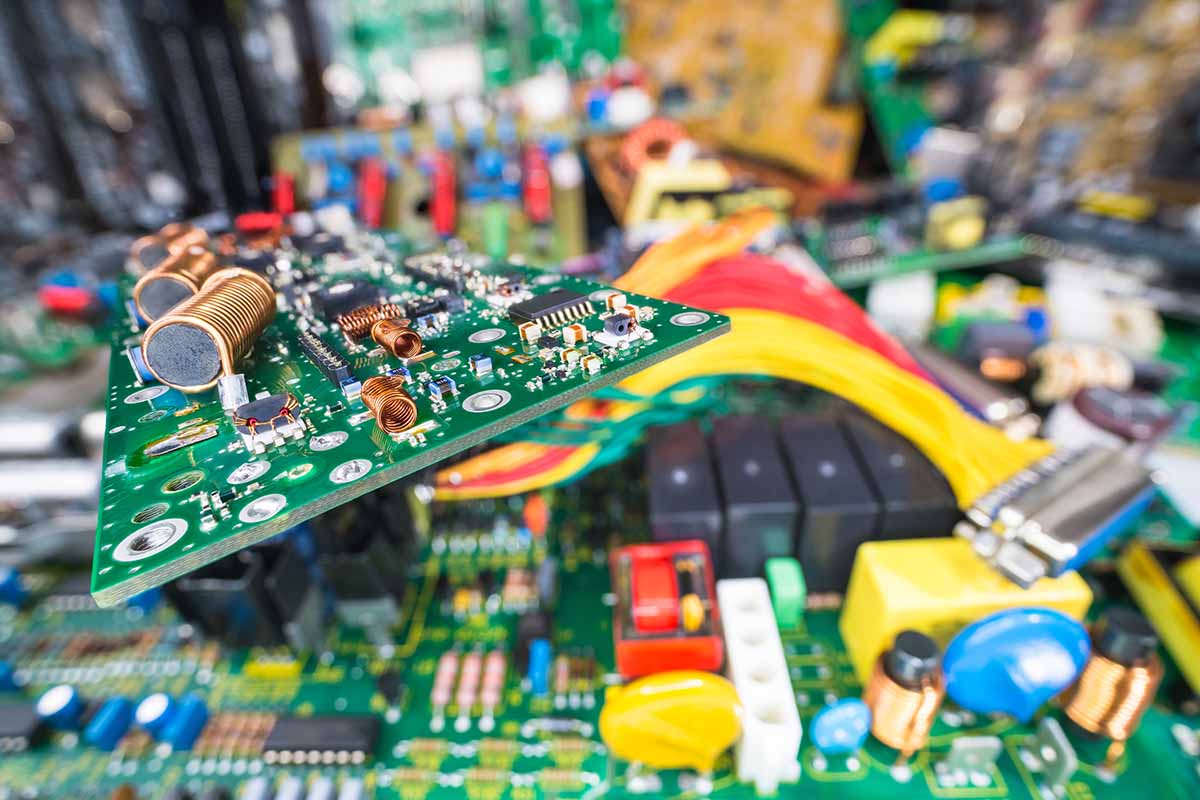
Electronics scrap gathered for recycling.

KPixMining / Shutterstock

Thailand’s recent seizure of suspected illegal e-waste at Laem Chabang Port is the latest in a wave of enforcement actions across Southeast Asia that is reshaping how the region handles foreign electronic scrap, and raising the prospect that exporters face a National Sword-style closure of informal import channels. 

With Malaysia running parallel crackdowns and corruption probes at Port Klang and Indonesia still working to re-export hundreds of containers of U.S.-origin e-waste from Batam, the Thai case is shaping up as a critical test of how the Basel Convention’s return-to-sender provisions will be applied in practice. Thai officials say a major portion of the load, declared as metal scrap but found to contain significant volumes of end-of-life electronics, will be sent back to the United States.   

Thai customs and environmental authorities have described three main groups of containers opened during an inspection operation presented to the public on March 10. The first group consists of 12 containers holding about 284 tons of material, declared on customs documents as “scrap iron” originating from Haiti. Officials say those containers actually contained electronic scrap, including circuit boards, computer components and other e-waste that falls under Thailand’s import prohibitions. Two additional groups included four containers declared as “metal scraps” and “mixed metal” from the United States, reportedly destined for Japan and Hong Kong, and two containers declared as “aluminum scraps” from the United States and the Netherlands.

Authorities have indicated that the March 10 enforcement action is part of a broader crackdown. The operation follows a separate seizure of 21 containers in February, 12 of which were found to contain electronic waste. On March 10, officials physically opened and examined 18 containers in the three groups described above. Thai media report that the Customs Department is preparing legal action under Section 244 of the Customs Act 2017, which carries penalties of up to 10 years’ imprisonment or a fine of up to 500,000 baht, and that authorities will also impose a settlement fine equivalent to 20 percent of the declared value.  

Thai officials say the 12 containers declared as scrap iron from Haiti, and found to contain about 284 tons of e-scrap, will be returned to the United States. Thai authorities have stated that, in their view, the electronic waste in those containers originated in the U.S., even though the documentation listed Haiti as the origin. The discovery was reportedly made following a tip-off from the Basel Action Network (BAN), an environmental watchdog that monitors trafficking in hazardous goods in violation of the Basel Convention. Thai authorities have linked their decision to repatriate the waste to the Basel Convention’s provisions on illegal traffic, which assign responsibility to the state of export or origin to take back waste shipments that are misdeclared or moved without proper consent.

Thailand is a Party to the Basel Convention, having ratified it in March 2023, and officials have framed this case as an example of applying Basel’s “return to state of export” mechanism to e-waste that reaches Thai ports in violation of national rules. The United States has not ratified Basel, but the convention’s procedures still allow a party such as Thailand to insist that a shipment it deems illegal be repatriated to the identified state of export. Thai authorities have not, at this stage, publicly named the U.S. exporter or broker they believe is behind the Haiti-declared containers.

The enforcement action builds on several years of regulatory tightening that have progressively closed Thailand’s doors to imported electronic waste. The government first moved in September 2020 to prohibit imports of e-waste across 428 categories, then expanded that list to 463 items in June 2025, adding more types of end-of-life electronics and aligning tariff codes with the 2022 Harmonized System. Against that backdrop, the Laem Chabang case signals that shipping non-repairable electronics into Thailand under commodity scrap labels carries a growing risk that containers will be opened, reclassified as illegal traffic and ordered back to the sender.

Thailand’s action at Laem Chabang is not happening in isolation. Malaysia is running its own crackdown at Port Klang, where authorities have seized hundreds of tons of misdeclared e-waste in recent weeks while anti-corruption investigators have arrested senior officials at the Department of Environment over alleged facilitation of the trade. Indonesia, meanwhile, is still working to re-export 914 containers of U.S.-origin e-waste from Batam. 

These developments increasingly resemble the early stages of what China’s National Sword policy did to mixed recyclables in 2018: a region-wide closure of informal import channels that forces exporters to find compliant domestic outlets or face escalating legal and financial consequences.  

Tags: Electronics
TweetShare
David Daoud

David Daoud

David Daoud is a contributor to Resource Recycling and E-Scrap News, covering IT asset disposition, electronics recycling, and circular IT governance. He is the founder of and current Principal Analyst at Compliance Standards LLC, where he conducts independent research and advisory work on ITAD markets, sustainability and ESG compliance, data security, and lifecycle risk management. Daoud has analyzed enterprise IT trends since the late 1990s and was among the first analysts to examine ITAD as a distinct market segment during his time at IDC. He advises operators, OEMs, and investment teams on regulatory, technology, and market developments affecting the electronics lifecycle.

Related Posts

Battery processors lay out latest moves

Battery recycler Ascend Elements files for bankruptcy

byDavid Daoud
April 13, 2026

The North American battery recycling sector built capacity for a wave of feedstock that has not arrived yet. The bankruptcies,...

Closed Loop Partners acquires Sutter Metals, connecting electronics disposition to metals recovery

byDavid Daoud
April 2, 2026

The acquisition completes a deliberate chain from enterprise device collection through disposition to raw material recovery, positioning PE capital to...

Policy update: EPR, right to repair and more

TERRA expands certified e-scrap network to Ecuador

byScott Snowden
April 1, 2026

TERRA has added Vertmonde in Quito to its certified electronics recycling network, giving the organization a first member in Ecuador...

URT builds alliance to remake electronics plastics at scale

Less premium smartphone inventory is reaching recyclers

byDavid Daoud
March 30, 2026

Assurant’s latest trade-in data shows resale value is being captured earlier in the device lifecycle.

#ESC2025 Speaker Spotlight: Matthew Young

From bootstrap to boom: EVR poised for growth after capital injection

byStefanie Valentic
March 26, 2026

Baltimore e-recycling company Electronics Value Recovery (EVR) is accelerating nationwide expansion into the ITAD and enterprise markets after securing a...

L-R: Koichiro Nishimura, CEO of ERI Japan and Manager, ITOCHU; John Shegerian, Chairman & CEO of ERI; and Daisuke Inoue, Deputy General Manager, ITOCHU, celebrate the announcement of ERI Japan.

ERI enters Japan through joint venture with Itochu

byDavid Daoud
March 24, 2026

The new joint venture marks the American company’s first overseas expansion.

Load More
Next Post
Traceability tools add recycled material trust

Industry coalition seeks injunction against California's SB 343

More Posts

EPR fees are a market signal. Here’s what they’re telling you.

EPR fees are a market signal. Here’s what they’re telling you.

April 10, 2026
End markets, policy key to RPET viability

End markets, policy key to RPET viability

April 8, 2026

Trafigura signs $1.1b deal for recycled battery metals

April 8, 2026
Wineries help create model for film recycling

Wineries help create model for film recycling

April 7, 2026
With RPET in crisis, focus turns to solutions

With RPET in crisis, focus turns to solutions

April 2, 2026
Wolframite ore, the primary ore of tungsten from Altai, Russia

Tungsten scrap export controls draw industry attention

April 9, 2026
Plastics Recyclers Have the Capacity to Recycle More. Now Let’s Use It.

Study finds most recycling occurs within 30 miles of access

April 8, 2026

WM opens new $60m MRF in Indy

April 10, 2026
Solarcycle starts up Georgia recycling plant

S3399 signals a shift in how states are tackling solar panel waste

April 6, 2026
Bill to update New Jersey e-scrap program heads to governor

New Jersey recyclers talk EPR

April 9, 2026
Load More

About & Publications

About Us

Staff

Archive

Magazine

Work With Us

Advertise
Jobs
Contact
Terms and Privacy

Newsletter

Get the latest recycling news and analysis delivered to your inbox every week. Stay ahead on industry trends, policy updates, and insights from programs, processors, and innovators.

Subscribe

Welcome Back!

Login to your account below

Forgotten Password?

Retrieve your password

Please enter your username or email address to reset your password.

Log In

Add New Playlist

No Result
View All Result
  • The Latest
  • Analysis
  • Recycling
  • E-Scrap
  • Plastics
  • Policy Now
  • Conferences
    • E-Scrap Conference
    • Plastics Recycling Conference
    • Resource Recycling Conference
    • Textiles Recovery Summit
  • Magazine
  • About Us
  • Advertise
  • Archive
  • Jobs
  • Staff
Subscribe
This website uses cookies. By continuing to use this website you are giving consent to cookies being used. Visit our Privacy and Cookie Policy.