Malaysia’s growing role as a hub for global e‑scrap is colliding with corruption probes, large container seizures and regional backlash.
The pressure is putting Southeast Asia’s informal import trade under its harshest spotlight since China’s 2018 “National Sword” policy, which effectively shut the door on most foreign waste and recyclables and forced exporters to find new destinations.
A string of big seizures at Port Klang
Over the past weeks, Malaysia’s Port Klang has seen multiple large-scale interceptions of falsely declared waste shipments, much of it e-waste that is outright banned under the country’s 1974 Environmental Quality Act.
In the most recent case, the Malaysian Border Control and Protection Agency (AKPS) inspected nine containers and found six carrying prohibited goods, including printed circuit boards, industrial fuses and copper materials classified as e-waste. Five containers of e-waste and one of copper cables totaled about 158 tons, all now held in a secure area while federal and Selangor environmental authorities decide on re-export procedures. AKPS officers say the consignments were brought in through classic misdeclaration, where containers described as aluminum flakes or other innocuous commodities in paperwork actually contained scrap electronics and related materials.
A separate AKPS operation days earlier netted over 125 tons of “falsely declared” waste at the same port, signaling that the 158 ton seizure is not an isolated case but part of a pattern. Officials say Malaysia was clearly the intended dumping ground and have pledged more intensive container checks at entry points, warning that e waste’s mix of mercury, lead and other hazardous compounds poses serious environmental and public health risks if handled outside regulated channels.
Corruption probe reaches top regulators
This enforcement development is now intertwined with a widening anti-corruption probe into how these shipments were able to flow for years. Malaysia’s Anti Corruption Commission (MACC) has arrested the director general and deputy director general of the Department of Environment (DOE) over alleged abuse of power and graft linked to e waste management. MACC sources say the case involves suspected corruption stretching back several years, including allegations of protection or facilitation for companies moving e waste into the country.
Earlier, six company owners were detained on suspicion of involvement in smuggling e-waste over roughly a five-year period, with MACC freezing 16 bank accounts holding about RM10.2 million and identifying at least seven implicated firms in Selangor, plus others in Negeri Sembilan.
In parallel, MACC chief Azam Baki has publicly complained that insiders within the Environment Department tried to sabotage one of MACC’s e-waste raids, underscoring concerns that parts of the regulatory apparatus may have been compromised. Azam is positioning the investigation as “holistic” and insists the agency will not compromise regardless of rank, signaling that more arrests could follow as the financial flows behind the import trade are unpacked.
Call for a moratorium on plastic and e-waste imports
As seizures mount and corruption allegations bite, MACC has moved beyond case-by-case enforcement and is now pushing for structural policy change.
Azam has proposed a six-month moratorium on imports of plastic waste and e-waste to give Malaysia space to evaluate the economic benefits versus environmental and enforcement costs of the trade. He argues that the country does not need large scale imports of such material and that multiple ministries and agencies, customs, the DOE, and the investment, trade and industry ministry, must align on controls. A special task force on plastic and e waste imports, chaired by MACC under a mandate from the chief secretary, reflects the government’s view that this is now a matter of national interest, not just a technical waste management question.
Environmental experts and NGOs, meanwhile, are using the Port Klang seizures and the MACC probe to reinforce a broader narrative: since China restricted waste imports, Malaysia has become one of the world’s top e-waste importers, and current laws and enforcement are insufficient to prevent the country from being used as a global dumping ground. Many are calling for tighter Basel aligned legislation, clearer bans, and better resourcing for enforcement rather than piecemeal crackdowns.
Batam’s backlog: re-exporting US e-waste
The same cross border dynamics are playing out next door in Indonesia, where Batam is struggling to physically move out a massive backlog of imported e-waste.
Batam Customs is in the process of re-exporting 914 containers of e-waste imported from the US, but officials deliberately have not set a hard deadline, emphasizing compliance with every procedural and regulatory requirement for shipping hazardous material back out of the country. Authorities say they are prioritizing inter agency coordination with the Environment Ministry and strict adherence to domestic and international hazardous waste rules, rather than speed.
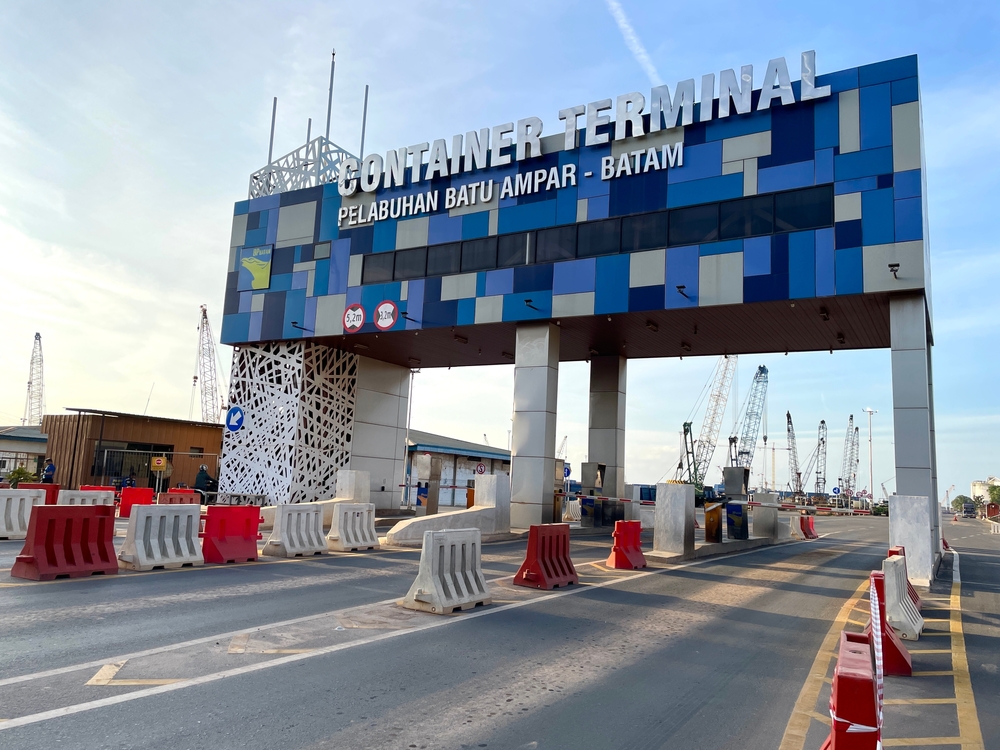
On the ground, however, the containers are clogging Batu Ampar Port, which can handle around 1,000 TEUs and has been sitting at roughly 914 TEUs occupied by these e-waste boxes for about six months. The import licenses for three companies, PT Batam Baterai Recycle Industries, PT Esun Internasional Utama and PT Logam Internasional Jaya, have been revoked, but the re-export backlog underscores how quickly port operations can be overwhelmed once authorities stop simply waving shipments through.
Australian e-waste tracked into Southeast Asia
Overlaying these national stories is new evidence that some of the material showing up in Malaysia and Indonesia may originate in Australia’s own “recycled” streams.
In an investigation led by Basel Action Network, GPS trackers hidden in Australian e-waste, such as monitors and printers, have been traced to destinations in Malaysia, Indonesia (including Batam) and the Philippines. Investigators say these routes likely violate the Basel Convention because the hazardous shipments lack appropriate permits and appear to be routed through opaque intermediaries rather than controlled, notified export channels.
The GPS data suggests a transparency gap in Australia’s domestic system: generators and consumers often believe their e waste is being handled domestically and responsibly, but a portion is instead leaking into poorly regulated export chains that converge on the same Southeast Asian ports now seizing or re-exporting containers.
Implications for the e-scrap industry
For the global e-scrap industry, these developments in Malaysia, Indonesia and Australia carry several immediate implications. The enforcement and anti-corruption push in Malaysia signals a higher risk environment for operators who have relied on misdeclared loads or weak oversight to move low value or hard to process fractions offshore. The combination of container seizures, senior regulator arrests and a proposed import moratorium raises the likelihood of shipment delays, costly re-exports and reputational risk for exporters and brokers across the supply chain.
Meanwhile, Batam’s clogged port is a clear illustration of what happens when authorities insist on full compliance for hazardous waste re-exports: even when regulators choose the most conservative legal path, port infrastructure and local logistics can be pushed to the breaking point. That dynamic creates pressure for clearer upstream controls and better capacity planning, since simply “sending it back” is not a frictionless option.
Then, the GPS tracker work out of Australia will increase scrutiny on EPR schemes, collection programs and contracted recyclers whose export practices may deviate from what is promised to regulators and the public. For compliant processors, this could create an opportunity to differentiate on traceability and certification, showing that material is processed domestically or exported only under documented, Basel compliant arrangements.
Finally, regional political sentiment appears to be hardening against the idea of Southeast Asia as an outlet for the world’s e waste, whether in Malaysia’s calls to stop being a “global e waste bin” or Indonesia’s termination of import licenses in Batam. Over time, that shift could accelerate domestic investment in processing capacity in exporting countries, drive more stringent design for recycling requirements, and push OEMs and brand owners to directly own more of the downstream fate of their products.
All in all, we estimate that the days of quietly routing problem material into weakly governed Southeast Asian channels are numbered; the combination of law enforcement, anti corruption probes and digital tracking is rapidly closing off those paths and forcing a rethink of what responsible, legally durable export really looks like.