





CompuCycle, a Houston-based ITAD provider focused on secure electronics recycling and data destruction, has partnered with Pearland Independent School District to launch the TechCycle program, which provides students with disabilities, including those on the autism spectrum, hands-on experience dismantling electronics while building pathways into the workforce.
The workforce training initiative serves students ages 18 to 22 enrolled in Pearland ISD’s transition program and was launched with $10,000 in funding from Texas A&M University.
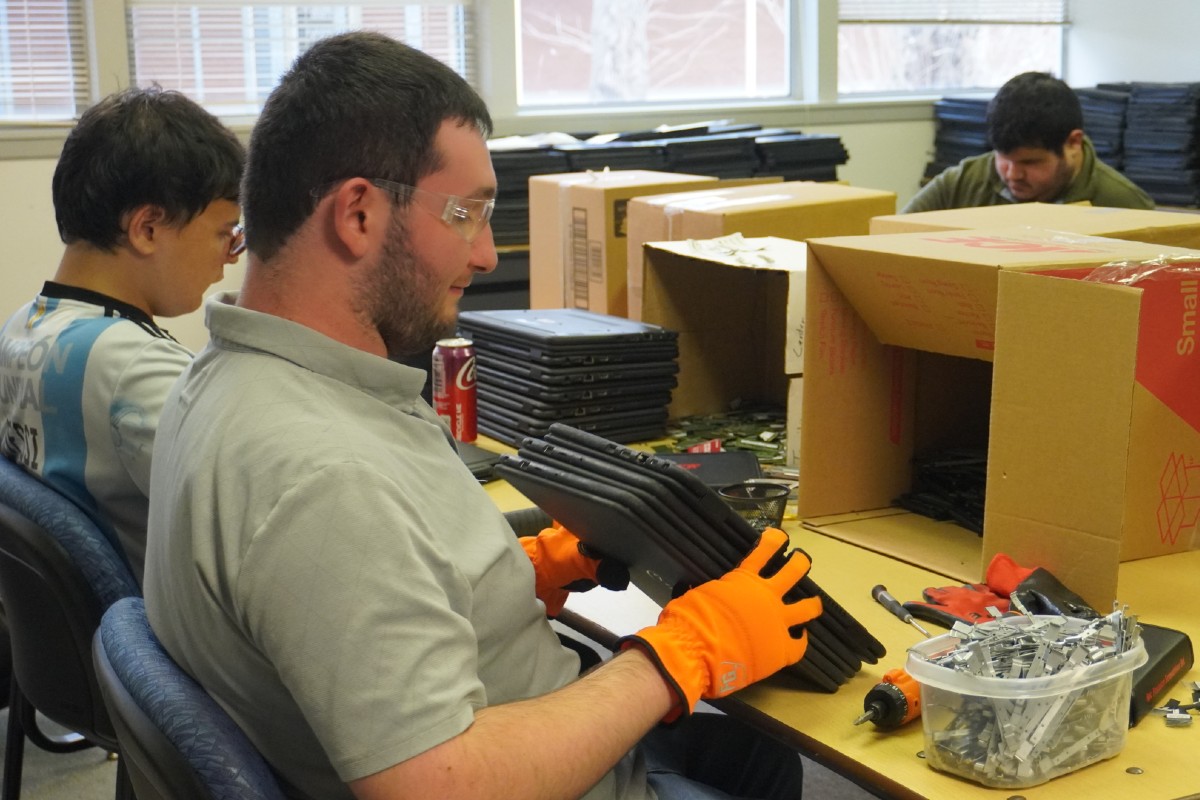
Participants are trained to safely disassemble computers and related equipment, identifying and separating components such as RAM, batteries, hard drives and Wi-Fi cards using processes aligned with industry standards.
“We are still early in the program, but the measurable gains we are already seeing are confidence, task completion, workplace readiness and technical familiarity with electronics,” said Kelly Hess, CEO of CompuCycle. “Students are learning how to identify these components, while also practicing safety, sorting, repetition and teamwork.”
Progress is being tracked through instructor feedback, skill checklists and attendance, with plans to connect students to internships and job placements through community partners as the program evolves.
During the current school year, students processed more than 7,000 computers, focusing primarily on desktops, laptops and smaller electronic components appropriate for instructional settings.
Hess noted the scope differs from CompuCycle’s commercial operations, which include enterprise IT asset disposition, data-bearing devices and high-volume corporate collections.
“TechCycle is designed as a controlled training stream, not a replacement for commercial production,” she said.
A notable aspect of the program is its workflow design, which has been intentionally structured to support students with varying learning needs. Tasks are broken into repeatable, clearly defined steps, allowing participants to build skills gradually while maintaining consistency and safety.
“The TechCycle workflow is built around structure, repetition, visual learning and clearly defined tasks,” Hess said. “Instead of overwhelming students with the entire recycling process, we break the work into manageable steps: identifying parts, safely removing components, sorting materials and following safety protocols.”
Those adjustments also support efficiency and improve productivity because students can build mastery through consistency and repetition.
The program is also designed to be financially self-supporting over time. Materials recovered through dismantling are directed into appropriate recycling and commodity streams, generating revenue that helps offset operational costs.
“The goal is for the program to create value from the materials students dismantle,” Hess said. “Revenue from recovered materials can then help support the program over time.”
The model is not intended to maximize profit but to demonstrate a circular approach that links training with sustainability.
“It is about creating a circular program where training, sustainability and recovered value work together,” Hess said.
The hope is that the TechCycle framework can be replicated in other districts, provided the right partnerships are in place. Schools would need access to a suitable training space, basic dismantling tools, supervision and a certified recycling partner to manage downstream processing. Hess noted that the model’s strength lies in combining workforce development with environmental goals.
“Our industry needs people who understand safety, material separation, data security and responsible processing,” Hess said. “TechCycle introduces students to real-world work in a way that is hands-on, meaningful, and accessible.”