












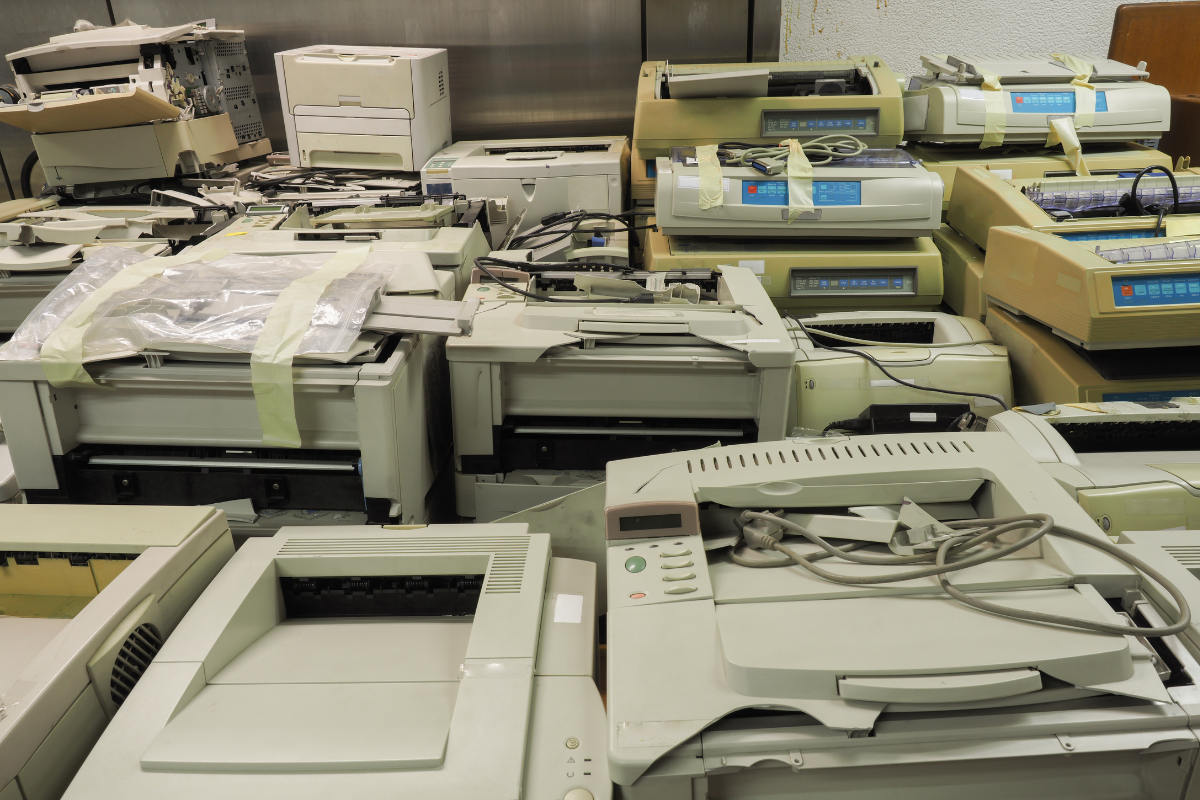
Shipments of both inkjet and laser units have declined steadily for years and every percentage point of contraction feeds directly into higher volumes of small office equipment entering the recycling stream.
While some people may think this is an isolated trend, a broad retirement cycle is accelerating across multiple categories and the next 18 to 24 months will push a significant wave of legacy devices into both municipal programs and commercial disposition channels.
A shift in enterprise environments
Looking at the enterprise sector, IT teams are rapidly moving away from on-site voice, storage and networking systems. The migration to cloud communications is eliminating entire rooms of PBX hardware, early Voice over IP phones, voicemail servers and analog switching gear that hold little or no resale value. This material is now showing up consistently in enterprise cleanouts linked to UCaaS migrations and post-pandemic office consolidations.
Infrastructure modernization is driving similar turnover elsewhere. Hardware load balancers, WAN-optimization appliances and mid-generation Fibre Channel arrays are being retired as organizations adopt SD-WAN and modern flash-based storage. Tape libraries and older LTO drives continue to exit service as companies transition to current-generation tape or cloud-backup environments. These categories represent high-volume, low-value streams with complex remediation and dismantling requirements, but modest reuse potential.
Office imaging equipment follows the same trend. IDC data shows a sustained multi-year decline in US printer and copier shipments. As fleets shrink and offices digitize workflows, scanners, fax units, desktop laser printers, MFPs and associated peripherals are entering recycling channels in increasing numbers.
A parallel consumer cycle
Consumer turnover is equally concentrated as CRT televisions continue to trickle into municipal collection events as the last remaining units are removed from garages and basements. DVD and Blu-ray player shipments have fallen by more than 80% from peak levels and many households are disposing of both devices and media. Legacy cable and satellite set-top boxes are being returned or discarded as pay-TV subscriptions decline nationally. This material shares the same characteristics: low reuse potential, limited resale and high plastic content.
Mobile devices also add volume with the retirement of 3G networks and the sunset of early LTE hardware that no longer receives security support, as millions of older smartphones fall below reuse thresholds each year. These devices contribute to an increasingly battery-heavy consumer stream, with all the handling requirements and downstream constraints that implies.
According to the EPA‘s most recent data set, the US generated roughly 2.7 million tons of consumer electronics waste and about 1.04 million tons were collected – a recovery rate near 38%. As device categories become obsolete and replacement cycles continue, the volume of small electronics entering municipal and retail take-back programs is expected to remain elevated.
Economic and processing implications
The material profile emerging from this retirement cycle is about high volume, low device-level value, high plastic concentration and variable remediation needs. For most categories in this wave – printers, analog phones, tape libraries, DVD players, set-top boxes, early networking gear – resale contribution is negligible. Margins depend on throughput efficiency, downstream reliability and the ability to separate mixed materials at scale.
This favors organizations with industrial shredding capability, automated separation systems and established outlets for plastics, low-grade circuit boards and metals. Facilities positioned to process large batches while maintaining compliance with CRT, battery, mercury-lamp and mixed-material regulations will capture most of the economic advantage.
Enterprise-focused ITAD firms also stand to benefit, not through remarketing, but through bundled service contracts. As companies replace voice systems, storage infrastructure and office equipment in the same project window, ITAD providers that offer combined site-clear services, on-site data sanitization and serialized reporting will see increased project volume. The value in these engagements is tied to logistics, labor, chain-of-custody compliance and integrated service delivery rather than resale outcomes.
Municipal recyclers and OEM-linked collection partners remain in a favorable position during this phase. Statewide or multiyear take-back programs provide predictable inflow of legacy categories – CRTs, set-top boxes, printers, small electronics – with compensation structures that reflect cost-plus or per-pound economics. These operators are shielded from the resale collapse affecting many of the retired device classes.
Specialty resale niches
Although most material in this cycle has limited value, a few narrow resale pockets remain. MiniDV and Hi8 camcorders continue to support niche demand tied to digitization services. Certain late-generation enterprise components maintain reuse value in industries with long hardware support lifecycles. Retro gaming and AV equipment also sustain a small but active collector market. These niches do not materially change overall stream economics, but do offer targeted opportunities for refurbishers working with specific partners.
Outlook and analysis
The next two years will bring a heavier mix of low-value office and consumer electronics into both municipal and commercial processing networks. This is the tail end of the pre-cloud, pre-mobile hardware era; printers still powered by mechanical drive trains, desk phones tethered to legacy PBXs and consumer devices designed for physical media rather than digital delivery. As these categories reach their natural end, recyclers and ITAD providers will see higher overall volume but limited resale contribution.
Operators with optimized throughput, reliable downstream markets and multi-category processing capability will be best positioned to navigate this phase. For the sector, the opportunity is not in recovering value from individual devices, but in managing the final wave of legacy electronics efficiently, safely and at scale