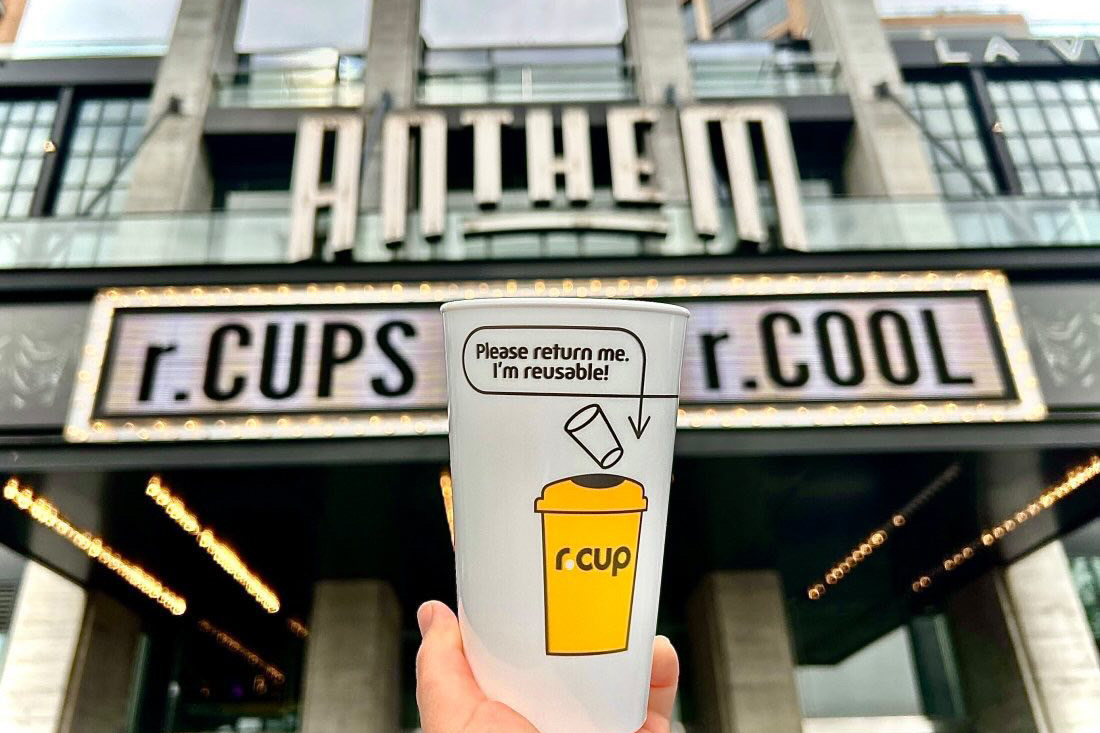
Reusable cup and foodware programs are expanding across US venues, arenas and festivals, but the systems driving them look little like their European counterparts, according to Michael Martin, CEO and founder of r.World.
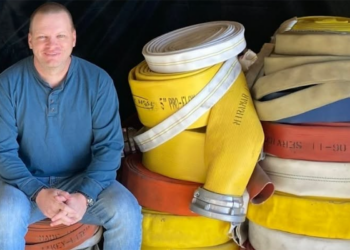
The company, which provides reusable cup, foodware and packaging systems for live events, was founded after Martin encountered reusable cup programs at U2 shows in Europe. The Minnesota-based company launched in 2017 as r.Cup, rebranding to r.World in 2023.
Tottenham Hotspur Stadium’s reusable cup program, which employs the kind of closed-loop system common across European venues, saves more than 1.25 million cups a year by washing and recirculating them rather than sending them to landfill after a single use. But Martin said that model broke down almost immediately when applied to US venues, geography and consumer behavior.
“What I brought back was not just the idea of a reusable cup,” Martin said. “It was the realization that America needed to move upstream from recycling and composting and begin building a true reuse economy.”
The global reusable packaging market was valued at $135.8 billion in 2024 and is projected to reach $190.1 billion by 2030, growing at a 5.9% CAGR, according to Grand View Research. North America holds the largest share of that market, and food and beverage is the top end-use segment.
The first pain point in Martin’s US rollout: deposits. In Europe, paying a small fee for a cup and getting it back on return is baked into the culture, a way of life. While r.World tried it, the results weren’t the same.
“When we tried that in the US, consumers just thought they had purchased the cup to keep,” Martin said.
Concessionaires hated the hassle of cash-handling. Large events saw bottlenecks at exit points as people lined up for refunds. In response, r.World scrapped the deposit model for most live events and rebuilt around design and behavior instead, a “utilitarian look” for cups and foodware, stripped of the souvenir appeal that makes people pocket a nice item on the way out.
The fix worked. Martin said r.World now regularly sees return rates above 90%, with some venues landing in the mid-to-high 90s.
And scalability matters: a single NFL game generates over 80,000 pounds of waste per stadium, totaling more than 44 million pounds across a season, and other estimates put a typical game’s waste at roughly 35 tons, a figure that can balloon by up to 50% for the Super Bowl, according to industry experts. Sporting events overall generate an estimated 39 million pounds of trash per year in the US, the volume r.World and competitors are trying to divert one cup at a time.
While deposits haven’t disappeared entirely, Martin said they still work on corporate campuses and university settings in closed, repeat-visitor environments where r.World hits 99% returns. But for stadiums, festivals and touring shows, the company leans on something closer to behavioral design than financial incentive.
“The goal isn’t to rely on incentives or penalties,” Martin said. “It’s to build a system where doing the right thing is easy, and people feel good about being part of it.”
Geography is the second speed bump. While Europe’s density supports centralized wash facilities and shorter transport runs, the US doesn’t offer that luxury. r.World’s answer is regional wash hubs built around metro density, and more venues and corporate partners in a given market translates to more wash volume and better logistics economics.
Venue type matters too. Stadiums and arenas were r.World’s starting point because they’re controlled: predictable foot traffic, trainable staff, guests who can’t leave with product in hand. Festivals and touring productions are harder with different sites, different crews and temporary infrastructure that has to be rebuilt and customized event to event. r.World now runs recurring programs at venues including Crypto.com Arena, the St. Paul Saints, Vans Warped Tour and Camp Flog Gnaw. Martin said return rates tend to climb over a season as fans and staff get more comfortable with the system.
What surprised him most wasn’t consumer resistance, but it was the absence of it.
“I’ve been more surprised by the optimism than the resistance,” Martin said. “In pretty much all cases, the hesitation is on the operational side, not the consumer side.”
Martin sees US reuse infrastructure following a similar arc to Europe’s shared, pooled systems across multiple brands and venues, but says the market has to build density and trust first through closed-loop, single-operator programs.
“Our goal isn’t to create isolated programs but to build the national reuse infrastructure,” Martin said, “and we’re doing it city by city.”
This story first appeared in the August 2026 issue of Resource Recycling Magazine.