
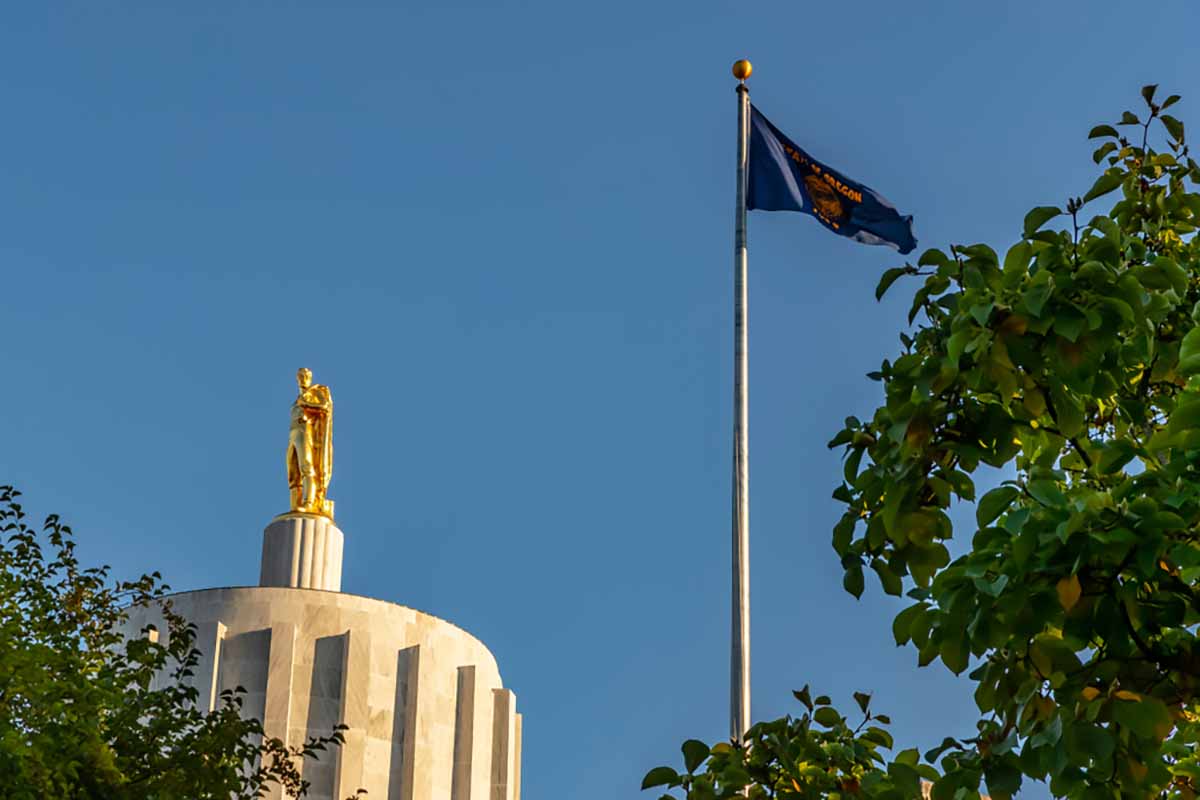
The National Association of Wholesaler-Distributors (NAW) is appealing the federal ruling that upheld Oregon’s packaging EPR law. The association is betting a higher court will read the Constitution differently than the judge who heard its case.
NAW filed a notice of appeal Sept. 24 with the US Court of Appeals for the Ninth Circuit. The appeal challenges US District Judge Michael H. Simon’s Aug. 27 decision in NAW v. Feldon.
That 71-page ruling found that Oregon’s Recycling Modernization Act, enacted as Senate Bill 582 in 2021, violates neither the dormant Commerce Clause nor the Due Process Clause. It also dissolved the preliminary injunction that had shielded NAW members from enforcement since February.
“The facts we established at trial haven’t changed, and they still show Oregon’s law is unconstitutional,” NAW President and CEO Eric Hoplin said in a statement. “The district court reached the wrong legal conclusions, and we’re asking the Ninth Circuit to correct them.”
The district court found few material facts in dispute. The case rides mostly on questions of law. The Ninth Circuit reviews those without deferring to the lower court.
Two arguments
The appeal focuses on two issues. Simon ruled against NAW on both.
The first is the dormant Commerce Clause. NAW argues the law disrupts national supply chains by charging fees to wholesaler-distributors that control neither the packaging nor where products end up.
It also points to Oregon DEQ’s expectation that producers would recover costs from out-of-state customers. Simon found NAW’s experts hadn’t quantified the law’s interstate effects specifically enough to show a “substantial or significant burden on interstate commerce.”
The second is due process. NAW argues Oregon improperly handed fee-setting power to Circular Action Alliance (CAA), a private producer responsibility organization. CAA keeps its fee methodology confidential and routes disputes to binding arbitration.
NAW cites CAA’s 2025 annual report, which shows the organization collected $145.5 million and spent $56.5 million.
Simon described that gap as reserve-building typical of a program in its second year, not a constitutional violation. He also held that producers aren’t compelled to join CAA, because they can form a competing PRO or use the law’s private-recycling exemption.
Karen Harned, NAW’s director of litigation and legal policy, disputed CAA’s transparency when she spoke with Resource Recycling in July.
“It is not transparent in how they got there, how those numbers were determined and what the methodology they used was. All of that is confidential to this day,” Harned said.
Brian Wild, NAW’s chief government relations officer, returned to margins.
“These laws leave distributors with three terrible options,” Wild said. “They can absorb fees they can’t afford on their already slim 3-5% margins, they can pass costs on to customers, or they can just stop selling into EPR states. Every one of those options raises costs for Americans.”
The NAW sued in July 2025. In February, Simon granted a narrow preliminary injunction for NAW members while dismissing most of the association’s other claims. Hoplin said then that members had been “dramatically impacted by the exorbitant fees imposed under the law by the Circular Action Alliance.”
In April, Simon limited that protection to companies that were NAW members as of Feb. 6.
With the injunction dissolved, Oregon can keep implementing the law while the appeal proceeds.
Ninth Circuit matters
A Ninth Circuit ruling would reach past Oregon, though likely not right away.
NAW is the sole business plaintiff in Nebraska v. Heller, a 17-state challenge to California’s SB 54 in the Eastern District of California. That court sits within the Ninth Circuit. A published appellate decision on the Commerce Clause and due process questions would bind it on those issues.
Civil appeals in the Ninth Circuit have historically taken well over a year from notice of appeal to decision, according to federal court caseload data. A hearing on the Heller plaintiffs’ preliminary injunction motion is set for January 2027. That means the California court could rule first, with only Simon’s opinion as persuasive guidance.
NAW’s Colorado suit targets the state’s Producer Responsibility Program for Statewide Recycling Act. That case sits in the Tenth Circuit.
Harned said in July there’s no version of the current model NAW could support.
“We think it’s unconstitutional, and there’s no middle ground here,” she said.
“It is not transparent in how they got there, how those numbers were determined and what the methodology they used was. All of that is confidential to this day,” Harned said.
Brian Wild, NAW’s chief government relations officer, returned to margins.
“These laws leave distributors with three terrible options,” Wild said. “They can absorb fees they can’t afford on their already slim 3–5% margins, they can pass costs on to customers, or they can just stop selling into EPR states. Every one of those options raises costs for Americans.”
The NAW sued in July 2025. In February, Simon granted a narrow preliminary injunction for NAW members while dismissing most of the association’s other claims. Hoplin said then that members had been “dramatically impacted by the exorbitant fees imposed under the law by the Circular Action Alliance.”
In April, Simon limited that protection to companies that were NAW members as of Feb. 6.
With the injunction dissolved, Oregon can keep implementing the law while the appeal proceeds.
Ninth Circuit matters
A Ninth Circuit ruling would reach past Oregon, though likely not right away.
NAW is the sole business plaintiff in Nebraska v. Heller, a 17-state challenge to California’s SB 54 in the Eastern District of California. That court sits within the Ninth Circuit. A published appellate decision on the Commerce Clause and due process questions would bind it on those issues.
Civil appeals in the Ninth Circuit have historically taken well over a year from notice of appeal to decision, according to federal court caseload data. A hearing on the Heller plaintiffs’ preliminary injunction motion is set for January 2027. That means the California court could rule first, with only Simon’s opinion as persuasive guidance.
NAW’s Colorado suit targets the state’s Producer Responsibility Program for Statewide Recycling Act. That case sits in the Tenth Circuit.
Harned said in July there’s no version of the current model NAW could support.
“We think it’s unconstitutional, and there’s no middle ground here,” she said.