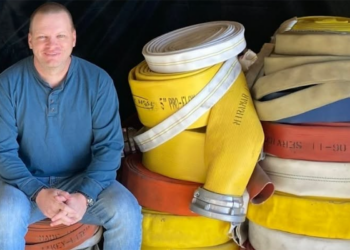






When something breaks, who decides what happens next — you, or the company that built it? On this episode of the Resource Recycling Podcast, Uriah Kiser talks with Matt Zieminski, Vice President of Partnerships at iFixit, about why that question now sits at the center of circular electronics, e-scrap, and right-to-repair policy.
Zieminski also serves on the board of the Repair Association, sits on the E-Scrap Steering Committee, and co-chairs the Service Parts and Warranty Committee for the Reverse Logistics Association. He has testified before the U.S. Copyright Office and multiple state legislatures, and co-presented with iFixit CEO Kyle Wiens at Teardown 2025 on “Repair is Hardware: Building a Future We Can Fix.” His argument is blunt: the owner, not the manufacturer, should decide whether to repair, refurbish, or replace.
That choice is constrained because chips and software now sit inside almost everything — phones, tractors, vacuums, even a $500 AI-enabled Dyson toothbrush. Manufacturers treat post-sale control as proprietary rights. Zieminski calls it a marketing strategy. Under current law, he says, they do not get to own the product after the sale. The practical result is thinner independent repair networks, long drives to authorized service, and devices held together with glue instead of screws.
Repairability, in his framing, is three things at once: can you open it, do you have documentation that works offline as well as on YouTube, and can you buy a replacement part that actually lasts? Independent repair generally does not void a manufacturer’s warranty under the Magnuson-Moss Warranty Act. Extended plans such as AppleCare are a separate contract.
The e-scrap industry feels this at the back end. Recyclers need clear battery identification and removal instructions so a single cell does not start a shredder fire. One-to-one OEM deals do not scale. When a manufacturer stops sharing with one plant, the next operator is left without the same information. Zieminski wants that data durable, industry-wide, and backed by law.
Right-to-repair bills have been introduced since 2014. Traction has grown in the last five or six years as affordability tightened and processors struggled to get into sealed devices. Europe’s point-of-purchase repairability indexes are a model U.S. advocates want copied. The simplest political lever he names is still a constituent phone call or a visit to the state capitol.
Zieminski is slated to be at E-Scrap: The Longevity Conference, October 26–28 in New Orleans. Kyle Wiens is up for Resource Recycling’s Electronic Circular Innovation Award.
Subscribe to The Resource Recycling Podcast and stay up-to-date on the latest recycling news, E-Scrap: The Longevity Conference updates and more on LinkedIn.
Transcript of episode 2: The Resource Recycling Podcast
Host: Uriah Kiser | Guest: Matt Zieminski
Uriah: When something breaks, who should decide what happens next? You, or the company that built it? On this week’s episode of the Resource Recycling Podcast, we’re going to be talking with Matt Zieminski. He’s the vice president of partnerships at iFixit, a board member of the Repair Association, and a member of the E-Scrap steering committee. He also co-chairs the Service Parts and Warranty Committee for the Reverse Logistics Association. He’s testified before the U.S. Copyright Office and multiple state legislatures on the right to repair, and he has co-presented with iFixit CEO Kyle Wiens at Teardown 2025 on “Repair is Hardware: Building a Future We Can Fix.”
The idea he brings to this episode: the owner, not the manufacturer, should decide whether to repair, refurbish, or replace. Matt, thanks for coming on the Resource Recycling Podcast. How are you today?
Matt: I’m great. Thanks for inviting me on. This is my first podcast I’ve done, so I’m really excited.
Uriah: Well, this is our second episode. So, your first, our second. That is so cool, man. I’m glad you’re doing this, and I appreciate the time you’re spending.
When we talked prior to coming on the podcast, I really connected with this, because at so many points in my life I have wondered, why is this such a mystery? If something breaks, whether it’s tech or mechanical. And I may not be the best when it comes to tech, or handy, or whatever. I didn’t take shop in high school, let’s just say that. You are really pushing for people to be able to repair their own devices as they work their farms, as they run their businesses. Why has repairability become such an important industry and policy issue for the circular economy?
Matt: I think it’s helpful to remember that all of the products that we use today, or most of them now, include some form of a computer chip, and that technology creates a lot of complications when it comes to ownership rights. Especially because manufacturers who sell us these products that have these computer chips claim that they include a lot of proprietary technology, and that that technology and those creations are theirs in perpetuity. And so manufacturers will restrict the access that a consumer may have to repair services, but under the guise of, “it’s a violation of their ownership rights.” The reality is that this is a marketing strategy that they’re using, and the law as it exists today doesn’t grant manufacturers control over property post-sale.
The critical thing is that this becomes a major issue when you try to sell that product. So maybe you use it for a year, or two years, or three years, or however long you as a consumer choose to use that product that you bought. But then when you try to sell it, it’s: who has the right to sell it, who has ownership over that product? Or, more central to what we’re working on, what is it that happens when you try to open it up and fix it? Because we know that everything eventually will break at some point, regardless of how durable it is. And so it’s really about what happens, who owns it in that process. And technology and computer chips in general are making this much more complicated than it ever has been before.
Uriah: You frame this around choice: the owner deciding to repair, refurbish, or replace. Why is that choice constrained? Why can’t people just go out and fix it on their own? What’s holding them back?
Matt: It can be a variety of things. The best analogy I have is, I used to live in a small town, Redding, California, about two and a half hours north of Sacramento. And when manufacturers were allowed to control the choice of repair business for a consumer, whether it was for a phone or even a car or tractor, the repair options are centrally located around the major metro areas. So Sacramento, California, the state capital, that’s going to have a lot of repair options, but my hometown of Redding, California, just is not. And so for me as a consumer, the problem just meant that I have to drive two-plus hours to get to the nearest service center.
So the choices aren’t really a choice anymore. When manufacturers own the repair pathways that might exist, your choices become really limited, and it doesn’t really become a choice at all. Your only option is to go to the manufacturer. And the problem is that this not only reduces consumer choice and works against this whole idea of how our economy is supposed to function with a competitive marketplace, but it’s also just practically hurting my local economy. My town doesn’t get individual, independent repair businesses. The number of things, the types of things that can be fixed, is really restricted by the manufacturer.
And when you’re in a situation like I was, where income is an issue as well, this becomes even more critical of an issue. I think for some people the decision to just replace it is an easy one. If it breaks, I’ll just go buy a new one, and that’s fine. But when you’re kind of struggling, living paycheck to paycheck or just above that, it’s a really bad decision to have to go buy a new one. That’s not even an option for them.
Uriah: Now, you’re going to be speaking at our E-Scrap, the Longevity Conference, October 26th through the 28th, and we’re all very excited to hear what you have to say about this and other topics, and to get to meet you in person, because you’re such a face in the industry. So we’re all very excited about that. Again, the conference is October 26th, 27th, and 28th. I’ll drop the information about that so you can get tickets and reserve your space at the conference and do all the things. I’ll drop the link in the description of this podcast.
I want to know what separates a genuinely repairable product from a disposable one. How do you tell the difference between the two?
Matt: Today, it’s glue, right? It’s how much adhesive is being used. 10, 15 years ago, so not that long ago, we used to have devices where you could obviously look at it and see screws, and that was very clearly an entry point to perform a repair. Just by looking at a device, if you don’t see any screws, the answer is that it’s probably being held together by some sort of adhesive. And good luck trying to open that without damaging something else in the process. So I think that’s the easiest way that I determine if something is repairable or not.
But there are independent entities out there that grade this as well. Not to promote iFixit, but iFixit does assess repairability on a product, and we’re also looking at a variety of factors. So, can you practically unscrew something or open it up is one consideration. But then, who is telling you how to do that? Is the manufacturer providing documentation for you to be able to do that safely and successfully, or is a third party like iFixit being the one that’s guiding you, or is it a YouTube channel, which isn’t always effective either? And then the third component about repairability is: maybe you can get access, maybe you found somebody to give you the guidance you need, but do you have access to the replacement component? So if you’re doing a battery repair, can you buy that battery? And is that battery going to last as long as it should for you as a consumer?
Uriah: You talk about documentation, YouTube. This podcast here is on YouTube, but YouTube’s also a great place to go and learn how to do things, right? For years there have been people who have been freely giving information and knowledge on videos to show you how to do things. Gosh, there’s a kitchen sink in my house I probably couldn’t have fixed if it weren’t for YouTube. So, are companies averse to putting these types of videos out there, or providing documentation, step-by-step walkthroughs? Talk about that. Is that a barrier?
Matt: Yeah, some companies are actually good at putting their instructions out there, on either their website or YouTube or something. But I think what it comes down to, and some of this is valid, is: is the video sufficient to give the consumer the right information to do the repair successfully? In your kitchen, everybody probably has a microwave. If you work with that microwave and you touch the magnetron in that microwave, it will shock you and kill you. And that’s not great. That’s not great for safety, that’s not great for the consumer, right? And so there’s a valid reason to want to dissuade somebody from touching that without all the right knowledge. The problem is, it’s counterintuitive when you’re actually blocking that information from being provided to the consumer to safely make that decision.
But I also think that our perspective is that repair content, repair information, needs to be provided to a consumer in a variety of different ways that work best for them. We here in the United States benefit from extremely fast internet all the time, pretty much. It’s a major crisis when internet is down for 10 or 15 minutes. That’s not the case everywhere else in the world. And so what we really push for is some sort of written form of documentation, because that written form can be downloaded, can be printed out, it can be turned into a video or an audio component. It doesn’t really matter, but it always generally starts at a written format and then expands from there.
Uriah: Everybody’s got a phone repair story, and you and I talked about mine. I found out that it was actually cheaper to buy an older-model phone brand new, well, not brand new, but new to me from Amazon or eBay or whatever store it was, than to repair a cracked screen. And so that’s pretty common. But there are a lot of other things out there in our world of things that have computer chips that people may not even think about. And you gave me a great example before we came on about the John Deere tractors in Nebraska: people having to drive to opposite ends of the state to get those fixed, because the documentation is not available for these farmers to fix these tractors. So give me some more examples, and really paint the picture about how broad this really reaches, beyond just a cracked cell phone screen.
Matt: Yeah, I’ll give you one from this week. Dyson, the famous vacuum manufacturer that actually produces some really great products, really great engineering, they announced, I think it was on Tuesday, an AI-enabled electric toothbrush. And so this thing will view, it’s trained off of some data on what the insides of mouths look like, and it’ll view your teeth and then intelligently decide if it needs to spray some mouthwash in there to help get in between cracks and crevices when we brush our teeth. Cool idea, right? The problem is that it has a computer chip in there. It’s got software updates now. And eventually something is going to break. And guess what? That device costs $500 for a toothbrush. Extremely expensive, extremely cool technology, but also really reliant on technology to continue to operate over time. And it will eventually break.
And so the best example, or warning, I have from that is: it’s going to eventually break. We need to have access to the information to replace the battery, the toothbrush head. Those bristles wear down over time, and so on. So we need to have the information to be able to do these repairs, again, safely and successfully. And the biggest barrier to doing those two things is that we don’t have information on how to do it. Dyson doesn’t even have an authorized service network to do these repairs, especially not for toothbrushes. And so if you’re a consumer that buys that really great technological innovation right now, and it does break eventually in like a year, you’re going to be kind of screwed, because there’s going to be no one that’s going to know how to do the repair until somebody comes along and decides to reverse engineer it and make a YouTube video about it, or a guide on iFixit about it. And that’s totally possible. But then the problem is that Dyson will go and claim intellectual property, and then they’ll shut it down, and they’ll have the video removed.
Uriah & Matt: Exactly.
Uriah: And does it also pose a problem that if the owner of the $500 toothbrush, which, my god, is the gift for the person who has everything, right? As we get closer to the holidays, if you’re out there thinking, “What am I going to get? Matt’s $500 toothbrush, here.” So if someone goes that route and reverse engineers it, and they decide to watch that video or read that guide step by step to repair it, does that void warranty? Is that a problem? Is that a risk that the consumer faces?
Matt: Not generally. So, if you’re familiar with going to get an oil change at like a Jiffy Lube or even your dealership, there’s a big banner over the service center that talks about a law called the Magnuson-Moss Warranty Act. It’s a federal law that was passed in, I think, the ’70s or ’80s, that essentially says: if you do independent repair outside of the manufacturer, there’s no right of the manufacturer to void your warranty overall on the equipment without proving that there was something you did that caused that failure. So you can change your tires, and if the engine blows up on your brand-new car, the manufacturer can’t say, “Sorry, that’s on you because you changed your tires,” right?
This same concept applies for tractors and cell phones and laptops and toothbrushes, to say that you can replace the batteries without needing to worry about a warranty violation. Now, that doesn’t necessarily protect you from independent warranties that you purchase. Like for an Apple device, you might buy AppleCare or Samsung Care or whatever it is. There may be different restrictions in there that tell you how you have to service your product, and you should follow those. But broadly, from a “I bought this, it has a manufacturer’s warranty for two years, three years, whatever,” it doesn’t mean that they get to void that warranty because you performed an independent repair.
Uriah: As you’re out talking with policymakers and legislators, and as you educate these policymakers on this issue, what are they saying? Are they aware of it? Are they hearing it for the first time? Is it kind of creeping in? Is it gaining traction? What responses do you get when you’re out there doing that sort of thing?
Matt: I think this is something that has really become front and center for a lot of legislators in the last five-ish years. We have been working on legislation since 2014, and we’ve been successful at getting bills introduced, but not successful at getting bills all the way through to a signing ceremony with the governor. Part of the problem has just been that they don’t see this issue as prominent in their communities, in their conversations with their constituents. Not that it didn’t exist, but that they weren’t hearing about it from their constituents. And I think in the last five or six years, this has become more of an issue for everyday consumers, as affordability becomes a concern, and as recyclers start to have trouble getting into these devices on the back end of things. And so they’re hearing about this more, and it’s becoming more of an obvious issue that needs to be addressed.
Uriah: That’s interesting, because, so, you say the legislators, if people aren’t bugging them about it, calling their offices, emailing them about this thing, I guess they’re not going to take it as seriously, or make it as much of a priority as it should be. And then there are the members of the general public who, if they don’t know how to fix something, will just take it in for repair or buy a new one, and they may not even know that a device can be repaired, or that they can do it themselves. So is there a push to educate all the rest of us, as it were, to maybe get people to prod their policymakers, their state senators or state legislators, to get this legislation more attention?
Matt: Yeah. So we always encourage the consumer and the business owner to contact their legislator and just share their story. They are far more powerful than our briefings that we give. But also, what we’ve been working on is ways to make that information that is available more prominent. So a lot of the legislation now requires that manufacturers inform consumers about this alternative repair resource.
In Europe, they’re actually doing something really cool. They’re assigning repairability or durability indexes at the point of purchase. So when you go to the product page, you’ll see a rating from, I think, A to E, that tells you how repairable or durable a product is, and you can make an informed decision before you purchase. That’s coming here to the US. We’re working at various levels in government to help make that a reality. And so there are a lot of resources here, but fundamentally the simplest thing people can take away is: if you’re being blocked when it comes to repair access, you should inform your legislator. And you can do that by emailing, yes, but the most powerful way is to call them, or to go visit them in person, which is worth probably a hundred emails that could be sent. And that’s really powerful. So get your friends together, rent a charter bus, get on it, go down to the state capital, and start knocking on doors and talking with legislators about this.
Uriah: If the Resource Recycling audience could change one design or policy assumption that currently shortens a product’s life, because sometimes these things seem to be built to fail, built to be replaced, what should that change be? What do you think?
Matt: Well, I think, the one we talked about earlier, about why this has become such an issue and the technology creeping into everything that we own, with that, in addition to computer chips, has been batteries. Batteries are extremely dangerous, and from a recycler or refurbishing standpoint, you’re dealing with a huge facility. You put one battery through one of these shredders and all of a sudden you’ve got a massive fire and millions of dollars in damage. And so I think the one thing that everybody’s trying to solve for here is: how do we get batteries, A, more clearly identified when they’re in a device, so they can be separated safely, but also, B, how do we know how to do that separation and remove that battery from that product? And that requires information from manufacturers. That requires the right to repair.
And one of the critical things here is that we’re not saying that your recycler, maybe ERI as an example, doesn’t already work with the manufacturer to get that information directly. The problem is they’re working on a one-to-one basis, one recycler to one manufacturer, and that information doesn’t disseminate across the entire industry. That’s a problem, because when the manufacturer decides they don’t want to work with ERI anymore in this example, what happens then? Blue Star Recyclers, who’s been benefiting from that working relationship that ERI had with Apple or Samsung, doesn’t get that same benefit anymore. And so what we’re trying to do is make sure this is something that exists across the industry for all recyclers, all manufacturers, but also something that is durable, has the force of law, so that it’s not subject to an OEM just changing their mind about something from year to year.
Uriah: Well, we mentioned that you’re going to be at the E-Scrap Conference in New Orleans. But before we go, I want to point out that Kyle Wiens, who’s the CEO at iFixit, is up for one of the awards at the conference. And so you can check it out here. But it’s the Electronic Circular Innovation Award from Resource Recycling, and it recognizes people and companies that move electronics forward toward reuse, repair, refurbishment, and recycling. So he’s your boss. And what do you think? Are you guys rallying behind him? Do you have a “vote for Kyle” campaign here? What are we doing to make sure he has a good chance of winning this award?
Matt: Yeah, that’s extremely exciting. Honestly, I don’t think anybody knew that he was nominated for this award, or at least I hadn’t heard about it yet. So I’m sure there will be an active campaign starting this morning to get Kyle going, starting absolutely right here and now.
Uriah: And we’re going to have a lot of fun at the awards ceremony at the E-Scrap Conference, October 26th, 27th, and 28th. I think there’s even a gong show in the works here, as we get together and figure out how we’re going to have some fun as we announce the awards. So stay tuned for all of that. And of course, I will put out information about the conference so you know about E-Scrap, the Longevity Conference, in New Orleans. You don’t want to miss it. It’s going to be a lot of fun. Matt Zieminski is the vice president of partnerships at iFixit. Matt, thanks for coming on the Resource Recycling Podcast. This has been a lot of fun.
Matt: This has been great. A really great time. Thank you so much.
Uriah: And if you want more conversations like this with industry professionals, please like this podcast, share it, subscribe, and we will see you on the next Resource Recycling Podcast.