




Editor’s note: Fire safety and electronics recycling will be featured in sessions at the 2026 E-Scrap: The Longevity Conference in New Orleans October 26-28.
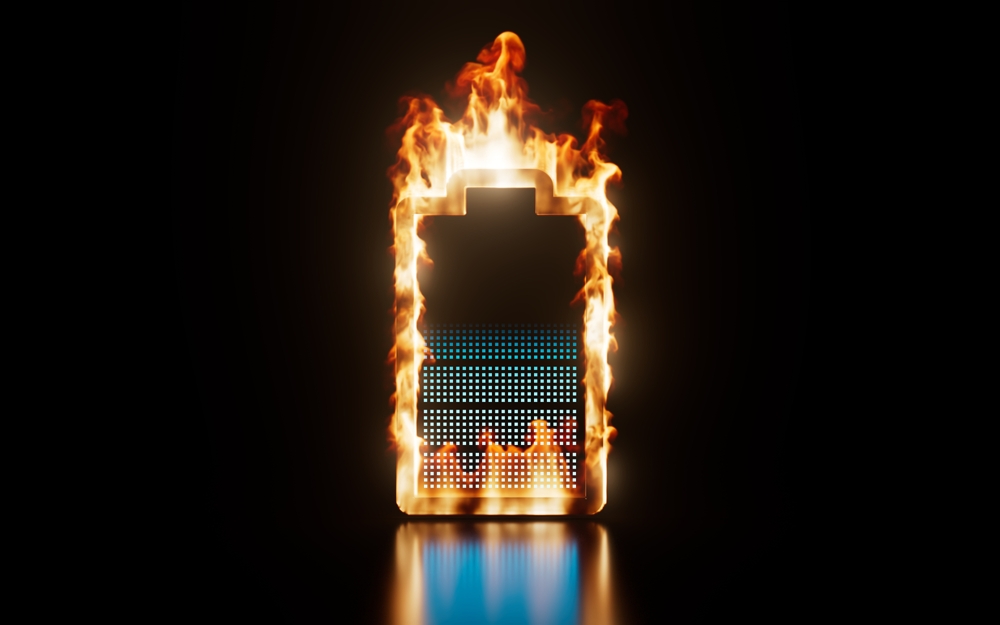
A lithium-ion battery tossed into the wrong bin can travel unnoticed until a compactor, shredder or sorting machine punctures it. By then, the person who discarded the battery is gone, the manufacturer is far removed and the recycling operator is left fighting the fire.
The scale of the problem is alarming. The US Environmental Protection Agency identified 245 fires at 64 waste-management facilities between 2013 and 2020 that were caused or likely caused by lithium metal or lithium-ion batteries. The incidents occurred at a number of sites, which include material recovery facilities, landfills, electronics recyclers, scrap yards, waste-to-energy facilities and during transportation. EPA cautioned that its research did not represent a complete accounting. Interviews and other evidence collected by the agency indicated that lithium-ion battery fires were substantially underreported.
European recyclers report similarly serious consequences. Research cited by the European Recycling Industries’ Confederation found that 36% of surveyed waste electrical and electronic equipment recyclers experienced a severe fire between 2016 and 2019. EuRIC reported that severe thermal events could take one to six hours to extinguish and estimated the average cost of more severe incidents at approximately €1.3 million ($1.5 million). The organization warned that such losses can be particularly difficult for a recycling industry composed largely of small and medium-sized companies.
When a fire occurs, the receiving facility faces the immediate operational consequences. Those can include damaged equipment, emergency response, cleanup, interrupted service and lost production. Regardless of how insurance, contracts or subsequent legal claims ultimately distribute the financial loss, the facility must first contend with the fire and the disruption it causes.
The industry has responded by strengthening prevention and emergency procedures. In December 2025, the Solid Waste Association of North America, National Waste & Recycling Association and Recycled Materials Association announced joint guidance covering battery identification, employee training, storage, handling and emergency planning at material recovery facilities. SWANA CEO Amy Lestition Burke called lithium-ion battery fires “one of the most urgent safety issues” facing the waste and recycling sector.
Prevention, however, carries its own costs. Lithium batteries are regulated as hazardous materials during transportation under Parts 171 through 180 of Title 49 of the Code of Federal Regulations. Damaged or defective batteries can require specialized packaging and handling, with additional requirements depending on their condition and how they are transported. Building a collection system capable of identifying, separating, storing and safely moving these batteries therefore requires more than simply placing another collection bin in front of consumers.
States are beginning to move more of these front-end responsibilities upstream. Illinois’ Portable and Medium-Format Battery Stewardship Act requires producers selling covered batteries in the state, beginning January 1, 2026, to participate in an approved stewardship plan providing for collection and end-of-life management. The programs are overseen by the Illinois Environmental Protection Agency. The Environmental Council of the States described the legislation when it was enacted as the country’s 16th battery extended-producer-responsibility law.
Minnesota lawmakers considered another approach after a lithium battery apparently ignited inside a recycling collection truck. House File 3566 proposed a recycling fee equal to 3.2% of the retail price of most covered electronics, with the revenue intended to support a system for collection and recycling of covered electronic devices. The legislation would have allowed retailers to collect the fee from purchasers. Representative Athena Hollins, discussing the truck fire and the broader battery problem, warned that the incident could not be dismissed as a “one-off.”
Illinois’ law and proposals such as Minnesota’s illustrate efforts to move more of the cost and responsibility for collection upstream. Convenient collection systems can give consumers alternatives to throwing batteries and battery-containing products into household recycling or trash, while stewardship programs can make producers participate financially in managing products at the end of their useful lives.
But collection responsibility and catastrophic-loss responsibility are not the same thing. When a battery still reaches the wrong facility and starts a fire, the operator initially confronts the suppression effort, cleanup, damaged equipment and downtime. Existing stewardship programs can shift collection and recycling costs upstream without necessarily assigning responsibility for catastrophic losses caused by improperly discarded batteries.
That distinction has important implications. Producer-funded collection can reduce the likelihood that batteries enter conventional waste and recycling streams, but it does not by itself answer what happens when prevention fails. A manufacturer, retailer, stewardship organization, consumer, municipality, insurer and recycling facility can each occupy a different position in the chain, while the fire occurs at only one of them.
The emerging policy question is therefore broader than who should pay to collect and recycle batteries. It is whether responsibility for preventing battery fires and responsibility for the losses that result from them should continue to be treated separately.
For now, policy is moving more of the prevention cost upstream. The much harder question of how catastrophic fire losses should ultimately be allocated remains largely unresolved.