





Resource Recycling
  • The Latest
  • Analysis
    • All
    • Certification Scorecard
    • Industry Announcements
    • Opinion
    MP Materials breaks ground on rare earth magnet campus in North Texas

    How critical mineral alliances aim to shape the future of e-scrap metals

    Certification Scorecard — Week of May 18, 2026

    Aurubis: Thefts involved scrap sample manipulation

    Metals and electronics recyclers report growth

    Plastic packaging

    Why SB 54 source reduction planning is becoming the industry’s most challenging EPR test

    Recycler cites market pressure in short-term closure

    AI, data anxiety push enterprises to destroy working devices: report

    Before the Bin: America’s textile waste problem starts in your closet

  • Conferences
    • Resource Recycling Conference
    • Plastics Recycling Conference
    • E-Scrap: The Longevity Conference
    • Textiles Recovery Summit
  • Publications
    • E-Scrap News
    • Plastics Recycling Update
    • Policy Now
    • Resource Recycling
    • Other Topics
      • Brand Owners
      • Critical Minerals
      • Glass
      • Grant Watch
      • Markets
      • Organics
      • Packaging
      • Research
      • Technology
      • Textiles
      • All Topics
Subscribe
No Result
View All Result
Resource Recycling
  • The Latest
  • Analysis
    • All
    • Certification Scorecard
    • Industry Announcements
    • Opinion
    MP Materials breaks ground on rare earth magnet campus in North Texas

    How critical mineral alliances aim to shape the future of e-scrap metals

    Certification Scorecard — Week of May 18, 2026

    Aurubis: Thefts involved scrap sample manipulation

    Metals and electronics recyclers report growth

    Plastic packaging

    Why SB 54 source reduction planning is becoming the industry’s most challenging EPR test

    Recycler cites market pressure in short-term closure

    AI, data anxiety push enterprises to destroy working devices: report

    Before the Bin: America’s textile waste problem starts in your closet

  • Conferences
    • Resource Recycling Conference
    • Plastics Recycling Conference
    • E-Scrap: The Longevity Conference
    • Textiles Recovery Summit
  • Publications
    • E-Scrap News
    • Plastics Recycling Update
    • Policy Now
    • Resource Recycling
    • Other Topics
      • Brand Owners
      • Critical Minerals
      • Glass
      • Grant Watch
      • Markets
      • Organics
      • Packaging
      • Research
      • Technology
      • Textiles
      • All Topics
Subscribe
No Result
View All Result
Resource Recycling
No Result
View All Result
Home Resource Recycling Magazine

Community Spotlight: Emerald City evolves diversion with analytical assistance

Colin StaubbyColin Staub
January 2, 2018
in Resource Recycling Magazine
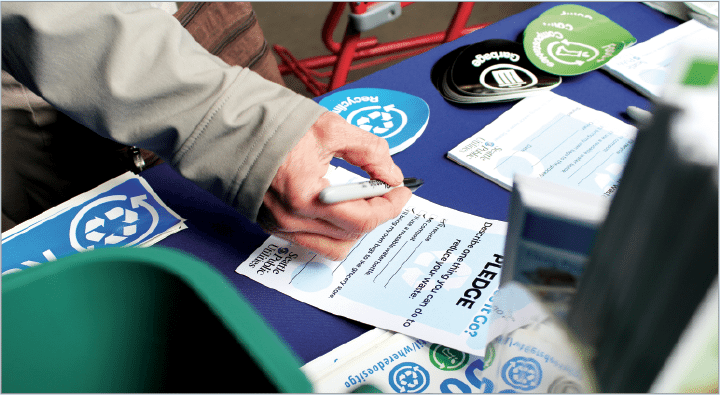
Seattle has steadily grown its program since the 1980s, in large part by regularly interacting with the public.

A data-driven approach to materials recovery has helped the city of Seattle steadily expand its recycling program to target a wider range of streams.

City officials point to data the city collects as a vital part of building support for aggressive diversion goals and initiatives. The collected data has consistently driven the conversation on tackling new material streams.

The importance of facts and figures was highlighted when Seattle passed its first disposal ban in 1989, at which point residential yard waste was prohibited from the landfill stream.

Susan Fife-Ferris, director of solid waste planning and program management at city agency Seattle Public Utilities, credits waste characterization studies and other analysis as important facets in building political will to implement the disposal ban and more policies since then.

“You could go back to the data and say, ‘Look, here’s what it would cost to manage it this way and here’s what it would cost to haul it away,’” Fife-Ferris said.
Circumstances converge

Recycling in Seattle was offered by small, local privately owned recycling operations beginning in the 1980s. Residents could self-haul material, including aluminum cans, glass bottles and newspaper, to local recycling depots.

Like many communities in Washington, municipal recycling in the Emerald City was spurred into existence by state legislation passed in the late 1980s. At that time, the city began offering curbside three-bin recycling for cans, glass bottles, and newspaper and mixed paper. Plastic containers were added later on.

At the same time municipal recycling began, many of the city’s landfills were coming to the end of their useful lives and needed to be closed down. Meanwhile, federal laws made it more expensive and more difficult to create and manage landfills.

“All of that was kind of a convergence that led to us saying, ‘Are there ways we could manage our waste other than just sticking it into the ground?’” Fife-Ferris said.

At the county level (Seattle is part of King County), officials were exploring waste-to-energy as an alternative to new landfills, which was “extremely unpopular” within Seattle, Fife-Ferris said. The city decided to withdraw from King County’s system and began its own planning for waste management alternatives.

Seattle conducted a “recycling potential assessment” to identify opportunities for diverting materials out of the waste stream for recycling or waste reduction, and the city has been conducting those assessments ever since. They have led to expansions and evolutions in the scope of materials collected through the program.

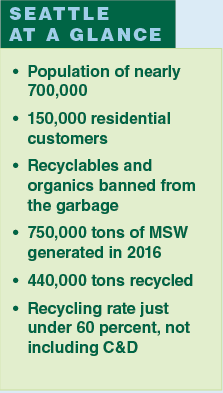
In 2016, the city’s reported diversion rate was 58.8 percent, a number that includes the single-family, multi-family, self-haul and commercial realms.

Program pushes forward

Today, residential collection is contracted through franchise zones to a private hauler, and commercial properties can choose any hauler to collect their recyclable and organic material. The city has nearly 700,000 residents and is in the midst of a boom period, with many of the new residents moving into multi-family housing.

The recycling program went to single-stream collection in the early 2000s and later added food waste and food-soiled paper in the organics receptacle. The city has also mandated material separation, meaning residents are legally required to separate recyclables and compostable materials from garbage.
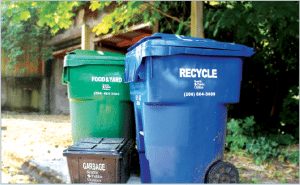
The city’s recycling program went to single-stream collection in the early 2000s, and curbside organics service has long been available to residents.

Further, beginning in 2017, the city regulated the colors of plastic bags available in grocery stores. Bags that are not compostable cannot be colored green, to avoid confusing customers.

The city also recently began full administration of an ordinance passed several years ago that requires straws, utensils and other foodservice packaging to be recyclable or compostable.

Fife-Ferris pointed to the public popularity of such environmental measures in Seattle.

“We’re very community focused,” Fife-Ferris said of her team’s strategy. “This goes way, way back, decades. Focusing on what people want is what kind of happened in the ‘80s. … People didn’t want a waste-to-energy facility in their backyard.”

But as strong as it is, the community interest isn’t always enough to influence regulatory action. That’s where the information gathered during the regular program analyses comes into play.

“Being able to point to the data and the financial benefit of doing something is very important, because we’re very concerned about affordability and other things too,” she said. “So I think it was a combination of community desire and then cost-benefit analysis. That helps inform the political landscape and provided the political will.”

Seattle continues to engage in the recycling potential assessments every few years to identify new recycling opportunities. But the city is also thinking about recycling in new ways altogether. The goal is to make program decisions that are in line with larger environmental goals such as reduction of greenhouse gas emissions.

“Right now, we really focus on a weight-based recycling program to help define success, as most people do across the country,” Fife-Ferris said. “We’re trying to tee up the conversation about how [we] should define success with respect to materials management. … [Are there] metrics we should be focusing on that involve environmental benefits and involve waste prevention, which a weight-based recycling rate doesn’t?”

This article originally appeared in the December 2017 issue of Resource Recycling. Subscribe today for access to all print content.

Tags: Local Programs
TweetShare
Colin Staub

Colin Staub

Colin Staub was a reporter and associate editor at Resource Recycling until August 2025.

Related Posts

Extruder pushes out natural HDPE pellets at KW Plastics in Troy, Alabama.

Rare look inside the world’s largest plastics recycler

byBrian Clark Howard
May 13, 2026

KW Plastics in Troy, Alabama is a leading recycler of PP and HDPE—here’s a glimpse behind the gates.

Bill to update New Jersey e-scrap program heads to governor

New Jersey recyclers talk EPR

byBrian Clark Howard
April 9, 2026

At the Association of New Jersey Recyclers’ spring meeting industry representatives discussed the state and future of the sector.

Wineries help create model for film recycling

Wineries help create model for film recycling

byAntoinette Smith
April 7, 2026

A collaboration between California wineries and the recycling value chain has provided a closed-loop model the partners aim to see...

Waste Connection recycling cart in The Dalles, Oregon

First Oregon community expands curbside recycling with EPR funding

byBrian Clark Howard
April 1, 2026

The City of The Dalles in northern Oregon is now rolling out nearly 5,000 new 90-gallon recycling carts to customers...

Rural effort targets vapes as battery fire risk grows

byScott Snowden
March 24, 2026

A Wisconsin firefighter is building a rural vape collection service as discarded devices with lithium-ion batteries continue to raise fire...

New Providence carts underpin recycling campaign

New Providence carts underpin recycling campaign

byBrian Clark Howard
March 23, 2026

With grant assistance, the Rhode Island capital is providing about 55,000 new collection carts to help boost its recycling rate,...

Load More
Next Post

MRF of the Month: Boulder County Recycling Center

More Posts

Bottle bill backers see opportunity for action

PET collapse exposes gaps in US recycling infrastructure

May 15, 2026
Niagara acquires rPlanet Earth assets in California

Niagara acquires rPlanet Earth assets in California

May 15, 2026
Revised CA budget includes $200m for recycling

Revised CA budget includes $200m for recycling

May 20, 2026
Plastic packaging

Why SB 54 source reduction planning is becoming the industry’s most challenging EPR test

May 19, 2026
Extruder pushes out natural HDPE pellets at KW Plastics in Troy, Alabama.

Rare look inside the world’s largest plastics recycler

May 13, 2026
NJ e-scrap legislation

NJ qualifies PureCycle PP for minimum PCR law

May 14, 2026

Before the Bin: America’s textile waste problem starts in your closet

May 19, 2026
Industry descends on DC to fight for PET

Industry descends on DC to fight for PET

May 13, 2026
Retail aisle with paper and plastic packaging.

Loblaw’s recyclability push could reshape packaging design across North America

May 14, 2026
Federal PACK Act aims to preempt ‘patchwork’ of state laws

House advances Recycling Infrastructure and Accessibility Act

May 21, 2026
Load More

About & Publications

About Us

Staff

Archive

Magazine

Work With Us

Advertise
Jobs
Contact
Terms and Privacy

Newsletter

Get the latest recycling news and analysis delivered to your inbox every week. Stay ahead on industry trends, policy updates, and insights from programs, processors, and innovators.

Subscribe

Welcome Back!

Login to your account below

Forgotten Password?

Retrieve your password

Please enter your username or email address to reset your password.

Log In

Add New Playlist

No Result
View All Result
  • The Latest
  • Analysis
  • Recycling
  • E-Scrap
  • Plastics
  • Policy Now
  • Conferences
    • E-Scrap Conference
    • Plastics Recycling Conference
    • Resource Recycling Conference
    • Textiles Recovery Summit
  • Magazine
  • About Us
  • Advertise
  • Archive
  • Jobs
  • Staff
Subscribe
This website uses cookies. By continuing to use this website you are giving consent to cookies being used. Visit our Privacy and Cookie Policy.