Resource Recycling
  • The Latest
  • Analysis
    • All
    • Certification Scorecard
    • Industry Announcements
    • Opinion

    Certification Scorecard — Week of June 8, 2026

    ITAD is moving past its adolescent phase: beyond end-of-life

    Rainforest

    Inside the Circle: What the rainforest can teach us about EPR

    Closeup of a printed circuitboard

    Hardware demand puts new focus on parts harvesting

    Rare look inside the world’s largest plastics recycler

    Mass balance matters: Why different rules can lead to different outcomes 

    Certification Scorecard — Week of June 1, 2026

  • Conferences
    • Resource Recycling Conference
    • Plastics Recycling Conference
    • E-Scrap: The Longevity Conference
    • Textiles Recovery Summit
  • Publications
    • E-Scrap News
    • Plastics Recycling Update
    • Policy Now
    • Resource Recycling
    • Other Topics
      • All Topics
      • Brand Owners
      • Critical Minerals
      • Glass
      • Grant Watch / RFPs
      • Markets
      • Organics
      • Packaging
      • Research
      • Technology
      • Textiles
Subscribe
No Result
View All Result
Resource Recycling
  • The Latest
  • Analysis
    • All
    • Certification Scorecard
    • Industry Announcements
    • Opinion

    Certification Scorecard — Week of June 8, 2026

    ITAD is moving past its adolescent phase: beyond end-of-life

    Rainforest

    Inside the Circle: What the rainforest can teach us about EPR

    Closeup of a printed circuitboard

    Hardware demand puts new focus on parts harvesting

    Rare look inside the world’s largest plastics recycler

    Mass balance matters: Why different rules can lead to different outcomes 

    Certification Scorecard — Week of June 1, 2026

  • Conferences
    • Resource Recycling Conference
    • Plastics Recycling Conference
    • E-Scrap: The Longevity Conference
    • Textiles Recovery Summit
  • Publications
    • E-Scrap News
    • Plastics Recycling Update
    • Policy Now
    • Resource Recycling
    • Other Topics
      • All Topics
      • Brand Owners
      • Critical Minerals
      • Glass
      • Grant Watch / RFPs
      • Markets
      • Organics
      • Packaging
      • Research
      • Technology
      • Textiles
Subscribe
No Result
View All Result
Resource Recycling
No Result
View All Result
Home Resource Recycling Magazine

Community Spotlight: Longevity and mandates spur success in Madison

Colin StaubbyColin Staub
August 1, 2017
in Resource Recycling Magazine

In the City of Madison, Wis., staying consistently ahead of the curve has led to high diversion and citizen engagement in municipal recycling.

Curbside collection in Wisconsin’s capital dates back to 1968, two decades before many municipalities were beginning to establish collection programs. Its early implementation means the city’s recycling program is frequently dubbed the first curbside program in the nation.

In the early days, the program collected only newspaper, but in the late 1980s it began to evolve. Yard waste was banned from landfill disposal in Madison and the surrounding Dane County in 1989, and in 1991 the now-standard list of single-stream materials followed with a separate landfill ban. That countywide ban came ahead of a state landfill ban, and “the county law became kind of the model for the state law,” said George Dreckmann, former recycling coordinator for the City of Madison.

The city’s current recycling coordinator, Bryan Johnson, points to those initiatives as key components of the city’s positive diversion results.

“With the combination of city ordinances, county ordinances and everything working together, it’s kind of allowed us to be where we are today,” Johnson said.

Making it mandatory

Madison makes it easy for residents to begin recycling. The program is budgeted out of property taxes rather than a utility fee, and residents do not have to “opt in” to receive recycling service. If a person lives in a single-family home in Madison, they receive recycling service. And residents are legally required to divert recyclables.

But these strategies haven’t required strong enforcement in Madison over the years. The city does not engage in active policing of the requirements and instead deals with problems on a case-by-case basis.
“If someone’s not putting out a recycling cart, we just tell them, ‘You start putting it out in two weeks or we’re going to stop collecting your trash,’” Dreckmann said. “That works really well. We haven’t issued fines, because people have complied.”

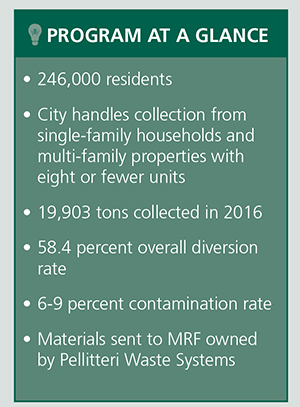
Statistics from the municipality suggest residents also get the message when it comes to putting the right materials in the cart. In 2016, Madison’s recycling stream had less than 10 percent contamination. That’s in part due to a series of “aggressive” public education initiatives, funded by sizable budgets, Dreckmann said.

When the program was going through big changes, public outreach efforts were allotted between $160,000 and $200,000 annually – although the education budget is currently much more modest at about $24,000 per year. A city ordinance requires landlords to share recycling information with their tenants both when they sign the lease and then every six months after that.
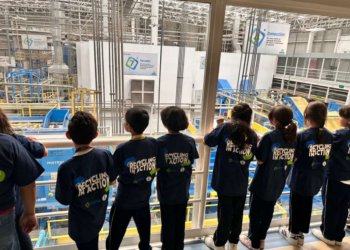
Madison’s Streets and Recycling division department regularly publishes a booklet called “Recyclopedia,” which educates residents on what and how to recycle. The city released a smartphone app called MyWaste, and the recycling program also maintains an internet presence via Recyclopedia as well as the city’s website.

“People go to a website when they’re looking for an answer to a question, that’s a good thing,” Dreckmann said. “The weakness, though, is that they don’t sit around at home and go, ‘You know what, I’m bored, let me go to the streets division website and see what’s new in recycling.’ It’s not as effective a way to get out new information, as a television ad, a radio ad or a mailing or something like that.”

In fact, Madison’s long history of recycling means its program leaders have sage advice on a number of initiatives other municipalities might consider. For instance, the city began offering three recycling cart options to residents, something Dreckmann advised other programs to avoid – the city has to keep three different segments of cart components in a stockpile to repair broken carts, which has turned into a hassle.

However, Dreckmann does recommend mandatory recycling ordinances, especially in cities that do not utilize a pay-as-you-throw system. Although “mandatory” is often considered to have negative connotations, Dreckmann said public perception often comes down to how an initiative is enforced. And with the right type of sustained outreach, ensuring compliance becomes less of a concern.

Driving up diversion

So how have those initiatives played out for the city? The numbers tell a successful story.
The year the yard waste landfill ban and mandatory compost source-separation policy was implemented, the city’s diversion rate jumped from 18 percent to 34 percent. By 1996, seven years later, the city had achieved 50 percent diversion. Of that, roughly two-thirds was compost and the rest recyclables.
In 2016, the city collected 19,903 tons of recyclables. Its total diversion rate – a a statistic that also includes bulky items, electronics, yard waste and organics – was 58.4 percent.

The city’s Streets and Recycling division collects every other week from the 75,000 properties that are either single-family residences or are multi-family with eight or fewer units, and other multi-family and commercial properties use private collection.

Collected materials are sent to a nearby materials recovery facility operated by Pellitteri Waste Systems, and the partnership has led to some unique opportunities.

“We are able to include some things that are maybe not standard for a lot of curbside programs,” Johnson said. He pointed to plastic bags, which are allowed in recycling carts if they are bundled together. “We got to there because we were able to work with this private MRF to make it happen, because they’re a local, family-owned company that’s been waste-hauling in Madison for decades.”

This article originally appeared in the July issue of Resource Recycling. Subscribe today for access to all print content.


Tags: Local Programs
TweetShare
Colin Staub

Colin Staub

Colin Staub was a reporter and associate editor at Resource Recycling until August 2025.

Related Posts

NYC, Mack Trucks unveil winning artwork

NYC, Mack Trucks unveil winning artwork

byAntoinette Smith
June 4, 2026

The five new hand-painted waste collection trucks feature themes of honor, resilience and care, and will operate in the city's...

Extruder pushes out natural HDPE pellets at KW Plastics in Troy, Alabama.

Rare look inside the world’s largest plastics recycler

byBrian Clark Howard
May 13, 2026

KW Plastics in Troy, Alabama is a leading recycler of PP and HDPE—here’s a glimpse behind the gates.

Bill to update New Jersey e-scrap program heads to governor

New Jersey recyclers talk EPR

byBrian Clark Howard
April 9, 2026

At the Association of New Jersey Recyclers’ spring meeting industry representatives discussed the state and future of the sector.

Wineries help create model for film recycling

Wineries help create model for film recycling

byAntoinette Smith
April 7, 2026

A collaboration between California wineries and the recycling value chain has provided a closed-loop model the partners aim to see...

Waste Connection recycling cart in The Dalles, Oregon

First Oregon community expands curbside recycling with EPR funding

byBrian Clark Howard
April 1, 2026

The City of The Dalles in northern Oregon is now rolling out nearly 5,000 new 90-gallon recycling carts to customers...

Rural effort targets vapes as battery fire risk grows

byScott Snowden
March 24, 2026

A Wisconsin firefighter is building a rural vape collection service as discarded devices with lithium-ion batteries continue to raise fire...

Load More
Next Post

MRF of the Month: Sims Municipal Recycling Sunset Park Material Recovery Facility, New York City

More Posts

Recycling industry addresses Beyond Plastics report

Recycling industry addresses Beyond Plastics report

May 26, 2026
House resolution aims to make recyclability central to product design

NY EPR bill fails to advance after third try

June 8, 2026
Fire at an EMR recycling facility in Camden, New Jersey May 29, 2026.

EMR faces shutdown calls after numerous fires

June 2, 2026
CalRecycle withdraws proposed regs for SB 54

Oceana, NRDC, CAW sue CalRecycle over SB 54 regs

June 5, 2026
IT asset disposition and electronics recycling: Now and then

$60 billion in AI servers will create an ITAD challenge

June 3, 2026
Rare look inside the world’s largest plastics recycler

Mass balance matters: Why different rules can lead to different outcomes 

June 5, 2026
The independent ITAD at a crossroads

DMD acquires ITAD firm Lifespan, outlines acquisition strategy

June 2, 2026
Circular Materials to supply PlasCred chem recycling plant

Circular Materials to supply PlasCred chem recycling plant

June 4, 2026
Our top stories from June 2021

Colorado advances EV battery EPR law

June 3, 2026
In My Opinion: Comparing the nation’s first packaging EPR laws

What Maine’s vape EPR law means for recyclers

June 4, 2026
Load More

About & Publications

About Us

Staff

Archive

Magazine

Work With Us

Advertise
Jobs
Contact
Terms and Privacy

Newsletter

Get the latest recycling news and analysis delivered to your inbox every week. Stay ahead on industry trends, policy updates, and insights from programs, processors, and innovators.

Subscribe

Welcome Back!

Login to your account below

Forgotten Password?

Retrieve your password

Please enter your username or email address to reset your password.

Log In

Add New Playlist

No Result
View All Result
  • The Latest
  • Analysis
  • Recycling
  • E-Scrap
  • Plastics
  • Policy Now
  • Conferences
    • E-Scrap Conference
    • Plastics Recycling Conference
    • Resource Recycling Conference
    • Textiles Recovery Summit
  • Magazine
  • About Us
  • Advertise
  • Archive
  • Jobs
  • Staff
Subscribe
This website uses cookies. By continuing to use this website you are giving consent to cookies being used. Visit our Privacy and Cookie Policy.