




Takeaways in two minutes (or less)
- Watch, wait and learn from the “starter seven”
- Focus first on expanding bottle deposit systems
- Highlight economic impact to gain bipartisan support
- Kentucky, Tennessee, Carolinas primed for action
- Learn from the Canadian experience
In an active year for legislation aimed at reducing plastic pollution and waste, recycling stakeholders have a bevy of lessons to draw from, even with bills that have come under attack or didn’t quite pass.
Most recently, California’s Department of Resources Recycling and Recovery (CalRecycle) reopened comment on a second revision of draft regulations for the state’s extended producer responsibility (EPR) law for packaging.
“In California’s case, the industry didn’t feel that they were being heard” when it said it couldn’t further source-reduce plastic packaging for protein, for example, said Heidi Sanborn, executive director of the National Stewardship Action Council, in an interview with Policy Now.
In addition to lobbying and advocacy work, NSAC provides consulting services to state and local governments, corporations and other organizations to identify materials management solutions.
Another early packaging EPR law has also encountered roadblocks. On July 1, Oregon’s packaging EPR became the first to be implemented, but it was promptly subject to litigation.
“If you can do this in California, you can do this anywhere. If you can stop this in Oregon, you can do it anywhere,” Sanborn said, referring to the states’ reputations for being progressive on environmental issues.
So, how can policymakers craft legislation to withstand legal challenges?
Watch and wait – and work on bottle bills
While litigation is among the hazards of emerging EPR framework, other states should “watch and learn through the bumpy, hard road the first seven states are going to have,” Sanborn said.
California, Colorado, Maine, Maryland, Minnesota, Oregon and Washington have passed EPR laws for packaging, “all slightly different, and they’re all little pilot projects. Let’s see how those work.”
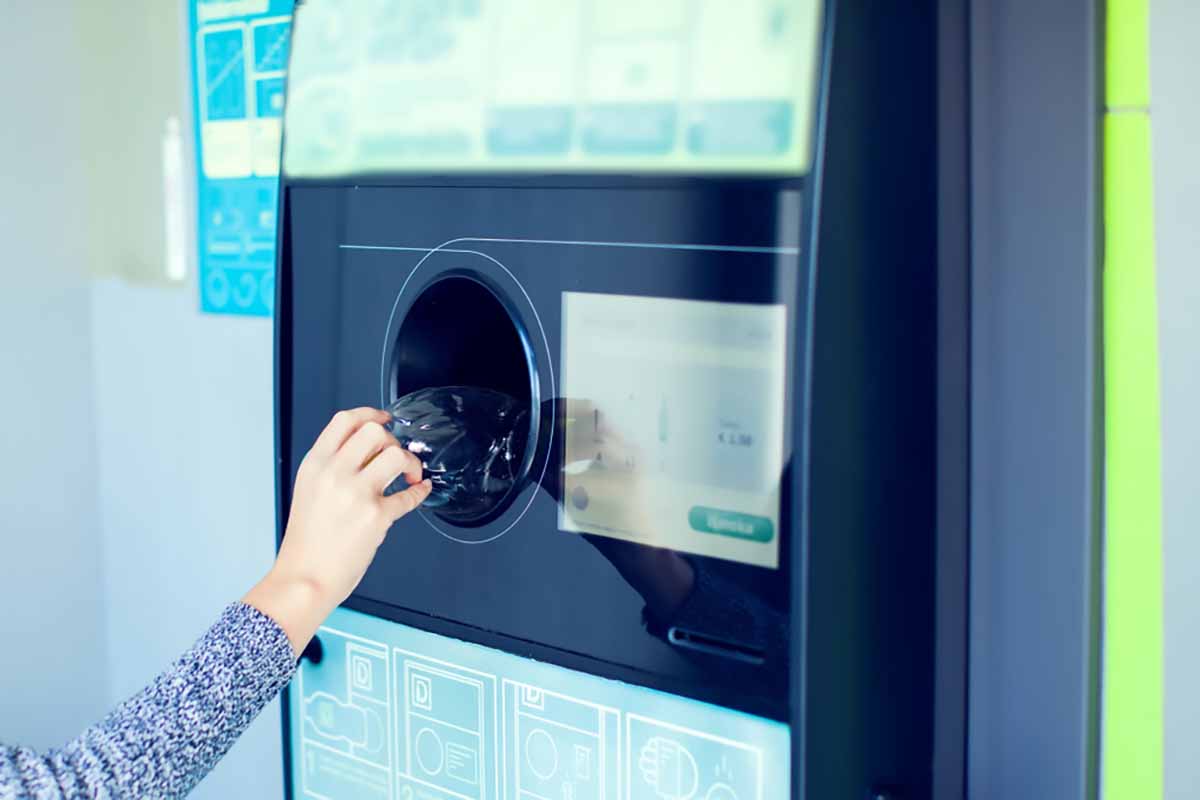
“I would not advise any other state to take on packaging at this moment,” she said, instead urging stakeholders to focus on implementing and expanding bottle deposit return systems (DRS).
“Those would help you immediately, and would help your infrastructure development, which would help with packaging overall later,” she said.
This applies even to so-called red states, such as Texas, which made significant progress toward passing a DRS bill this year.
“If people don’t understand how serious this is, and get some bottle bills passed in this country, we could very well close entire [recycling] plants in the Midwest,” Sanborn said, adding that many of these plants are located in Republican-dominated states.
DRS legislation has a history stretching back more than 50 years. In 1971, Oregon‘s legislation became the first, and as of 2024, the state has the highest US redemption rate at over 80%, compared to 35% nationally, and at times exceeding 90%.
US recycling infrastructure faces critical challenges, with facilities struggling to maintain operations and existing infrastructure for bottles and cans, plastic, aluminum and glass.
“All of them are having trouble feeding their plants in the US today and could very seriously go down, and we could lose them for good if we don’t get more bottle bills passed quickly,” she said.
Highlighting economic impact to gain bipartisan support
As US waste streams have shifted, a geographic split has developed. While Republican-leaning states are behind on policy, they are typically facility rich. Democratic states have robust policies but lack adequate infrastructure, Sanborn said.
“If you’re policy rich or facility poor, you’re creating jobs in other states, and if you’re facility rich and policy poor, you may not be able to feed those plants, and both situations are happening right now,” she said.
“I think the ones that are ready to start this conversation are Kentucky, Tennessee, possibly the Carolinas. They have a lot of facilities where they can’t feed them. In Texas, securing industry support was “a big, big reason the Texas bill got as far as it did,” she said, noting that amid a low plastics recovery rate for the state, recyclers import resin.
NSAC also has encountered lawmakers who do not realize their state is home to a packaging plant that could serve as an end market for in-state recyclables.
“You’ve got to know your audience,” Sanborn said, pointing to Florida where, in May, Gov. Ron DeSantis vetoed a bill calling for a waste reduction and recycling plan.
“He’s not interested, right? But if you had sent him a bill that says we need to feed our recycling plants that exist and keep the jobs and expand to three shifts and do worker safety,” he might have been more receptive, she said.
Sanborn referred to Tennessee’s proposed EPR bill (now deferred to 2026), whose entire message is to “turn waste into jobs.”
In Texas, too, backers of the bottle bill de-emphasized the environmental aspect and played up the impact on jobs and litter, she said.
As US lawmakers continue to navigate the complexities of packaging legislation, many are turning northward for implementation insights.
Look to Canada
As Canadian provinces roll out EPR for packaging, starting with Alberta in April 2025, this staggered approach provides valuable and ongoing lessons for states considering their own legislation.
Sanborn recently participated in a trip with waste service providers to British Columbia, which added paper and packaging to its EPR program in 2011.
“What I think we can learn from them on packaging is they had a long-standing bottle bill, I think 20 years before packaging got stood up side by side,” Sanborn said, adding that implementing a bottle bill first does not preclude future packaging laws.
To be sure, “packagers don’t want deposits, and they will fight the bottle bills separately,” she said. But from a policy standpoint, bottle bills offer “the most experience and the most win,” such as reducing all roadside litter – not just beverage containers – in states with this type of law. “People just stop throwing things out the window.”
Over the years, British Columbia has refined its system. “The public knows about it. They have a very high education rate. They’ve made it very convenient,” Sanborn said.
The country’s most populous province, Ontario, recently looked to adjust its EPR law, in response to producer feedback about costs and other concerns about its program, implemented in 2014.
Other valuable lessons include the pitfalls of giving consumer fees to producers, and that smaller government approaches work best, because as costs rise, laws get more difficult to pass, Sanborn said. In addition, having too many people involved who “get their fingers in all kinds of pies they shouldn’t be in” only serves to overcomplicate the process, she said.
“In the US, especially in California, we’ve tended to go overboard and not focus on what we’re supposed to be doing on the government side, which is hold the line on accountability and transparency, making sure there’s a fair, level business playing field.”
In contrast, British Columbia officials “get out of the way of the industry. That was the whole point,” she said.