





Resource Recycling
  • The Latest
  • Analysis
    • All
    • Certification Scorecard
    • Industry Announcements
    • Opinion

    From CES to the shredder: What 2026 PCs mean for ITAD

    Certification scorecard for week of Jan. 12, 2026

    Industry announcements for January 2026

    Certification scorecard for Dec. 18-30, 2025

    Certification scorecard for Dec. 18, 2025

    Industry announcements for the week of Dec. 15

    Certification scorecard for December 10, 2025

    Industry Announcements for Week of December 8

    Certification Scorecard for December 3, 2025

  • Conferences
  • Publications

    Other Topics

    Textiles
    Organics
    Packaging
    Glass
    Brand Owners

    Metals
    Technology
    Research
    Markets
    Grant Watch

    All Topics

Subscribe
No Result
View All Result
Resource Recycling
  • The Latest
  • Analysis
    • All
    • Certification Scorecard
    • Industry Announcements
    • Opinion

    From CES to the shredder: What 2026 PCs mean for ITAD

    Certification scorecard for week of Jan. 12, 2026

    Industry announcements for January 2026

    Certification scorecard for Dec. 18-30, 2025

    Certification scorecard for Dec. 18, 2025

    Industry announcements for the week of Dec. 15

    Certification scorecard for December 10, 2025

    Industry Announcements for Week of December 8

    Certification Scorecard for December 3, 2025

  • Conferences
  • Publications

    Other Topics

    Textiles
    Organics
    Packaging
    Glass
    Brand Owners

    Metals
    Technology
    Research
    Markets
    Grant Watch

    All Topics

Subscribe
No Result
View All Result
Resource Recycling
No Result
View All Result
Home Recycling

How a national deposit could drive can recovery

Marissa HeffernanbyMarissa Heffernan
February 4, 2025
in Recycling
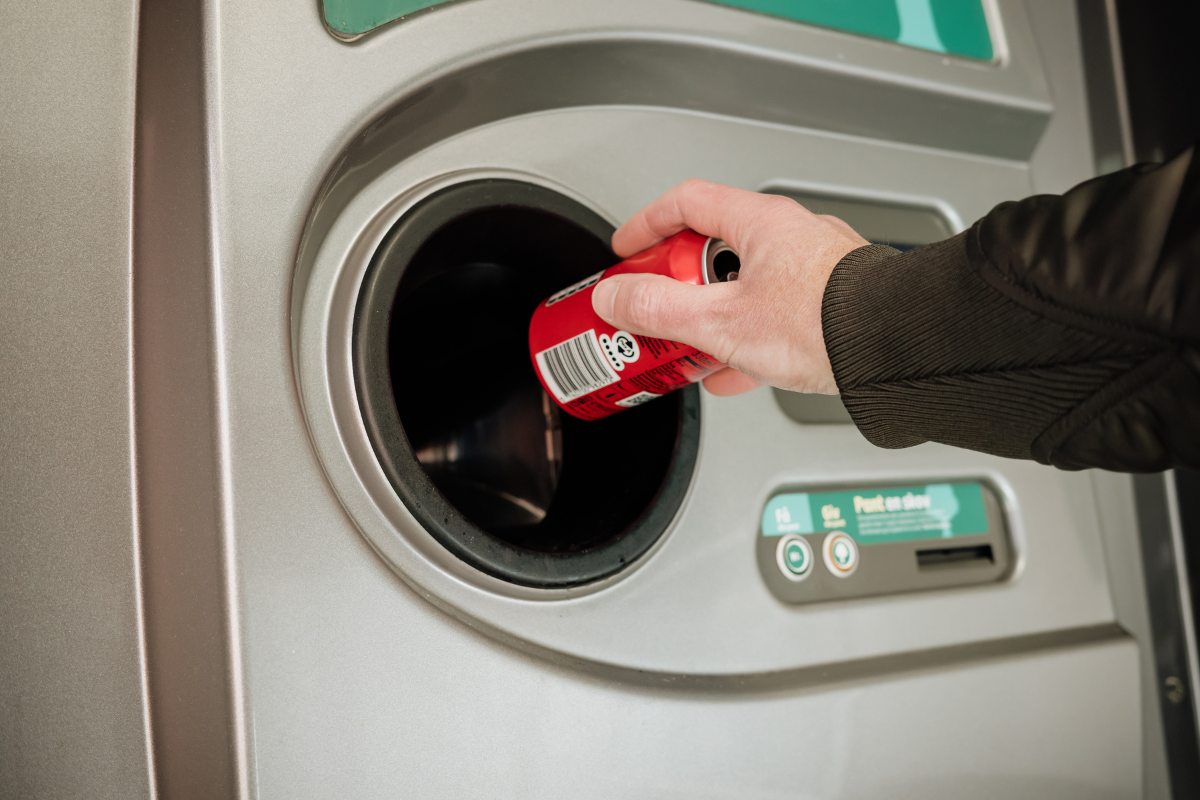
A report from the Container Recycling Institute explored deposit return systems at various levels, aluminum can design and markets and material loss over the recycling process. | Mikkel H. Petersen/Shutterstock

A national deposit return system would raise the U.S. UBC recycling rate to 85%, an analysis from the Container Recycling Institute found.

The report estimated a 2021 national UBC recycling rate of 37.2%, “dramatically lower than that in many other industrialized countries,” due to a lack of recycling access and participation as well as losses at the curb, MRFs and secondary smelters.

CRI’s recycling rate is slightly lower than the 41.6% rate reported by the Aluminum Association and Can Manufacturers Institute, because CRI didn’t include food cans and included imported full goods. The Aluminum Association only includes imported empty cans. 

UBC recycling rates have been declining even in states with a DRS. Other reports, such as those from Eunomia and Reloop, have also suggested that deposit return systems are a highly effective way to recover UBCs. 

A national DRS would recover 815,000 additional tons of UBCs per year, CRI found. Even modernizing the existing systems in the 10 states that have passed bottle bills would raise the national UBC recycling rate by 3.2 percentage points, the report added, and passing DRS laws in all the states that have introduced DRS legislation since 2021 would raise the national rate by 20 percentage points. 

Modernization typically includes raising deposits from 5 cents to 10 cents and sometimes adding more beverage types to the program. 

The report, called “Improving Efficiency and Sustainability in Aluminum Beverage Can Recycling,” also addresses how aluminum beverage cans could be designed and manufactured with recycling in mind.

“The 2020 COVID-related ‘candemic’ aluminum can shortage indicated the importance of improving the way materials and resources in aluminum used beverage cans (UBCs) are reused, recycled, or kept in circulation in the economy and ensuring the can recycling process is as lossless as possible,” the institute wrote. 

In a press release, CRI President Susan Collins said it’s “imperative that the domestic aluminum can industry improve its recycled content status, because the global aluminum can industry simply cannot meet its sustainability goals without such improvement.”

A higher volume of material is necessary to support two multi-billion-dollar secondary smelters being built in the U.S., she added, which will bring the total number of secondary smelters in the country to nine. 

Arconic has a smelter in Alcoa, Tennessee. Novelis has smelters in Greensboro, Georgia; Berea, Kentucky; Oswego, New York; and is building another in Bay Minette, Alabama. The other smelters are Constellium’s in Muscle Shoals, Alabama, Kaiser Aluminum Warrick’s in Newburgh, Indiana, and Logan’s in Russellville, Kentucky. Aluminum Dynamics is currently constructing a smelter in Columbus, Mississippi.

The new facilities will each have about 600,000 tons of capacity, both recycled and virgin. 

For perspective, almost 700,000 tons of UBCs were recycled in 2020, according to the CRI report. 

“Any further declines in the U.S. aluminum UBC recycling rate, or any legislative repeals of state DRS programs, would threaten UBC supply levels for the melters, putting a financial strain on their businesses,” Collins added. 

Where cans slip through the cracks

The report sought to quantify UBC losses at all points of the recycling process, starting with lack of collection. About 55% of UBCs in the U.S. are recycled via DRS or curbside bins, the report found, leaving 45% landfilled or littered. 

“If the country had only curbside recycling and no DRS programs, the theoretical maximum recycling rate would be 45% due to losses at MRFs and melters, as well as the fact that about 24% of beverages in aluminum cans are consumed away from home,” the authors wrote. 

Once UBCs make it to the MRF, between 25% and 33% are missorted, the report said, based on other reports and studies. One study estimated the number could be as high as 53%. CRI noted that “additional comprehensive studies are needed to analyze the sorting and recovery accuracy of MRFs.” 

Past the MRF, about 11% of the total weight of UBC bales that are sent to secondary aluminum smelters is contamination, the report continued. 

“Contaminants include those that are unavoidable – inherent parts of the can and baling wire – and those that are avoidable – including PET and rigid plastics, dirt and debris, fiber and other materials,” the report noted. 

Ways to improve rates 

Simply increasing access to recycling would help raise rates, the report noted, as could increased collaboration among curbside, DRS and away-from-home recycling programs. 

However, the report found that DRS made the largest impact. The report used 2021 industry data to calculate that UBCs in deposit programs have a 74% recycling rate versus 26% for non-deposit UBCs. 

In line with that finding, the 10 U.S. states with DRS programs account for almost half of the total tons of aluminum UBCs recycled in the U.S., the report noted: 300,716 of the 633,500 tons total. 

“DRS programs recycle greater numbers of UBCs because beverage cans on deposit are handled and sorted differently than those in curbside systems,” the report said. “Cans are kept as separate commodities throughout the DRS process, meaning they are not mixed with other materials, resulting in clean, high-quality UBCs more likely to be made into new containers.”

Given the report analyses and data, CRI suggested four ways to improve the U.S. UBC recycling rate: modernizing existing DRS, passing DRS in all states that have introduced legislation since 2021 (Texas, Florida, Pennsylvania, Illinois, North Carolina, New Jersey, Washington, Maryland, New Hampshire and Rhode Island), implementing DRS laws in the 10 non-deposit states with the highest populations (Texas, Florida, Pennsylvania, Illinois, Ohio, Georgia, North Carolina, New Jersey, Virginia and Washington), and implementing a national DRS. 

A national deposit would have to be rolled out in stages, Collins said in the press release, but the “data conclusively demonstrate that DRS programs are the most impactful way to increase UBC recycling rates.” 

“We believe that a potential 85% national recovery rate is achievable with a high performing, transparent recycling system,” she added. 

Tags: CollectionContainer DepositsMetals
TweetShare
Marissa Heffernan

Marissa Heffernan

Marissa Heffernan worked at Resource Recycling from January 2022 through June 2025, first as staff reporter and then as associate editor. Marissa Heffernan started working for Resource Recycling in January 2022 after spending several years as a reporter at a daily newspaper in Southwest Washington. After developing a special focus on recycling policy, they were also the editor of the monthly newsletter Policy Now.

Related Posts

Houston, MRF operator sign chemical recycling MOU

CompuCycle CEO: Transparency drives electronics diversion

byStefanie Valentic
January 16, 2026

As Houston's role as a major port city raises concerns about electronics being exported overseas for processing, CompuCycle CEO Kelly...

New Comstock site to feed Nevada solar panel recycling

New Comstock site to feed Nevada solar panel recycling

byScott Snowden
January 13, 2026

Comstock Metals has opened a new California facility aimed at improving the collection and transport of retired solar panels to...

Diversion Dynamics: Recycling partnerships are an art form, but crucial for progress

Diversion Dynamics: Recycling partnerships are an art form, but crucial for progress

byStefanie Valentic
January 8, 2026

Whether you're operating a MRF, managing municipal contracts or navigating supplier relationships, the daily pressures pile up: financial constraints, shifting...

Solar recycling ramps up in NY with new pickup service

Solar recycling ramps up in NY with new pickup service

byScott Snowden
December 23, 2025

New York’s clean energy and digital infrastructure sectors have grown in recent years and the flow of decommissioned, warranty-return, storm-damaged...

Mitsubishi Materials buys into Elemental e-scrap pact in US

Mitsubishi Materials buys into Elemental e-scrap pact in US

byScott Snowden
December 19, 2025

Mitsubishi Materials will take a 19% voting stake in Elemental’s US e-waste unit, backing Colt Recycling growth and potentially feeding...

Deposit schemes garner support, despite ‘awareness gap’

Deposit schemes garner support, despite ‘awareness gap’

byAntoinette Smith
December 18, 2025

A new study commissioned by a global aluminum recycling initiative indicates that DRS programs can help bridge an "awareness gap"...

Load More
Next Post

Greif closures affect recycled fiber consumption

More Posts

#PRC2026 Speaker Spotlight: Joel Morales

#PRC2026 Speaker Spotlight: Joel Morales

December 22, 2025
Panel tracks shifts in e-scrap as policy, AI reshape

Panel tracks shifts in e-scrap as policy, AI reshape

December 22, 2025
Robot pilot targets legacy parts to help supply defense

Robot pilot targets legacy parts to help supply defense

December 29, 2025
Solar recycling ramps up in NY with new pickup service

Solar recycling ramps up in NY with new pickup service

December 23, 2025
State policy drives tire recycling investment in Southeast

State policy drives tire recycling investment in Southeast

December 23, 2025
New Hampshire makes progress on waste goals

New Hampshire makes progress on waste goals

December 22, 2025
Federal PACK Act aims to preempt ‘patchwork’ of state laws

Federal PACK Act aims to preempt ‘patchwork’ of state laws

December 23, 2025
APR year in review

APR year in review

December 30, 2025
#PRC2026 Speaker Spotlight: Christine Yeager

#PRC2026 Speaker Spotlight: Christine Yeager

December 29, 2025
House resolution aims to make recyclability central to product design

House resolution aims to make recyclability central to product design

December 30, 2025
Load More

About & Publications

About Us

Staff

Archive

Magazine

Work With Us

Advertise
Jobs
Contact
Terms and Privacy

Newsletter

Get the latest recycling news and analysis delivered to your inbox every week. Stay ahead on industry trends, policy updates, and insights from programs, processors, and innovators.

Subscribe

Welcome Back!

Login to your account below

Forgotten Password?

Retrieve your password

Please enter your username or email address to reset your password.

Log In

Add New Playlist

No Result
View All Result
  • The Latest
  • Analysis
  • Recycling
  • E-Scrap
  • Plastics
  • Policy Now
  • Conferences
    • E-Scrap Conference
    • Plastics Recycling Conference
    • Resource Recycling Conference
    • Textiles Recovery Summit
  • Magazine
  • About Us
  • Advertise
  • Archive
  • Jobs
  • Staff
Subscribe
This website uses cookies. By continuing to use this website you are giving consent to cookies being used. Visit our Privacy and Cookie Policy.