Key takeaways
- Pricing, nationalism present tailwinds
- Regulatory support accelerating
- Brand owners driving film applications
- Europe, Asia plants progressing
War-related price surges for virgin polymers as well as global trends toward nationalism have boosted PureCycle’s confidence in its business model, the CEO said during a quarterly investor update.
Amid supply constraints caused by the war in Iran, virgin polypropylene pricing has increased significantly while post-consumer PP bales have seen only modest gains, giving PureCycle confidence in its business model, said CEO Dustin Olson.
“This is narrowing the cost premium of recycled content versus virgin and accelerating customer urgency around securing supply,” he said.
Virgin PP typically is purchased domestically or regionally, but the prolonged closure of the Strait of Hormuz and throttled Middle East and Asian capacity have increased demand for US export volumes.
The war has reinforced the value of a stable, domestic supply and has created urgency, Olson said. “Brands and converters all around the world are actively looking for domestic compliant alternatives to global supply.”
Although higher pricing for virgin resin is a tailwind for recycled plastics, most PureCycle customer contracts are independent of global supply chains, since feedstock bales are locally sourced and produced, Olson said. “So most of the customers we see right now, they kind of like that hedge” provided by the slightly more stable domestic supply of recycled feedstock.
“In 2025 we faced numerous macro challenges,” he said. “This has reversed. The current macro environment in 2026 is a tailwind, not a headwind.”
Regulatory pressures accelerate
In addition to the ongoing war, regulatory developments are providing bullish momentum, Olson said, including final approval of SB 54 regulations..
More specifically, New Jersey is raising its minimum recycled content requirement to 20% next year, from the current 10%, and a temporary exemption for food-contact containers expires in January 2027. This is creating urgency for brand owners to seek qualifications for recycled materials such as PureCycle’s offtake, Olson said.
However, the state evaluates non-mechanical processes, including dissolution or solvent-based and chemical recycling, on a case-by-case basis to determine whether their offtake can count toward the mandate. PureCycle continues to engage with state government officials, and Olson said approval would unlock 25 million to 50 million pounds a year of demand. “That number has grown since last quarter, and I believe it will continue to grow.”
And although packaging EPR laws have passed largely in so-called blue states, recycling as a whole receives bipartisan support, Olson said. In the past year, federal legislators have introduced bipartisan bills on recycled content claim standards, reuse and refill systems, design for recyclability, packaging disposal claims, chemical recycling and recycling infrastructure.
And in contrast to a focus on sustainability in the past, today’s support is also rooted in security of supply, he said. “They’re worried about tariffs and they’re worried about being dependent on other countries to deliver them goods. And so the more that they can lean into recycling, I think the less dependence they have on others, which is good for Europe.”
Brand owners driving film applications
With around 180 “active opportunities” in the PureCycle pipeline, Olson directed attention to recycled-content film, a notoriously difficult process, especially for mechanical recyclers.
He said PureCycle’s compounding operations can enable cavitated film, which incorporates microscopic air bubbles in BOPP (biaxially orientated PP) film to remain lightweight while maintaining strength and durability, and typically a pearlescent, opaque appearance. One example is the white interior of a candy bar wrapper, Olson said.
“The interesting thing about film is that brands are driving that discussion,” he said. “It’s less about us pushing it to a converter to see if it works. It’s more about brands hearing we can do it, and they’re starting to pull it through.”
Olson attributed delays in customer conversion to the time required for food-contact testing and differing needs for each customer. For example, some want to review third-party certifications such as Green Circle or Association of Plastic Recyclers (APR), he said. “But it’s really not what’s going wrong or what’s holding them back. It’s more about what is their process.We’re just moving forward through the process.”
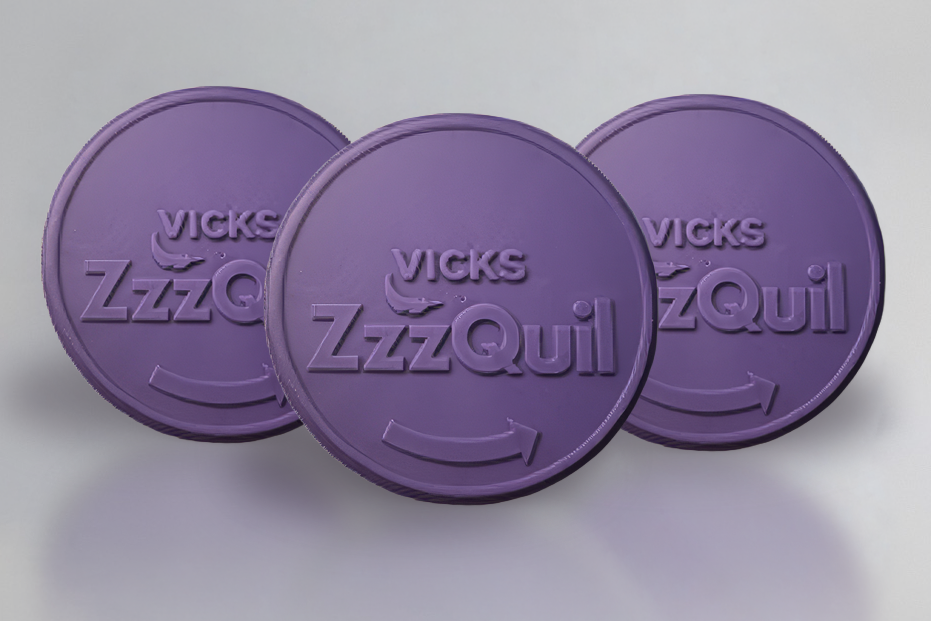
PureCycle recently received final approval for two Procter & Gamble applications: Caps for select Tide bottles will ship during the second quarter and for Vicks ZzzQuil during the second half of the year. PureCycle is in the process of qualifying three more P&G applications, Olson said, “which are going well.”
Last month the company announced that Plastic Ingenuity would incorporate PureFive resin into its coffee lids.
In addition, the company is progressing in talks with two of the top five global food brand owners for snack and confectionery packaging, he said.
Ohio, Thailand, Belgium updates
At its flagship Ironton facility in Ohio, PureCycle completed planned maintenance last month, finishing early for the first time and about 15% under budget, Olson said. Activities completed during the turnaround focused on capacity, reliability and quality, he added.
During the quarter, the plant achieved a record 8.4 million pounds of PureFive resin, higher by 12% on the quarter, as the site amassed inventory for use during the turnaround. Ironton also processed record volumes of feedstock, at about 10 million pounds.
Also in April, the on-site compounding operations reached mechanical completion and are now in the commissioning phase.
In Asia, the planned Thailand plant remains on track for mechanical completion by the end of 2027, with production starting in mid-late 2028. Groundbreaking is expected later this year. And the company is in discussions with a Thai bank regarding project financing, he said.
Construction on a new plant in Belgium is expected to start in Q1 2027, with mechanical completion by the end of 2028. PureCycle recently received a €40 million ($47 million) EU grant, toward the $350 million plant.