




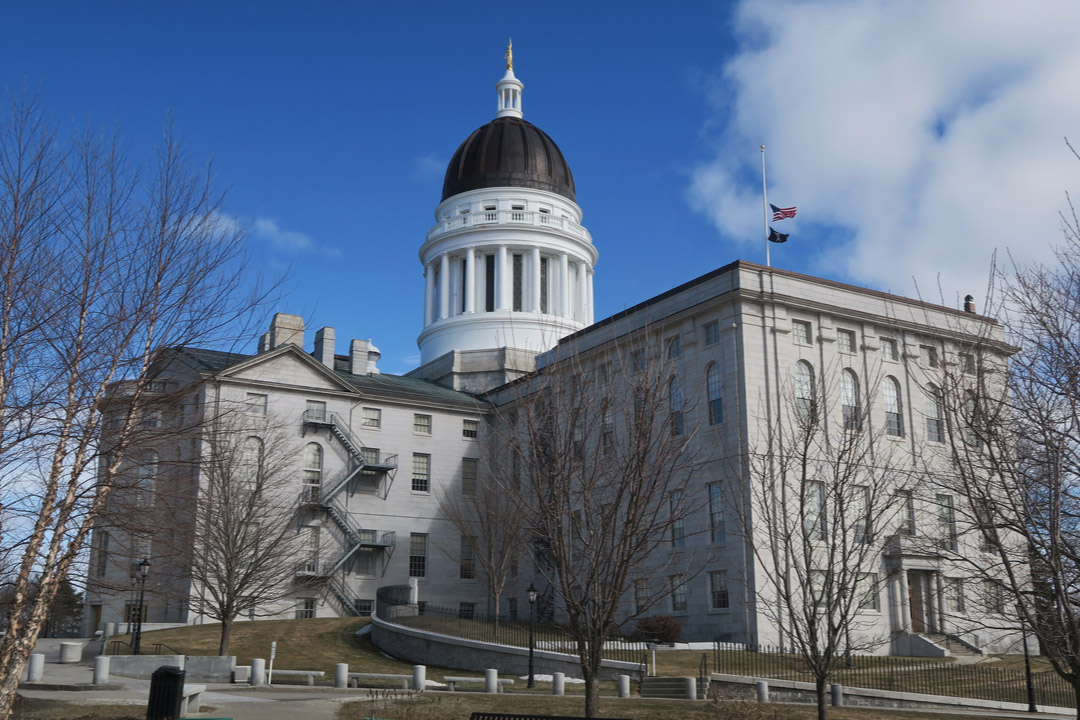
Maine approved rules for its extended producer responsibility law for packaging, three years after becoming the first state to pass packaging EPR.
The Maine Board of Environmental Protection adopted the rules on Dec. 5 in a 6-1 vote. The program is set to start in 2027. Chair Susan Lessard was the lone vote in opposition, citing worry over increased costs to consumers and her desire for the rulemaking to have legislative review.
The rules cover targets, fees, reporting requirements and reimbursement methods. They also lay out guidelines for investment projects and alternative collection programs, along with the requirements for producers to apply for a PCR waiver.
Oregon also recently approved its second set of rules for its packaging EPR law. Colorado, California and Minnesota are working through implementation of their own packaging EPR policies at varying speeds.
In Maine’s program, producers directly reimburse municipalities for collection but leave collection systems in place and under control of municipalities. That differs from other states’ shared responsibility model, in which municipalities are reimbursed but producers and municipalities both have an active role in collection.
The Maine State Chamber of Commerce asked the state to pause the rulemaking process because Maine’s EPR program is so different from the four other states. The chamber also expressed worry that the incentive fees have too short of a timeline. Throughout the rulemaking process, commenters raised concerns about the cost being borne by consumers.
“While the Chamber supports efforts to improve packaging recyclability, the research and development of the technology and implementation of the necessary infrastructure in the state required to achieve these goals will take time,” the group wrote in a comment. “Penalizing producers who are making good-faith efforts to develop more sustainable packaging could have unintended consequences, including increased costs for consumers.”
Haulers pushed back against the reimbursement rates for packaging that’s not readily recyclable, with Casella Waste Systems “strongly” opposing reimbursing communities that use incinerators at a higher rate than landfills.
“It obscures the current realities of waste disposal in the State of Maine, results in unfair outcomes for Maine municipalities, reduces market competition, incentivizes CO2 emissions from the combustion of plastic, adds unnecessary complexity, and distracts from the stated goals of EPR for Packaging,” said Bob Cappadona, vice president of resource solutions, in a written comment.
The Consumer Technology Association commented that “we still object to setting of program goals at this stage,” as well as setting the producer fees, as the state has not selected a PRO or completed a needs assessment. “Recycling rates and target dates need to be supported by data from the needs assessment conducted via a third-party expert consultant.”
The American Forest & Paper Association called for “off ramps” for producers of materials with consistently high recycling rates, an exemption for paper bags and a revision to the number of audits needed, as the “audits run on vastly different timelines and will complicate management of the EPR program.”
“This process would be more effective if timelines were aligned, and DEP was a secondary reviewer of the audits to support in compliance and enforcement,” the association added.
Reporting requirements and targets
The rules lay out reporting requirements and assessments: The PRO must conduct a statewide recycling needs assessment every 10 years, disposal audits at least once every 10 years and litter audits twice per year.
The rules also set program goals for the packaging stewardship organization, as follow:
Recycling access:
- 70% of residents have access by the second needs assessment.
- 90% access by the third needs assessment.
- 100% access by the fourth needs assessment.
Participation:
- 60% of cities, towns, townships, villages and plantations participating by 2034.
- 75% participating by 2039.
- 100% from 2040 onward.
The PRO is directed to contact municipalities that are not participating “to determine their reasons for not participating and must include a summary of the findings of this outreach in the following year’s annual report,” the rules note.
Recyclable packaging material in the disposal stream:
- No more than 40% by 2034.
- No more than 30% by 2039.
- No more than 20% from 2040 onward.
Recycling rates:
- 60% by 2034.
- 65% by 2039.
- 70% by 2044.
- 75% from 2045 onward.
Reduction, measured against a baseline of the fifth reporting year:
- 40% by 2049.
- 60% from 2050 onward.
Reuse:
- 15% reusable packaging by weight of total packaging material from by 2039.
- 30% by 2049.
- 50% from 2050 onward.
Packaging material that is be readily recyclable, reusable or compostable:
- 50% by 2039.
- 75% by 2049.
- 100% by 2050.
PCR:
- 10% by 2039.
- 20% by 2049.
- 30% from 2050 onward.
Percent of litter that is packaging material, measured in items in annual litter audits:
- Less than 80% by 2029.
- Less than 50% by 2039.
- Less than 30% by 2049.
- Less than 15% from 2050 onward.
If the litter goal is unmet, the PRO “must identify the five packaging material types that are most littered, evaluate the feasibility of a deposit system for those packaging material types, evaluate any location patterns with respect to littering of packaging material, and include this information and any suggested mitigation methods in the following year’s annual report, unless it did so for one of the past three annual reports,” the rules state.
Acceptance lists and reimbursement
The state Department of Environmental Protection will determine whether packaging is readily recyclable, reusable and compostable. Now that the initial rules have been approved, that process can start and will be reviewed annually.
Any packaging material types designated as readily recyclable must be collected and sent for recycling by participating municipalities, according to the rules, and participating municipalities must be reimbursed for managing packaging material by producers by Oct. 1 each year.
Participating municipalities must participate in cost studies and audits, and the PRO must determine the tons of each packaging material type recycled, reused or composted, as well as the median per-ton cost. Labor, equipment, structure, energy, profit and overhead are all factored into the reimbursement amount.
Fees
The initial producer start-up fees vary but collectively must cover one year of PRO operational costs and the $30,000 administrative fee to the state. A producer’s fee cannot exceed its share of packaging material produced, however, “unless the producer agrees to a higher fee,” the rules note.
Packaging material type fees are the average per-ton cost for recycling, reusing or composting that packaging material for readily recyclable materials, and two times the average per-ton cost for packaging material types that are not readily recyclable. That rises to three, four and five times the average per-ton cost in subsequent years if the readily recyclable goals are not met.
Starting in the third year of the program, producers must also pay incentive fees if they do not meet targets. For PCR targets, the per-ton fee is equal to 10% of the packaging material type fee, plus the difference between the target and the actual amount of PCR used.
There is a similar 10% fee for toxicity. For litter fee, any brand that consistently represents one of the top five brands collected during a litter audit for three consecutive years must pay a fee equal to 10% of its annual registration fee. To avoid the fee, the producer could also run an anti-litter campaign of similar cost.
If packaging material is labeled for a material management pathway that is not available throughout the state, the producer must pay a per-ton fee equal to 20% of the packaging
material type fee.
And for readily recyclable materials that are not recycled, the per-ton fee is equal
to 30% of the packaging material type fee. However, a low-volume producer will pay no more than $500 per ton of packaging material and no more than $7,500 in total annual fees.
A version of this story appeared in Plastics Recycling Update on Dec. 11.