



Many exporters of recovered materials have increased the volume they send to Southeast Asia this year in an effort to fill the void left by China.
But recently, that strategy has become tenuous as well, because officials in several of the key Southeast Asian export destinations have signalled their interest in waste import restrictions. Government officials and shipping lines have made a number of announcements indicating tighter import controls for recovered plastic and paper are possible. And in the case of Vietnam, restrictions and increased regulation have already begun to take effect.
To get a better idea of the on-the-ground impact of these announcements for exporters of recovered material, Resource Recycling spoke with Pablo Leon, Asia manager for Fosimpe S.L., a major Spanish broker of recovered plastics.
In January, Leon described how Fosimpe had reacted to the turbulent export market during 2017. Part of the company’s strategy involved shipping more material into the Southeast Asian market. In a follow-up interview, Leon discussed the regulatory changes in that region during the past few months.
How has Southeast Asia played into your company’s export strategy?
By February, we were starting to shift to some Southeast Asian countries. We already had some partners there that were taking our materials, but not big quantities before everything in China happened. To keep developing these relationships, we began to ship more materials there. Mostly the good-quality [loads] because after what happened in China, it was very difficult to find an outlet for the lower grades.
They started taking these, they started more capacity. Most of our partners had bought more machines from their equipment suppliers so that they could process more, because they knew that it was a good opportunity for them since China could not process material anymore. Southeast Asia looked like the natural destination because it’s close to China. The demand for pellets is still in China because most of the marketers of finished products are still in China, so they need it there.
“Vietnamese ports, same as all Southeast Asian ports, they are not so big. They are not like in China. So they started to become congested.”
In this area they all have free trade agreements with China, so for the Chinese it was cheaper to buy pellets from there than from Europe or the U.S. That’s one of the most important things because if they buy the pellets from Europe or from the U.S. directly, then they need to pay import tax.

Everything was going well; we started shipping big volumes. We also saw some Chinese recyclers that opened facilities in all Southeast Asian countries, but mostly in Malaysia, Thailand and Vietnam. We have been shipping big volumes for a few months. We got back to our biggest volumes, and we even shipped more than before because these factories enlarged their capacities so they could handle very big volumes. And then, they started having some problems in Vietnam.
When did you start hearing about these problems, and what were they at first? Was it ports filling up at capacity?
No, actually, it was mostly that the Vietnamese government cancelled some import licenses. I don’t know the exact reason why it happened. My clients there, they told me that suddenly they were canceled and the Vietnamese government was performing checks on most of the import licenses.
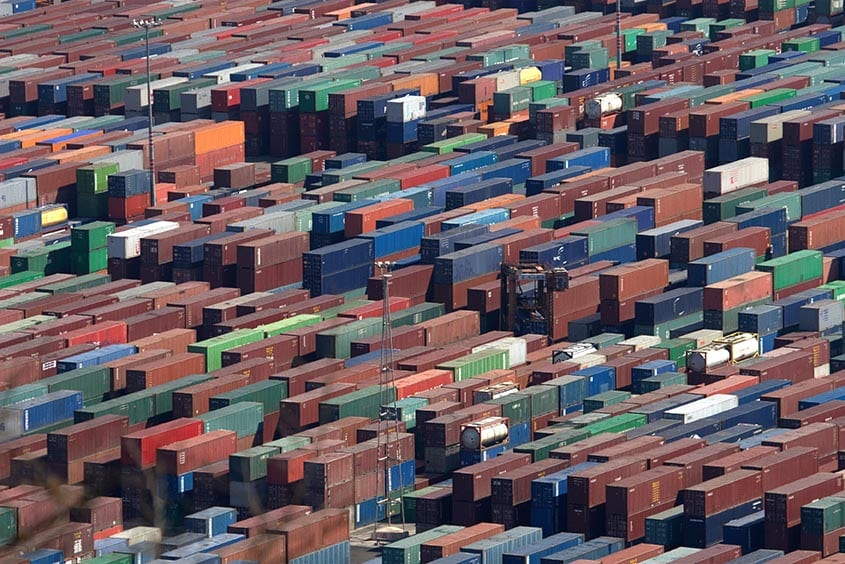
That was around the Vietnamese New Year (mid-February) and that’s when everything started to be delayed in Vietnam because the government was checking the import licenses and companies couldn’t get the customs clearance for their containers, so then containers started to pile up in the ports. And Vietnamese ports, same as all Southeast Asian ports, they are not so big. They are not like in China. So they started to become congested.
There were many Chinese opening factories there. I think Vietnam has been the country where the Chinese companies opened the most factories. The ports started becoming very congested after one month of this.
The Vietnamese government issued import permits after that, or they renewed the current ones, but it was too late. And there were less import licenses than before. So the situation has not gotten any better, even though most of the containers that were stuck at the port in February, they have been cleared already. But there are many others that are still there.
Now, the processing time at the Vietnamese ports is much longer than before. Some terminals in Vietnam have stopped receiving plastic scrap, and we don’t know how the situation is going to be in the future.
Vietnam has been recycling plastic since much earlier than this, so I’m not so sure if they just want to get rid of this, which wouldn’t make much sense since they already have the industry, or they are trying to regulate it. But they still need to find a way.
“These countries, they don’t have the experience that China has. Even the authorities, the customs officers or the environmental department, they don’t really have a long experience, as in China, to tell which material is good, which material is bad, and how to recycle it.”
How have the shipping companies responded to this situation?
When this started happening, a few shipping lines stopped taking any bookings for plastic scrap for Vietnam. From Europe, there are no shipping lines taking any bookings to Vietnam – even if the customer has an import license. Even if everything is OK, they are not taking bookings. Some of our customers, they still have an import license but we cannot ship the containers in.
Right now, we are mostly exporting everything to Malaysia and Thailand, and also to Indonesia.
We’ve been hearing about possible restrictions in those countries as well.
We heard about these rumors a couple of weeks ago. There was a raid by the police in Thailand. They did some inspection of an e-waste processor in Thailand. They said that they found some plastic garbage that cannot be recycled, and then they posted a photo of decent LDPE film in bales, which can be totally recycled.
These countries, they don’t have the experience that China has. Even the authorities, the customs officers or the environmental department, they don’t really have a long experience, as in China, to tell which material is good, which material is bad, and how to recycle it. So I’m not so sure, if they even regulate it, whether it is going to be the right way.
I mean, the Chinese government made a decision. It can be judged in many different ways. But at least they knew the materials, they knew what they were doing and the goals they wanted to reach. But in these Southeast Asian countries, they don’t have as much experience, so I’m not sure how they are going to regulate it, and whether it will be well-informed.
There are many different kinds of plastics that can be recycled, but they don’t know how to tell, so they just label everything as “foreign garbage,” which is a very fashionable term. I hope that at least they get some accurate information before taking any measures.
Photo credit: Lukasz Gonerski