



Resource Recycling
  • The Latest
  • Analysis
    • All
    • Certification Scorecard
    • Industry Announcements
    • Opinion
    HP receives ocean plastics certification

    How HP’s strategy shift affects ITAD

    Industry announcements for January 2026

    Industry announcements for September 2026

    APR adds PCR content verification to cert program

    Certification Scorecard — Week of August 24, 2026

    Top stories from July 2024

    ITAD global regulation and compliance this summer

    ESG

    Foreign equity is moving into North America’s e-scrap origination

    From claims to custody: PCR procurement grows up

    Certification Scorecard — Week of August 17, 2026

  • Conferences
    • Resource Recycling Conference
    • Plastics Recycling Conference
    • E-Scrap: The Longevity Conference
    • Textiles Recovery Summit
  • Publications
    • E-Scrap News
    • Plastics Recycling Update
    • Policy Now
    • Resource Recycling
    • Other Topics
      • All Topics
      • Brand Owners
      • Critical Minerals
      • Glass
      • Grant Watch / RFPs
      • Markets
      • Organics
      • Packaging
      • Research
      • Technology
      • Textiles
Subscribe
No Result
View All Result
Resource Recycling
  • The Latest
  • Analysis
    • All
    • Certification Scorecard
    • Industry Announcements
    • Opinion
    HP receives ocean plastics certification

    How HP’s strategy shift affects ITAD

    Industry announcements for January 2026

    Industry announcements for September 2026

    APR adds PCR content verification to cert program

    Certification Scorecard — Week of August 24, 2026

    Top stories from July 2024

    ITAD global regulation and compliance this summer

    ESG

    Foreign equity is moving into North America’s e-scrap origination

    From claims to custody: PCR procurement grows up

    Certification Scorecard — Week of August 17, 2026

  • Conferences
    • Resource Recycling Conference
    • Plastics Recycling Conference
    • E-Scrap: The Longevity Conference
    • Textiles Recovery Summit
  • Publications
    • E-Scrap News
    • Plastics Recycling Update
    • Policy Now
    • Resource Recycling
    • Other Topics
      • All Topics
      • Brand Owners
      • Critical Minerals
      • Glass
      • Grant Watch / RFPs
      • Markets
      • Organics
      • Packaging
      • Research
      • Technology
      • Textiles
Subscribe
No Result
View All Result
Resource Recycling
No Result
View All Result
Home Recycling

Report details how to make CA textile recycling work

byPaul Lane
February 16, 2026
in Recycling
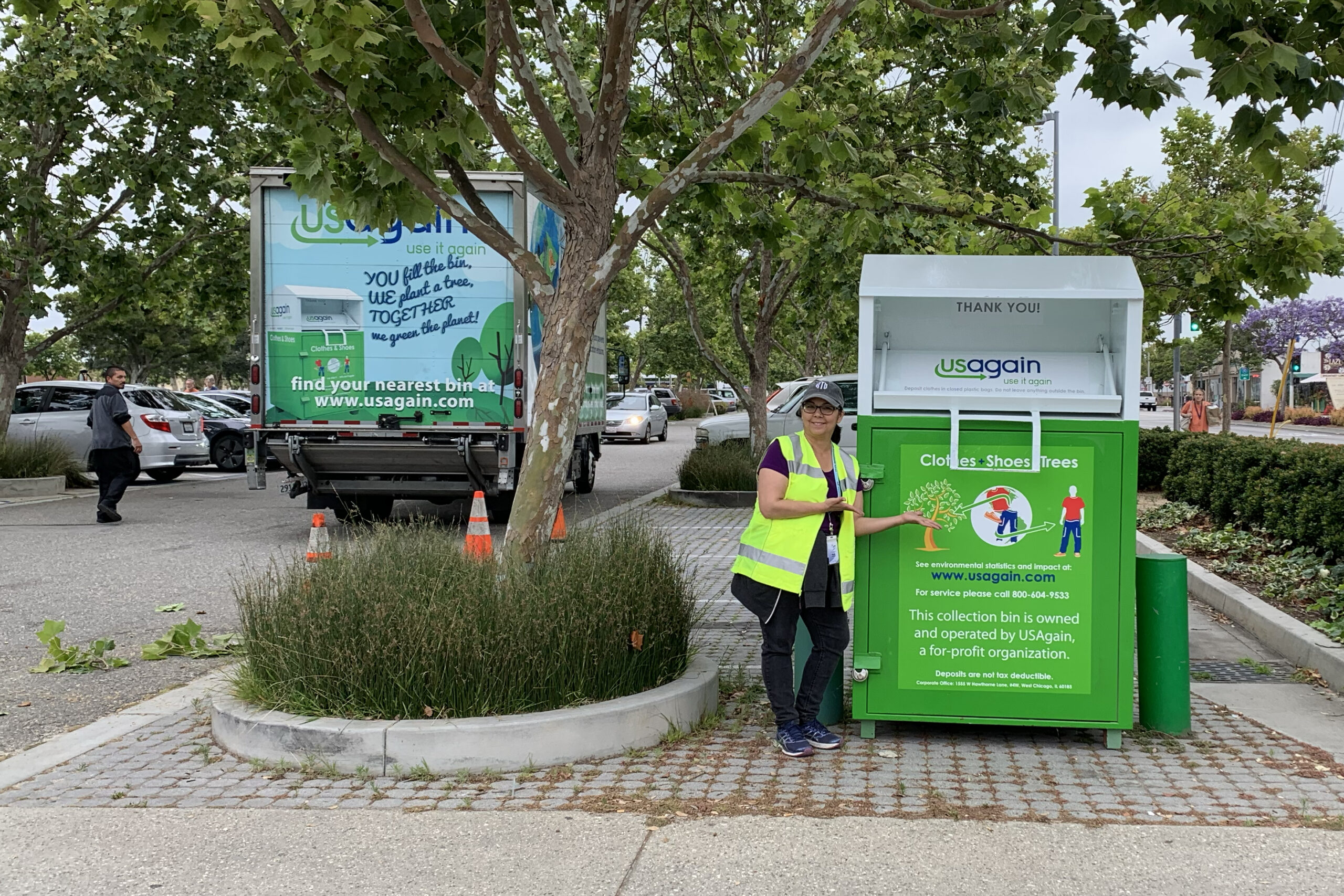
Textile clothing bins

Courtesy USAgain

Editor’s Note: Textile recovery implementation — along with a presentation of this report — will be featured in sessions at the 2026 Textile Recovery Summit, Feb. 23-25 in San Diego, California. Register now!

A new report confirms the sentiment that led to a new textile recovery law in California, detailing just how much clothing-related material ends up in the waste stream and how it could be removed from the waste stream.

The report, California Textiles EPR Study, released by USAgain and researched and written by Cascadia Consulting Group, found nearly 1.2 million tons of textiles were sent to landfills across California, costing residents nearly $99 million per year in disposal-related costs. USAgain is a nonprofit that works to put clothes back into the reuse cycle rather than have them disposed of; it operates textile collection programs in 15 states, including California.

The organizations collaborated on the report to help implement California’s Responsible Recovery Act (SB 707), which will require clothing and other textile companies to fund and operate a statewide recovery and recycling system. USAgain has no official role in the law’s implementation but wanted to offer guidance on how to do so.

“We are living in a world facing a mounting crisis of textile overproduction and waste driven by fast fashion,” said Mattian Wallander, USAgain CEO. “We undertook this study to better understand how collection systems can scale in the real world and to generate the evidence needed to support policymakers and partners in implementing SB 707 effectively.”

 The organizations used quantitative scenario modeling and on-the-ground research to conduct the study. Among its findings was the fact that diverting 24% of textiles from landfills could create 2,500 jobs and save up to 1.7 million metric tons of carbon dioxide emissions. Getting more textiles back into reuse would be a big help toward that, but the report also found an existing infrastructure that might not be able to accommodate such a push:

●  Municipal zoning laws might hamper the collection density needed to meet SB 707’s requirements, especially in areas with few collection options. These laws may limit the use of collection bins, which the study found to be the easiest, most scalable collection method.

●  Convenience standards set forth in the law include a minimum number of collection sites per county. But these sites must be balanced with the fact that clothes should be reused rather than recycled, whenever possible, to maximize circularity and not overstrain recycling sites.

●  Per-producer fee levels required by the law haven’t been specified, which could strain the system’s finances,

The law could also serve as a model elsewhere. The most recent figures from the U.S. Environmental Protection Agency indicate about 17 million tons of textiles were made in 2018 nationally and the textile recycling rate was 14.7% (2.5 million tons). The 11.3 million tons of textile sent to landfills in 2018 represented 7.7% of all material landfilled. But according to estimates from the New York Department of Environmental Conservation, about 95% of textiles can be recycled or reused.

“This matters to Californians and to all Americans because it affects landfill capacity, climate pollution and green job growth,” Wallander said. “It also determines whether residents can actually do the right thing with unwanted textiles.”

The report finds citizens, among other groups, have a role to play in the law’s success. Residents can use collection sites as much as possible and encourage municipal leaders to update their ordinances to expand access. City planners can be receptive to these pleas and make sure their rules don’t hamper the law’s intended effects. Producers can quickly make the investments they need to, hire experienced partners and help normalize donation.

“California has a strong foundation to build on,” said Julie Cerenzia, Cascadia’s director. “The biggest win will be designing a system that works in the real world … With the right implementation, SB 707 can become a landmark circular economy success.”

Adds Wallander: “We would consider the report successful if it helps SB 707 translate policy ambition into measurable, real-world change. That means informing the design and implementation of the extended producer responsibility (EPR) framework.”

Wallander said the study’s findings can be used in the other 12 states in which USAgain works to guide EPR efforts nationally.

Tags: EPRLegislation & EnforcementTextiles
TweetShare
Paul Lane

Paul Lane

Paul Lane is an award-winning journalist who joined Resource Recycling in June 2026 after working for several years in corporate communications and at various local news outlets. He can be reached at paul.lane@resource-recycling.com.

Related Posts

Removing an eBike battery pack.

California battery EPR bill heads to Newsom’s desk

byStefanie Valentic
September 1, 2026

Editor's note: Policy for batteries and electronics is among the sessions at the 2026 E-Scrap Conference, Oct. 26-28 in New...

Bipartisan reps introduce bill on recycling claims

House subcommittee advances PACK Act

byStefanie Valentic
September 1, 2026

A federal preemption bill over packaging labels just moved one step closer to reality on Capitol Hill.

EFS-plastics invests as EPR takes shape

EFS-plastics invests as EPR takes shape

byAntoinette Smith
August 31, 2026

The Canadian recycler recently completed a $12m expansion of its Alberta facility, amid emerging packaging EPR programs at home and...

Recology CEO Sal Coniglio in front of one of the hauler's trucks

Recology’s Sal Coniglio on business and policy working together

byBrian Clark Howard
August 31, 2026

The CEO of the West Coast hauler and recycler shares his thoughts on EPR, organics and what keeps him up...

Minnesota EPR program advances in budget bill

Oregon’s EPR law survives first constitutional test

byStefanie Valentic
August 28, 2026

After a five-day trial and 71 pages of findings, Judge Michael Simon says the state's packaging EPR law is constitutional.

Top stories from July 2024

ITAD global regulation and compliance this summer

byDavid Daoud
August 26, 2026

For ITAD and recycling industry stakeholders, the period reinforced policy priorities around product life, battery safety, packaging responsibility and cross-border...

Load More
Next Post
UN trade data, tools aim to shape plastics treaty talks

UN trade data, tools aim to shape plastics treaty talks

2026 Buyers’ Guide

Equipment, services and technology suppliers serving the recycling industry.

Browse the Guide

More Posts

Alpek closing Pennsylvania RPET plant

Alpek seizing on war-related opportunity 

July 27, 2026
Minnesota EPR program advances in budget bill

Oregon’s EPR law survives first constitutional test

August 28, 2026
Recology CEO Sal Coniglio in front of one of the hauler's trucks

Recology’s Sal Coniglio on business and policy working together

August 31, 2026
WM CEO Jim Fish to retire in string of leadership changes

WM CEO Jim Fish to retire in string of leadership changes

August 26, 2026

Bob’s Red Mill meets 92% waste diversion rate

August 26, 2026
Bipartisan reps introduce bill on recycling claims

House subcommittee advances PACK Act

September 1, 2026
Hefty ending Orange Bag program

Hefty ending Orange Bag program

August 25, 2026
Mich. sortation project shows shifting MRF role

Mich. sortation project shows shifting MRF role

August 26, 2026
Canada seeks recycled-content mandates feedback

Building demand for recycled flexibles

August 25, 2026
The Maine state capitol building.

No bidders respond to Maine’s EPR RFP

August 20, 2026
Load More

About & Publications

About Us

Staff

Archive

Magazine

Work With Us

Advertise
Jobs
Contact
Terms and Privacy

Newsletter

Get the latest recycling news and analysis delivered to your inbox every week. Stay ahead on industry trends, policy updates, and insights from programs, processors, and innovators.

Subscribe

Welcome Back!

Login to your account below

Forgotten Password?

Retrieve your password

Please enter your username or email address to reset your password.

Log In

Add New Playlist

No Result
View All Result
  • The Latest
  • Analysis
  • Recycling
  • E-Scrap
  • Plastics
  • Policy Now
  • Conferences
    • E-Scrap Conference
    • Plastics Recycling Conference
    • Resource Recycling Conference
    • Textiles Recovery Summit
  • Magazine
  • About Us
  • Advertise
  • Archive
  • Jobs
  • Staff
Subscribe
This website uses cookies. By continuing to use this website you are giving consent to cookies being used. Visit our Privacy and Cookie Policy.