





Resource Recycling
  • The Latest
  • Analysis
    • All
    • Certification Scorecard
    • Industry Announcements
    • Opinion
    What the NAND flash crunch means for remarketing, refurbishment and residual values

    Telamon acquires ITAD consultancy Retire-IT

    Certification Scorecard — Week of July 6, 2026

    Tech giant pens detailed ‘plastic-free packaging’ guide

    What Google’s latest report means for ITAD

    Unpacking the Starbucks cup data

    Unpacking the Starbucks cup data

    Amazon cutting out more flexible packaging

    Amazon’s AWS hardware reuse is measured

    MP Materials breaks ground on rare earth magnet campus in North Texas

    ERI confirms ITAD shift toward minerals

  • Conferences
    • Resource Recycling Conference
    • Plastics Recycling Conference
    • E-Scrap: The Longevity Conference
    • Textiles Recovery Summit
  • Publications
    • E-Scrap News
    • Plastics Recycling Update
    • Policy Now
    • Resource Recycling
    • Other Topics
      • All Topics
      • Brand Owners
      • Critical Minerals
      • Glass
      • Grant Watch / RFPs
      • Markets
      • Organics
      • Packaging
      • Research
      • Technology
      • Textiles
Subscribe
No Result
View All Result
Resource Recycling
  • The Latest
  • Analysis
    • All
    • Certification Scorecard
    • Industry Announcements
    • Opinion
    What the NAND flash crunch means for remarketing, refurbishment and residual values

    Telamon acquires ITAD consultancy Retire-IT

    Certification Scorecard — Week of July 6, 2026

    Tech giant pens detailed ‘plastic-free packaging’ guide

    What Google’s latest report means for ITAD

    Unpacking the Starbucks cup data

    Unpacking the Starbucks cup data

    Amazon cutting out more flexible packaging

    Amazon’s AWS hardware reuse is measured

    MP Materials breaks ground on rare earth magnet campus in North Texas

    ERI confirms ITAD shift toward minerals

  • Conferences
    • Resource Recycling Conference
    • Plastics Recycling Conference
    • E-Scrap: The Longevity Conference
    • Textiles Recovery Summit
  • Publications
    • E-Scrap News
    • Plastics Recycling Update
    • Policy Now
    • Resource Recycling
    • Other Topics
      • All Topics
      • Brand Owners
      • Critical Minerals
      • Glass
      • Grant Watch / RFPs
      • Markets
      • Organics
      • Packaging
      • Research
      • Technology
      • Textiles
Subscribe
No Result
View All Result
Resource Recycling
No Result
View All Result
Home Plastics

EPA report includes 2019 recycling rate estimates

Marissa HeffernanbyMarissa Heffernan
January 29, 2025
in Plastics
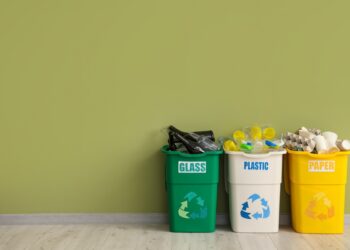
As part of a recent report, the U.S. EPA provided new recycling rate estimates, which hadn’t been updated since the agency released 2018 data. | Billion Photos/Shutterstock

The U.S. EPA’s recent recycling infrastructure report was largely focused on the investments needed to improve the system but also included new recycling rate estimates for specific materials, some of the first data updates the agency has released since its last Facts and Figures report several years ago. 

The Assessment of the U.S. Recycling System: Financial Estimates to Modernize Material Recovery Infrastructure came out of a 2021 directive from Congress for the EPA to collect data on residential recycling and estimate the financial investments needed to modernize the U.S. recycling system. 

It included 2019 generation and recycling tonnages for PET bottles, PET rigids, HDPE bottles, aluminum, steel, cardboard, paper and glass – and the rates, in many cases, differ sharply from other estimates. 

The report estimated recycling rates of: 

  • PET bottles: 23.2%.
  • PET rigids: 5.9%.
  • HDPE bottles: 22.7%.
  • Aluminum: 36.9%.
  • Steel: 31.2%.
  • Cardboard: 53.5%.
  • Paper: 29.6%.
  • Glass: 41.4%.
  • Total: 38.9%.

Those generation and recycling volumes were estimated using the 50 States of Recycling report, prepared by Eunomia for the Ball Corporation, as well as the U.S. Census Bureau’s American Community Survey and state waste management reports.

The report noted that the 50 States of Recycling report from 2021 was applied to state-level population data from the 2019 American Community Survey. However, data for paper generation and recycling were unavailable for most states, so the EPA estimated missing values using the difference between average per-capita generation and recycling for states that reported data for paper recycling.

“It is important to note that the state paper generation data are self-reported, not independently verified, collected at irregular intervals, and contain varying levels of detail about community recycling programs,” the report’s authors added. 

Terry Webber, American Forest and Paper Association vice president of industry affairs, said that language in the EPA report raises “questions about the accuracy of their new recycling rate statistics.”

“Facts and data matter, especially when it comes to measuring and tracking the success of paper recycling over time,” he said, adding that “AF&PA has closely monitored paper recycling rates for decades.”

Past estimates 

However, looking at other reports that estimated 2019 recycling rates for specific materials, there’s a wide spread between the numbers. 

The AF&PA estimated a cardboard recycling rate of 92% and a mixed paper recycling rate of 66.2% in 2019, while a study from the National Renewable Energy Laboratory estimated a paper recycling rate of 38%. 

The EPA itself has not released an update to its Facts and Figures report since 2020, which covered 2018 data. In that report, it estimated a 68% paper recycling rate for 2018. 

Fiber industry analysts from Bloomberg Intelligence and Circular Ventures have also presented different, lower OCC and paper recycling rate estimates. 

AF&PA changed how it calculates recycling rates last November, Webber added, “to reflect continuously evolving global economic, supply chain, and trade flows.”

The new rate is “what we believe is the most thorough and fact-based U.S. recycling rate possible with currently available data,” Webber noted, which reflects AF&PA’s “commitment to utilize the best data available to support industry investments and guide our efforts to recover and recycle more paper and paper packaging products in the U.S.”

Looking at plastics, NAPCOR and the Association of Plastic Recyclers published a 2019 PET bottle recycling rate of 27.9% and a total HDPE bottle recycling rate of 30.9%. 

NAPCOR’s Director of Data Services Lauren Laibach said the rates differ due to differing methodologies.

“Previously, the EPA relied on industry data to generate their annual ‘facts and figures,’ but this effort was discontinued,” she said. “The recent EPA report states that they rely in large part on Eunomia’s 2021 The 50 States of Recycling report, which emphasizes what Eunomia calls the “real” (net) recycling rate, instead of the collection (gross) rate that is most commonly used to characterize and track recycling performance.”

Meanwhile, NAPCOR calculates both, Laibach said. In addition, Eunomia relies on data collected and reported by individual states, rather than nationwide industry data, and “waste characterization studies are sometimes the only basis for arriving at individual state recycling rates.”

“Because recycling takes place through complex systems, and the point at which data is available affects measurement of recycling performance,” it can be complicated to arrive at a nationwide recycling rate, she added. Setting standards or best practices to create consistency across material reporting could help, Laibach noted, but “this would require cooperation among many different stakeholders, and it could be tough to arrive at consensus given the complexity of the issues.”

While the Glass Packaging Institute did not have numbers for 2019, it estimated a recycling rate of 31.3% for glass food and beverage packaging containers in 2018.The Aluminum Association published a consumer recycling rate for aluminum cans of 46.1% in 2019, higher than the EPA’s new estimate.

Editor’s note: This story has been updated with statements from AF&PA and NAPCOR.

A version of this story appeared in Resource Recycling on Jan. 28.

Tags: DataPlasticsTextiles
TweetShare
Marissa Heffernan

Marissa Heffernan

Marissa Heffernan worked at Resource Recycling from January 2022 through June 2025, first as staff reporter and then as associate editor. Marissa Heffernan started working for Resource Recycling in January 2022 after spending several years as a reporter at a daily newspaper in Southwest Washington. After developing a special focus on recycling policy, they were also the editor of the monthly newsletter Policy Now.

Related Posts

Unpacking the Starbucks cup data

Unpacking the Starbucks cup data

byAntoinette Smith
July 8, 2026

Upon close examination, data casting doubt on the coffee giant's recycling claims raises more questions than it answers.

RIT researchers develop AI-based textile recycling system

CA expects first textile EPR deadline

byStefanie Valentic
June 30, 2026

California's first textile EPR registration deadline arrives July 1 amid lawsuits challenging the nonprofit status of Landbell USA, the selected...

NERC forum explores textile reuse

byIsabella Burke
June 30, 2026

A July 7 online forum will explain the role of donation and resale in the textiles space.

EPR deadlines approach as lawsuits loom

byStefanie Valentic
June 23, 2026

Packaging producers in Washington and Maryland have until July 1 to register with a producer responsibility organization (PRO), demonstrating how...

Tzvika Shahaf of Blancco

Blancco names new SVP of product strategy

byDavid Daoud
June 17, 2026

At the same time the data erasure landscape is undergoing a major shift.

Goodwill, WM partner for textile recycling pilot

CiCLO co-creator helps forge path to sustainability

byPaul Lane
June 11, 2026

Andrea Ferris says her additives, which can make synthetic fabrics biodegradable, can help companies improve their environmental footprints while meeting...

Load More
Next Post
Hawaii Pacific opens summer short classes on plastics

Hawaii Pacific opens summer short classes on plastics

More Posts

Oregon’s Recycling Modernization Act faces injunction

Oregon’s EPR program posts first-year results

July 6, 2026
Two recycled-content bills gain approval in California

California agriculture seeks SB 54 repeal

July 7, 2026
Unpacking the Starbucks cup data

Unpacking the Starbucks cup data

July 8, 2026
In Our Opinion: Coalitions: The EPR Differentiator

Inside NAW’s constitutional case against packaging EPR

July 6, 2026
EPR fees are a market signal. Here’s what they’re telling you.

Building the infrastructure behind EPR

July 6, 2026
Tech giant pens detailed ‘plastic-free packaging’ guide

What Google’s latest report means for ITAD

July 8, 2026
MP Materials breaks ground on rare earth magnet campus in North Texas

ERI confirms ITAD shift toward minerals

July 3, 2026
SB 54 draft rules generate debate on rates, review

California increases PET market payments

July 7, 2026
ITAD firm wins spot for NASA purchasing

ITAD firm wins spot for NASA purchasing

July 6, 2026
SCS launches chem recycling standard

SCS launches chem recycling standard

July 1, 2026
Load More

About & Publications

About Us

Staff

Archive

Magazine

Work With Us

Advertise
Jobs
Contact
Terms and Privacy

Newsletter

Get the latest recycling news and analysis delivered to your inbox every week. Stay ahead on industry trends, policy updates, and insights from programs, processors, and innovators.

Subscribe

Welcome Back!

Login to your account below

Forgotten Password?

Retrieve your password

Please enter your username or email address to reset your password.

Log In

Add New Playlist

No Result
View All Result
  • The Latest
  • Analysis
  • Recycling
  • E-Scrap
  • Plastics
  • Policy Now
  • Conferences
    • E-Scrap Conference
    • Plastics Recycling Conference
    • Resource Recycling Conference
    • Textiles Recovery Summit
  • Magazine
  • About Us
  • Advertise
  • Archive
  • Jobs
  • Staff
Subscribe
This website uses cookies. By continuing to use this website you are giving consent to cookies being used. Visit our Privacy and Cookie Policy.