





Resource Recycling
  • The Latest
  • Analysis
    • All
    • Certification Scorecard
    • Industry Announcements
    • Opinion
    Colorado regulators suggest mid-range EPR scenario

    Why collaboration on plastic waste still matters

    Battery processors lay out latest moves

    Battery recycler Ascend Elements files for bankruptcy

    EPR fees are a market signal. Here’s what they’re telling you.

    EPR fees are a market signal. Here’s what they’re telling you.

    Wolframite ore, the primary ore of tungsten from Altai, Russia

    Tungsten scrap export controls draw industry attention

    Certification Scorecard — Week of April 6, 2026

    Closed Loop Partners acquires Sutter Metals, connecting electronics disposition to metals recovery

    Certification Scorecard — Week of March 30, 2026

    Industry announcements for January 2026

    Industry announcements for April 2026

    Certification scorecard – Week of March 23, 2026

  • Conferences
  • Publications

    Other Topics

    Textiles
    Organics
    Packaging
    Glass
    Brand Owners

    Metals
    Technology
    Research
    Markets
    Grant Watch

    All Topics

Subscribe
No Result
View All Result
Resource Recycling
  • The Latest
  • Analysis
    • All
    • Certification Scorecard
    • Industry Announcements
    • Opinion
    Colorado regulators suggest mid-range EPR scenario

    Why collaboration on plastic waste still matters

    Battery processors lay out latest moves

    Battery recycler Ascend Elements files for bankruptcy

    EPR fees are a market signal. Here’s what they’re telling you.

    EPR fees are a market signal. Here’s what they’re telling you.

    Wolframite ore, the primary ore of tungsten from Altai, Russia

    Tungsten scrap export controls draw industry attention

    Certification Scorecard — Week of April 6, 2026

    Closed Loop Partners acquires Sutter Metals, connecting electronics disposition to metals recovery

    Certification Scorecard — Week of March 30, 2026

    Industry announcements for January 2026

    Industry announcements for April 2026

    Certification scorecard – Week of March 23, 2026

  • Conferences
  • Publications

    Other Topics

    Textiles
    Organics
    Packaging
    Glass
    Brand Owners

    Metals
    Technology
    Research
    Markets
    Grant Watch

    All Topics

Subscribe
No Result
View All Result
Resource Recycling
No Result
View All Result
Home Recycling

US EPA shares new recycling rate estimates

Marissa HeffernanbyMarissa Heffernan
January 28, 2025
in Recycling
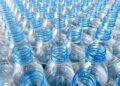
As part of a recent report, the U.S. EPA provided new recycling rate estimates, which hadn’t been updated since the agency released 2018 data. | Billion Photos/Shutterstock

The U.S. EPA’s recent recycling infrastructure report was largely focused on the investments needed to improve the system but also included new recycling rate estimates for specific materials, some of the first data updates the agency has released since its last Facts and Figures report several years ago. 

The Assessment of the U.S. Recycling System: Financial Estimates to Modernize Material Recovery Infrastructure came out of a 2021 directive from Congress for the EPA to collect data on residential recycling and estimate the financial investments needed to modernize the U.S. recycling system. 

It included 2019 generation and recycling tonnages for PET bottles, PET rigids, HDPE bottles, aluminum, steel, cardboard, paper and glass – and the rates, in many cases, differ sharply from other estimates. 

The report estimated recycling rates of: 

  • PET bottles: 23.2%.
  • PET rigids: 5.9%.
  • HDPE bottles: 22.7%.
  • Aluminum: 36.9%.
  • Steel: 31.2%.
  • Cardboard: 53.5%.
  • Paper: 29.6%.
  • Glass: 41.4%.
  • Total: 38.9%.

Those generation and recycling volumes were estimated using the 50 States of Recycling report, prepared by Eunomia for the Ball Corporation, as well as the U.S. Census Bureau’s American Community Survey and state waste management reports.

The report noted that the 50 States of Recycling report from 2021 was applied to state-level population data from the 2019 American Community Survey. However, data for paper generation and recycling were unavailable for most states, so the EPA estimated missing values using the difference between average per-capita generation and recycling for states that reported data for paper recycling.

“It is important to note that the state paper generation data are self-reported, not independently verified, collected at irregular intervals, and contain varying levels of detail about community recycling programs,” the report’s authors added. 

Terry Webber, American Forest and Paper Association vice president of industry affairs, said that language in the EPA report raises “questions about the accuracy of their new recycling rate statistics.”

“Facts and data matter, especially when it comes to measuring and tracking the success of paper recycling over time,” he said, adding that “AF&PA has closely monitored paper recycling rates for decades.”

Past estimates 

However, looking at other reports that estimated 2019 recycling rates for specific materials, there’s a wide spread between the numbers. 

The AF&PA estimated a cardboard recycling rate of 92% and a mixed paper recycling rate of 66.2% in 2019, while a study from the National Renewable Energy Laboratory estimated a paper recycling rate of 38%. 

The EPA itself has not released an update to its Facts and Figures report since 2020, which covered 2018 data. In that report, it estimated a 68% paper recycling rate for 2018. 

Fiber industry analysts from Bloomberg Intelligence and Circular Ventures have also presented different, lower OCC and paper recycling rate estimates. 

AF&PA changed how it calculates recycling rates last November, Webber added, “to reflect continuously evolving global economic, supply chain, and trade flows.”

The new rate is “what we believe is the most thorough and fact-based U.S. recycling rate possible with currently available data,” Webber noted, which reflects AF&PA’s “commitment to utilize the best data available to support industry investments and guide our efforts to recover and recycle more paper and paper packaging products in the U.S.”

Looking at plastics, NAPCOR and the Association of Plastic Recyclers published a 2019 PET bottle recycling rate of 27.9% and a total HDPE bottle recycling rate of 30.9%. 

NAPCOR’s Director of Data Services Lauren Laibach said the rates differ due to differing methodologies.

“Previously, the EPA relied on industry data to generate their annual ‘facts and figures,’ but this effort was discontinued,” she said. “The recent EPA report states that they rely in large part on Eunomia’s 2021 The 50 States of Recycling report, which emphasizes what Eunomia calls the “real” (net) recycling rate, instead of the collection (gross) rate that is most commonly used to characterize and track recycling performance.”

Meanwhile, NAPCOR calculates both, Laibach said. In addition, Eunomia relies on data collected and reported by individual states, rather than nationwide industry data, and “waste characterization studies are sometimes the only basis for arriving at individual state recycling rates.”

“Because recycling takes place through complex systems, and the point at which data is available affects measurement of recycling performance,” it can be complicated to arrive at a nationwide recycling rate, she added. Setting standards or best practices to create consistency across material reporting could help, Laibach noted, but “this would require cooperation among many different stakeholders, and it could be tough to arrive at consensus given the complexity of the issues.”

While the Glass Packaging Institute did not have numbers for 2019, it estimated a recycling rate of 31.3% for glass food and beverage packaging containers in 2018.The Aluminum Association published a consumer recycling rate for aluminum cans of 46.1% in 2019, higher than the EPA’s new estimate.

Editor’s note: This story has been updated with statements from AF&PA and NAPCOR.
Tags: DataPaper FiberPlastics
TweetShare
Marissa Heffernan

Marissa Heffernan

Marissa Heffernan worked at Resource Recycling from January 2022 through June 2025, first as staff reporter and then as associate editor. Marissa Heffernan started working for Resource Recycling in January 2022 after spending several years as a reporter at a daily newspaper in Southwest Washington. After developing a special focus on recycling policy, they were also the editor of the monthly newsletter Policy Now.

Related Posts

Industrial sources drive rise in PVC recycling

byAntoinette Smith
April 13, 2026

Volumes of post-industrial PVC recycled in 2024 rose by 10% from 2019 levels, while post-consumer sources fell and missed a...

WM opens new $60m MRF in Indy

byAntoinette Smith
April 10, 2026

The newest recycling facility has annual capacity of 200,000 tons and will send all mixed paper to Pratt Industries for...

Paper giant closes Texas containerboard mill

International Paper plans $225m Mississippi plant

byScott Snowden
March 31, 2026

International Paper plans a $225m box plant in Mississippi to replace an aging facility, with reported capacity of 1.8 billion...

Unilever shifting focus to flexibles targets

Unilever shifting focus to flexibles targets

byAntoinette Smith
March 23, 2026

The global brand hit its target of 25% PCR use in packaging last year, but will increase work on substituting...

In My Opinion: Bring consumer trust to refurb markets

Record $6.4B in trade-ins as older phones drive market

byScott Snowden
March 23, 2026

Device protection and services firm Assurant showed that iPhones were traded in at an average 3.8 years and Androids reached...

Northeast recycled commodity values hit 5-year lows

Northeast recycled commodity values hit 5-year lows

byAntoinette Smith
March 6, 2026

While most recycled commodity values continued to fall during the quarter, they did so at a slower pace, according to...

Load More
Next Post

Oakland recycling contract scheme draws federal scrutiny

More Posts

EPR fees are a market signal. Here’s what they’re telling you.

EPR fees are a market signal. Here’s what they’re telling you.

April 10, 2026
End markets, policy key to RPET viability

End markets, policy key to RPET viability

April 8, 2026

Trafigura signs $1.1b deal for recycled battery metals

April 8, 2026
Wineries help create model for film recycling

Wineries help create model for film recycling

April 7, 2026
With RPET in crisis, focus turns to solutions

With RPET in crisis, focus turns to solutions

April 2, 2026
Wolframite ore, the primary ore of tungsten from Altai, Russia

Tungsten scrap export controls draw industry attention

April 9, 2026
Plastics Recyclers Have the Capacity to Recycle More. Now Let’s Use It.

Study finds most recycling occurs within 30 miles of access

April 8, 2026

WM opens new $60m MRF in Indy

April 10, 2026
Solarcycle starts up Georgia recycling plant

S3399 signals a shift in how states are tackling solar panel waste

April 6, 2026
Bill to update New Jersey e-scrap program heads to governor

New Jersey recyclers talk EPR

April 9, 2026
Load More

About & Publications

About Us

Staff

Archive

Magazine

Work With Us

Advertise
Jobs
Contact
Terms and Privacy

Newsletter

Get the latest recycling news and analysis delivered to your inbox every week. Stay ahead on industry trends, policy updates, and insights from programs, processors, and innovators.

Subscribe

Welcome Back!

Login to your account below

Forgotten Password?

Retrieve your password

Please enter your username or email address to reset your password.

Log In

Add New Playlist

No Result
View All Result
  • The Latest
  • Analysis
  • Recycling
  • E-Scrap
  • Plastics
  • Policy Now
  • Conferences
    • E-Scrap Conference
    • Plastics Recycling Conference
    • Resource Recycling Conference
    • Textiles Recovery Summit
  • Magazine
  • About Us
  • Advertise
  • Archive
  • Jobs
  • Staff
Subscribe
This website uses cookies. By continuing to use this website you are giving consent to cookies being used. Visit our Privacy and Cookie Policy.