

As more consumers turn a skeptical eye to traditional recycling programs, Ridwell, a company that provides curbside collection of hard-to-recycle materials, is growing into numerous markets across the country. And the company is doing it with transparency in mind.
Gerrine Pan, Ridwell’s vice president of partnerships, said demand is booming in terms of both new customers and customer demand for more material types to be added to the program.
“Right now the challenge is just going to be being able to continue our mission and expand at the pace that we want to go,” she told Plastics Recycling Update. “To match up the need and the desire and will with actually the ability to keep operations steady, that’s a tough thing.”
During a tour of Ridwell’s Portland warehouse, Taylor Loewen, regional director for the West, said that “you have to get the right match between stuff people have in their homes that also have end markets.”
Growing from Owen’s List
Ridwell started out as a weekend project for founder and CEO Ryan Metzger and his young son, Owen, nearly six years ago. Each week, they would take a different household item in need of disposal and figure out where to bring it. Eventually, they started asking neighbors if anyone else had anything to bring to Seattle-area transfer stations, Pan said, and that led to a 2,000-person list called Owen’s List for disposal of tricky items. From there, Ridwell was born.
Today, Ridwell is in eight markets: Seattle; Portland, Oregon; the San Francisco Bay Area; Los Angeles; Denver; Austin, Texas; Minneapolis; and Atlanta. The company services 100,000 homes, and Pan said they keep lists of ZIP codes where people have requested service. When it seems like there’s enough interest in an area to make collection efficient and productive, Pan said they start exploring the market.
“Our plan for the future is really expansion,” she said. “We’d love to be in more East Coast cities” and all major metropolitan areas.
Pan noted that most new customers report hearing about Ridwell through word-of-mouth. Skepticism about recycling has ballooned in recent years, driving more conversations about the process and companies like Ridwell.
“That’s absolutely like a tailwind for our business, but also it’s work,” Pan said. “Because then our job is to educate people. I mean, it’s just who we are, to have radical transparency, but it absolutely has to be something that we put time and effort toward.”
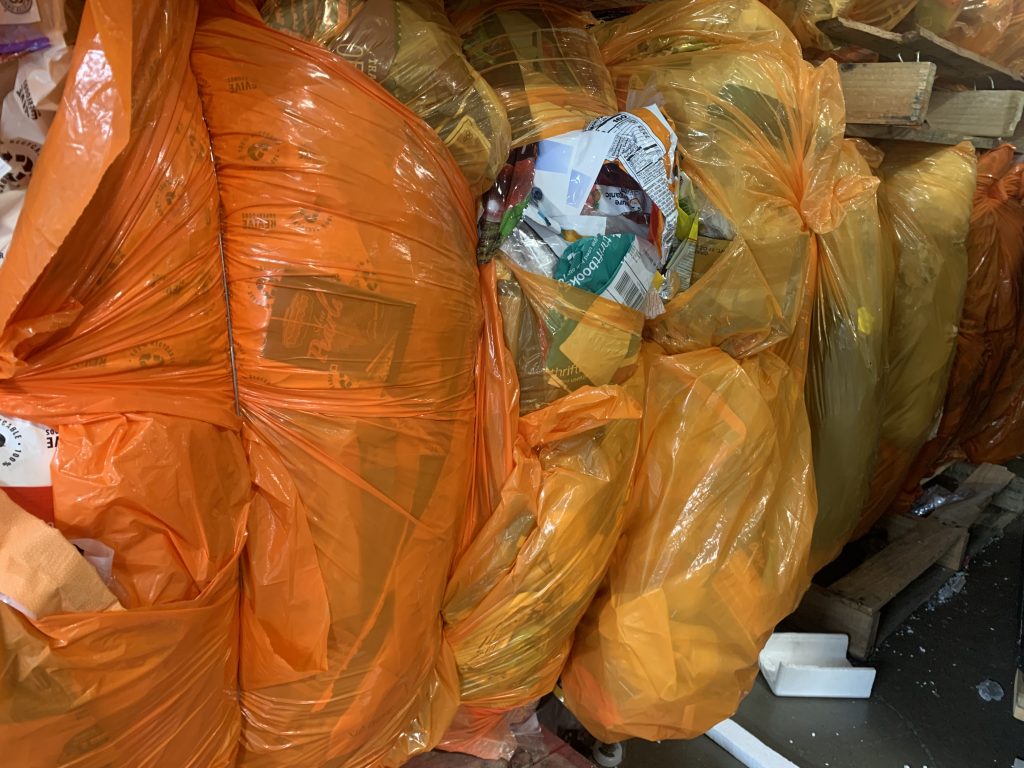
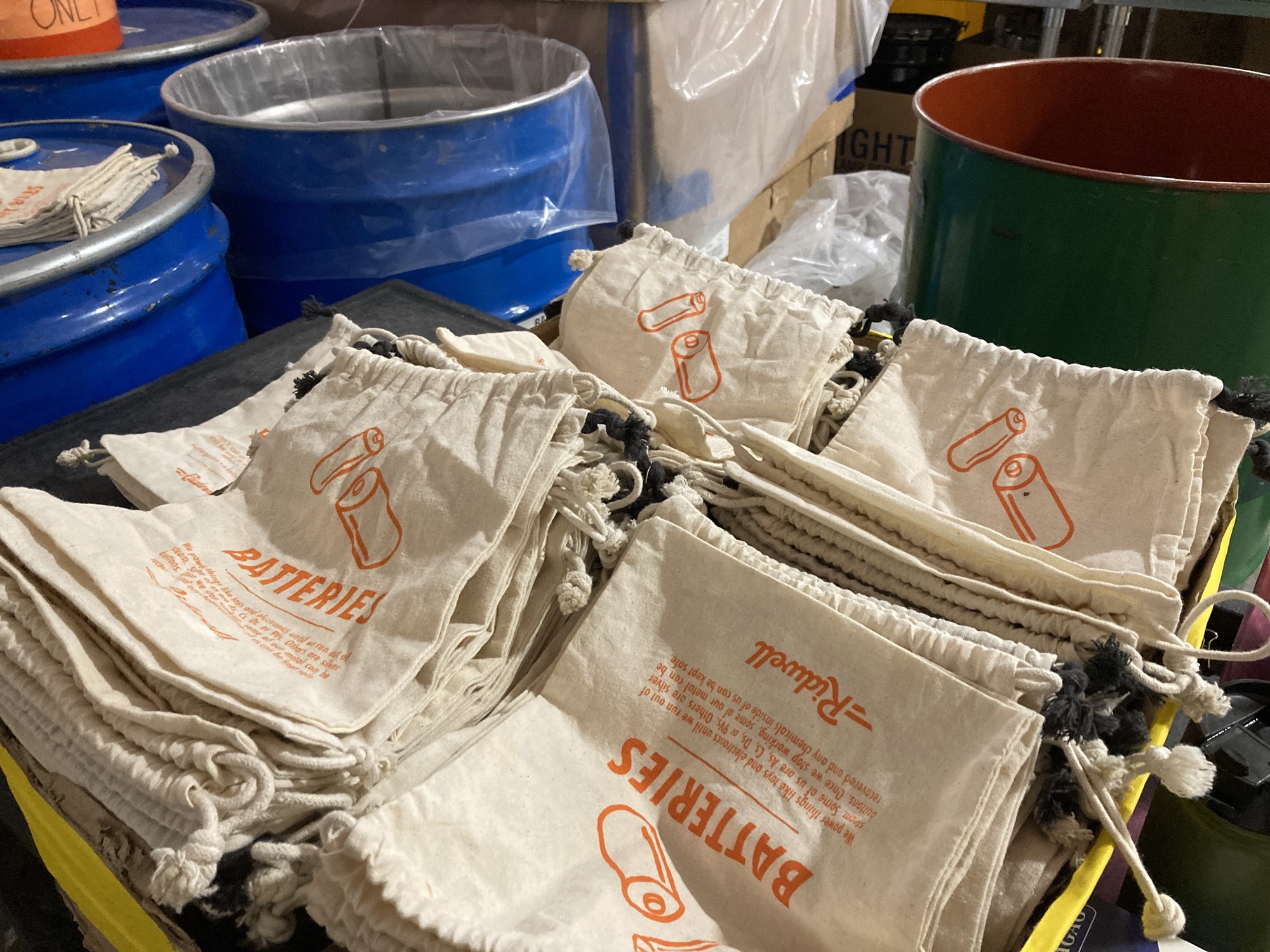
The bags into which customers put recyclable materials are all printed with information about what to recycle and how, which helps reduce contamination, Loewen said, as does the fact that this is a paid service that customers opt into.
Transparency in downstream outlets, diversion data
Ridwell lists all of its downstream partners on its website, by market, along with diversion rates and contamination rates. Pan and a team of three other people have selected and vetted all 220 of their U.S. partners, choosing local companies when possible. All of the partners are in North America.
“It’s a blend of predominantly local, then there’s some regional and some nationwide, depending on the category,” Pan said.
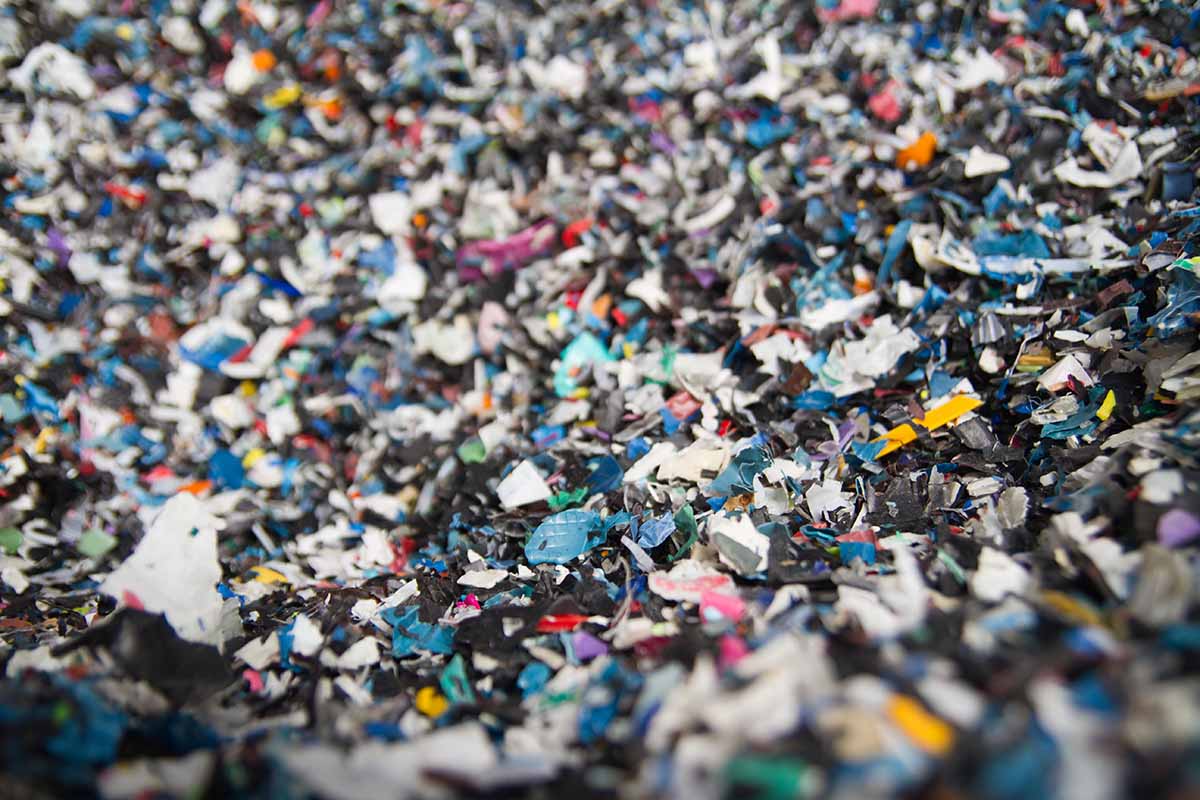
Ridwell picks up the typical hard-to-recycle items twice a month from customers’ doorsteps, such as batteries, lightbulbs, plastic film and textiles, as part of its more basic plan. It also takes materials such as EPS, multilayer plastics, plastic thermoform containers, paint and fluorescent lights for an extra cost, depending on the location.
“There’s a lot of other things that we can do, but we never overlap with the blue bin and so it changes depending on where we are,” Pan said.
In addition, there are “featured categories” that change every pickup and tend to be reusable items, in support of a rotating cast of nonprofits. For example, Pan said one week’s featured collection will be old eyeglasses for the Lions Club, secondhand bras for women’s shelters or used pet leashes and collars for animal shelters.
In each market, Ridwell has a roughly 10,000-square-foot warehouse where it aggregates the materials until it has full truckloads to send to partners.
“If we are very early on and not receiving enough, we will regionally consolidate and we’ll do LTLs – less than truckloads – to get from one market to another to ultimately get to our partner,” Pan said. “That’s happened a couple times, but we grow out of that relatively quickly.”
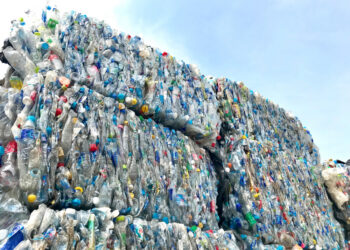
In Portland, material from about 25,000 customers is picked up with 20 vans. Workers hand-sort and aggregate items, and two balers compress clamshells, film and multi-material packaging. Loewen said from the Portland market, about 40,000 pounds of film is sent to Trex about once a month, while about 12,000 pounds of clamshells go to K&S Recycling each month.
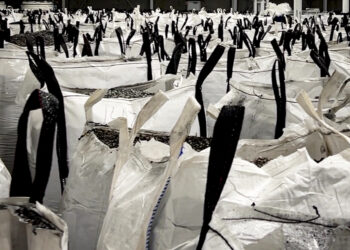
A truckload of multilayer packaging is shipped to HydroBlox about every month and a half. EPS goes to Green Century Recycling after the closure of Agilyx, and Loewen said EPS volumes have been higher since the removal of Agilyx’s drop-off option.
“The name of the game is getting items out of here as fast as they come in,” Loewen said.
Pan and her team work a year in advance on the nonprofit partners, creating a calendar to share with customers. For recycling partners, the vetting process depends on the material.
For electronics and batteries, Pan checks for certifications such as R2 or e-Stewards, but “there’s a lot of hard-to-recycle categories for which there is no standard, in which case we are going, we’re meeting them personally.”
“We’re vetting to make sure that they’re diverting from landfill,” Pan said. “We are checking online to see if they have environmental violations – we check for that.”
Trex said via email that it has partnered with Ridwell since 2020. Stephanie Hicks, materials and recycling programs manager for Trex, said that Ridwell is “an incredibly valuable source of high-quality plastic film, which is a key ingredient in the making of Trex composite decking.”
Dave Heglas, senior director of material management for Trex, said Ridwell “does a fantastic job of educating the marketplace on the importance of transparency and how to properly recycle plastic waste so that it is usable and doesn’t end up in landfills.”
“Together, transparency and education are the keys to driving behavior and habits that can make a big impact on our environment,” Heglas added.
Loewen said that Ridwell hopes to set a new standard with its transparency policies.
Changing end markets
Some end markets are getting easier to tap into, while others are contracting, Pan said.
“It’s very category-specific,” she added. “It’s hard to see a trend, actually, because we work on and we will tease out items for which there is literally no other market.”
For example, multilayer plastics and EPS continue to be difficult, she said, as Ridwell does not partner with chemical recyclers. Clamshells are also difficult, and Ridwell recently had to remove flexible foam from its offerings in the Bay Area and Minneapolis after previous partners stopped accepting it.
“In the entire time that I’ve been at Ridwell, we’ve hardly ever taken something off the menu,” Pan said, but after doing a multi-month search, they couldn’t find a solution.
Mono-material film has a robust market compared to other materials Ridwell deals in, Pan said. The trick is aggregating enough to make transportation efficient.
Pan also maintains a list of items that customers have requested Ridwell take, and “we chip away at it.” Last year, Ridwell did 20 trials of items, including down feather pillows, wetsuits, climbing rope and plastic Easter eggs.
“We listen to what people want and we try,” she said. “There are some items that are really, really hard. We really can’t find someone to take it.”
EPR interplay
In areas with extended producer responsibility programs for paint and batteries, Ridwell works with the producer responsibility organizations. For example, the company coordinates with PaintCare for old paint and Call2Recycle for batteries.
“We very much support EPR, and we benefit from it as well,” Pan said. Aggregating from households and bringing those items to PaintCare or Call2Recycle saves the PROs, Ridwell and customers money.
Leo Raudys, Call2Recycle CEO and president, said his nonprofit provides back-end support and collection infrastructure, such as boxes to safely transport the batteries, to Ridwell.
He said that the partnership is strong because the two organizations have aligned missions and Ridwell is innovative, “and we like working with innovators, people who think creatively and do things a little bit differently.”
“Especially during the pandemic, people were looking for more convenient ways to recycle things from their homes and traditionally batteries have been a difficult thing to do in a cost-efficient way,” Raudys said.
EPR for batteries is also growing across the U.S., with Vermont, Illinois, California and Washington recently passing laws. Raudys said Call2Recycle anticipates service numbers to grow from about 1 million to over 61 million in the next several years, and partners like Ridwell will help in that scale-up.
As for the packaging EPR coming online in five states, Pan said there’s a role for Ridwell to play.
“We see a place for Ridwell to be considered as an alternative collector of the hard-to-recycles, because we think it would be pretty hard to have a one-size-fits-all solution,” she said.
That could help address another obstacle Ridwell sometimes faces: resistance from local government entities and haulers. Pan said as their method is different from the way disposal has historically been done, and “changing the status quo is hard.”
In Portland especially, Ridwell’s entrance in 2020 spurred lawsuits. The area operates under a franchise agreement system, and haulers in Washington and Clackamas counties and Portland argued that Ridwell was infringing on exclusive franchise rights. The Portland City Council later voted unanimously to allow Ridwell to operate. Ridwell later sued Washington County when it launched a similar boutique pickup program.
Loewen said Ridwell seeks to be “complementary and not competitive” and has been working with Portland Metro and nearby Lake Oswego on code changes or additional business licenses that would make it easier for them and similar businesses to operate.
Pan said EPR can also help ease the way, as it’s a change in the way things have historically been done.
“It’ll be challenging for us to inject money into a MRF and think that will solve all future issues of all packaging that will be created, right?” Pan said. “And so we think Ridwell can be an alternative, slightly more flexible solution for picking up difficult small-format items – as we already are today.”