





As California regulators gear up to write statewide guidelines for which products are “recyclable,” analysts say the process – spurred by recent legislation – will have national impacts.
Senate Bill 343, signed by Gov. Gavin Newsom last week and supported by numerous environmental and waste advocacy groups, sets strict new rules on how products can be labeled for recyclability.
Supporters see a clear and simple rationale for the bill, which will prohibit the “chasing arrows” symbol on all but the most commonly recycled plastic packaging. It also sets strict guidelines for how packaging producers can label their products for recyclability.
“It shouldn’t be a difficult concept: If it says ‘recyclable,’ that means we should be able to put it in the recycling bin,” said Nick Lapis, director of advocacy for Californians Against Waste, in a statement.
But even as it seeks to clarify recycling rules to help consumers, the bill raises questions of how to bring additional materials into the recycling system. If a product is not already recyclable under the guidelines the California Department of Resources Recycling and Recovery (CalRecycle) will lay out, it cannot be labeled as such. If it can’t be labeled as such, it could be difficult to increase recovery as consumers may be unaware of collection availability.
“So, while the bill might avoid some consumer confusion as to whether the resin identification code on a product does or doesn’t mean that the product is recyclable, it really throws a wrench in efforts to expand recycling,” said Creighton Magid, a partner at law firm Dorsey & Whitney, in a statement.
Magid, who focuses on plastics litigation, said the recyclability determination poses a “huge new risk for anyone promoting new recycling technologies, developing new products or investing in recycling infrastructure or markets.”
“If CalRecycle decides that the particular product in which you’ve invested can’t claim to be recyclable, you’ve lost your investment,” he said.
The labeling bill takes effect in 2024.
Polypropylene plastic in the spotlight
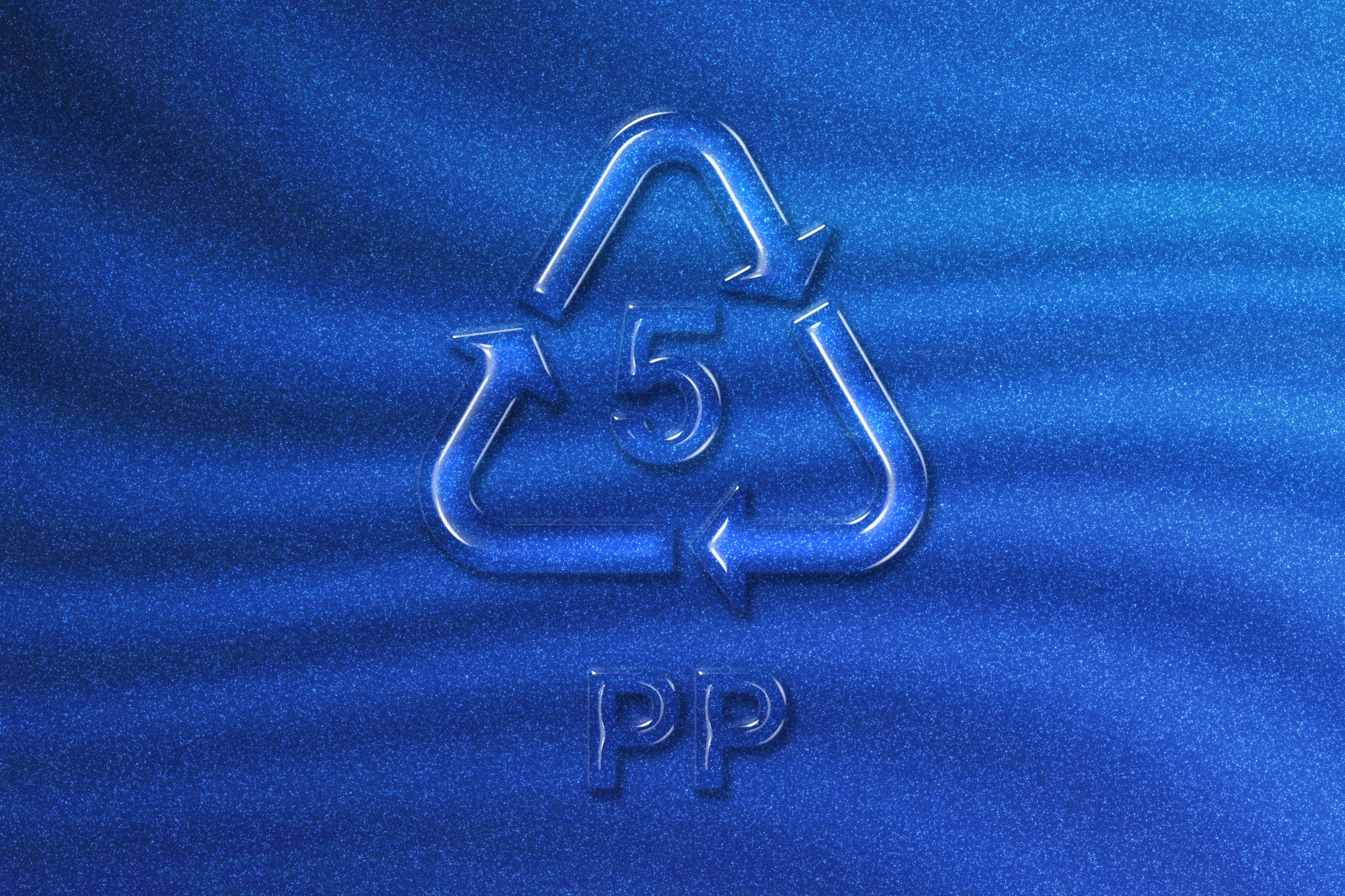
That’s a concerning prospect for proponents of materials on the cusp of wider recyclability, and polypropylene has become the most cited example of the potential for the bill to pause collection growth.
Corporations have put significant capital toward increasing recovery of polypropylene. For example, the Polypropylene Recycling Coalition recently formed with money from brand owners and other companies with an interest in increasing recovery of the resin.
But despite the interest in boosting recovery, polypropylene currently is not collected or processed on the level of the most commonly recycled resins, PET and HDPE. Polypropylene does not qualify for a “widely recyclable” label through How2Recycle, a voluntary national labeling initiative, because of the access and processing challenges.
The U.S. EPA reported that in 2018, the most recent year for which figures are available, the U.S. generated 3.66 billion pounds of PP in containers and packaging. Of that, 100 million pounds were recovered, for a recycling rate of 2.7%. Meanwhile, HDPE saw a 14.8% recycling rate, and PET notched a 25.4% rate, across all containers and packaging.
Some recycling leaders say the California labeling process, which will almost certainly designate polypropylene as not recyclable given historical collection figures, could stifle efforts to expand recovery.
“We need to collect more polypropylene so the recycling community can supply the recycled content,” said Steve Alexander, president and CEO of the Association of Plastic Recyclers (APR). “And yet this bill undermines the collection of that material.”
(APR owns Resource Recycling, Inc., publisher of Plastics Recycling Update.)
Alexander said plastics recycling stakeholders are trying to grasp what the bill means for collection. He noted a standardized list of recyclable products creates some market certainty in terms of what’s entering the recycling stream. But he said that list “has to be built on reality, facts,” and he is concerned it will be based on “yesterday’s recycling” rather than what is currently being tackled.
“With a lot of these bills, at the worst possible time, it’s giving mixed messages to the marketplace,” Alexander said.
He described the tactic of removing materials from the recycling stream as “backwards,” and noted that the recycling industry is always developing and investing in new technologies to handle materials that were previously contaminants. Plastic shrink sleeve labels and closures, for example, were one-time problem materials that technology has helped to mitigate in the recycling stream.
“The market responds to those so that we can continue to have the material available,” Alexander said.
Potential conflict with other states
Law firm Beveridge & Diamond wrote about the labeling bill and its implications for national labeling standards. The chasing arrows symbol is required in some states, even as California moves to prohibit it on all but the most commonly recycled packages.
“Companies operating in California and other states may now face a conundrum, potentially resulting in the need for different labeling in different states,” wrote the law firm, which advises companies and municipalities on waste issues.
Some states, including Oregon and Washington, previously required the chasing arrows but removed that requirement in recent years, as part of recycling reform legislation. But because there are numerous states that retain language requiring the arrows in state law, the conflicting regulations could create distribution challenges for companies selling products throughout the country.
“I would assume there would be some sort of litigation to sort that out,” Alexander said.
Beveridge & Diamond added that the California bill could impact the Federal Trade Commission (FTC) Green Guides, which regulate recyclability labeling on a federal level but are not as restrictive as the rules established in California. The law firm explained that the Green Guides sometimes consider the chasing arrows symbol to be a recyclability claim, depending on where it’s located on a package, whereas the new California rules always consider the symbol as a recyclability claim.
That dichotomy could play into an upcoming process to revise the federal rules.
“The FTC intends to begin an update of its Green Guides in 2022, and the developments under SB 343, and the risk of conflicting mandates from other states, will undoubtedly result in significant revision to the Green Guides’ existing provisions with respect to plastic recyclability claims and markings,” the law firm predicted.
However the legal and federal regulatory process shakes out, this much is clear: The recyclability criteria development process that will be carried out by CalRecycle will carry significance that extends well beyond the state’s borders.
“Because California is such a large market, it will be very difficult for product sellers to include the ‘chasing arrows’ symbol or otherwise indicate that their product can be and should be recycled anywhere in the country if it doesn’t make CalRecycle’s list,” Magid of Dorsey & Whitney said.
The bill does not specify how CalRecycle will carry out the criteria development process. But a legislative analysis indicated the department estimates annual ongoing costs of $1.7 million to fund 11 positions to develop and maintain the list of recyclable products.
A version of this story appeared in Resource Recycling on Oct. 11.