

Resource Recycling
  • The Latest
  • Analysis
    • All
    • Certification Scorecard
    • Industry Announcements
    • Opinion
    Intel sign outside of company building.

    What Intel’s blockbuster quarter means for ITAD

    Feds to develop repairable computer donation program

    The whitebox blind spot in PC recycling

    Analysis: circular design still elusive in laptops

    PC shipments grew in Q1, but questions remain

    The independent ITAD at a crossroads

    The independent ITAD at a crossroads

    Certification Scorecard — Week of April 20, 2026

    Apple Watch on product box.

    Wearables are coming and ITAD isn’t ready

    Certification Scorecard — Week of April 13, 2026

    EV Battery Pack - Sergii Chernov-Shutterstock

    Redwood, Rivian deal fuels US infrastructure plans

    Bloom ESG and e-Stewards roll out critical metals metric

  • Conferences
  • Publications

    Other Topics

    Textiles
    Organics
    Packaging
    Glass
    Brand Owners

    Metals
    Technology
    Research
    Markets
    Grant Watch

    All Topics

Subscribe
No Result
View All Result
Resource Recycling
  • The Latest
  • Analysis
    • All
    • Certification Scorecard
    • Industry Announcements
    • Opinion
    Intel sign outside of company building.

    What Intel’s blockbuster quarter means for ITAD

    Feds to develop repairable computer donation program

    The whitebox blind spot in PC recycling

    Analysis: circular design still elusive in laptops

    PC shipments grew in Q1, but questions remain

    The independent ITAD at a crossroads

    The independent ITAD at a crossroads

    Certification Scorecard — Week of April 20, 2026

    Apple Watch on product box.

    Wearables are coming and ITAD isn’t ready

    Certification Scorecard — Week of April 13, 2026

    EV Battery Pack - Sergii Chernov-Shutterstock

    Redwood, Rivian deal fuels US infrastructure plans

    Bloom ESG and e-Stewards roll out critical metals metric

  • Conferences
  • Publications

    Other Topics

    Textiles
    Organics
    Packaging
    Glass
    Brand Owners

    Metals
    Technology
    Research
    Markets
    Grant Watch

    All Topics

Subscribe
No Result
View All Result
Resource Recycling
No Result
View All Result
Home Plastics

US asks developed nations to omit Basel plastic rules

Colin StaubbyColin Staub
July 17, 2019
in Plastics
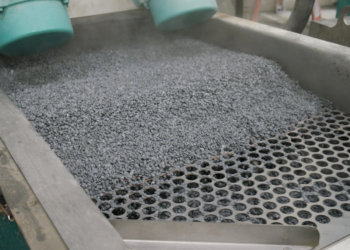
Regulatory changes could prevent the U.S. from exporting mixed plastics to a number of countries. | rawf8/Shutterstock

Federal regulators are asking countries that are major buyers of U.S. recyclables to refrain from implementing new trade restrictions laid out in the Basel Convention, a treaty covering global scrap material shipments.

U.S. EPA Administrator Andrew Wheeler on July 3 sent a letter to the Organisation for Economic Cooperation and Development (OECD), a consortium whose members are generally considered non-developing nations. In his letter, Wheeler references significant scrap plastics-related changes that were approved to the Basel Convention on the Control of Transboundary Movements of Hazardous Wastes and Their Disposal earlier this year.

The U.S. has a unique stake in asking that OECD countries not adopt the Basel changes. The U.S. is the only OECD member that is not a party to the Basel Convention.

Under the current terms of the Convention, OECD member countries can continue receiving shipments from non-Basel party countries. If the OECD adopts the Basel changes, however, that trade relationship could change, hampering scrap material shipments to other developed nations.

Changes came amid marine debris anxieties

The Basel changes, which were given the thumbs up during a meeting of world governments in May, were framed as a way to tackle the growing marine debris problem. Among other measures, the changes will impose restrictions on scrap plastic shipments, particularly targeting the trade of mixed plastics.

As far as how they affect the U.S., it could theoretically prevent the U.S. from exporting mixed plastics to any country that’s a party to the Basel Convention, except for OECD countries. The OECD includes Canada and Mexico as well as most European nations, South Korea and a handful of other countries.

Although their full impact on the recycling industry is unclear – the changes officially take hold Jan. 1, 2021 – experts anticipate even larger disruption to the industry than the export strife spurred by China’s import restrictions. Countries that are parties to the Basel Convention must adopt the Convention changes into their own national laws.

In a press release, the Basel Action Network (BAN), a watchdog group that generally opposes U.S. scrap exports, explained that under OECD policy, the OECD group would typically automatically adopt the changes into its own rules, which are applied to member countries. However, if an objection is submitted from a member country, the adoption process is put on hold, according to BAN.

The EPA’s letter serves as such an objection.

Managed in ‘environmentally sound manner’

Wheeler wrote that the OECD countries have “attained high environmental standards and have the capacity to manage waste in an environmentally sound manner,” with less than 1% of scrap plastic “mismanaged” among OECD members.

Subjecting OECD countries to the restrictive Basel changes “would impede trade for recycling and could reduce the level of recycling among OECD countries,” Wheeler wrote. “If trade becomes more difficult, we anticipate that more OECD-generated plastic scrap will be disposed in landfills, sent for incineration or used for fuel, which are less-preferred options on the waste-management hierarchy.”

Instead, Wheeler asks that scrap plastic be considered under a less-stringent guideline, the “Green” control procedure, which still requires that the material being shipped is destined for recycling operations but would avoid a handful of additional regulations set out in the new Basel changes. Using this guideline, Wheeler wrote, “will help ensure that the material can move to jurisdictions that can recycle it efficiently and in an environmentally sound manner.”

In a statement, the Institute of Scrap Recycling Industries (ISRI) described the EPA letter as “an important step in facilitating a proper discussion on how recycling works and is part of the solution toward keeping end of life materials – including plastics – out of the environment.”

“Restricting trade does not solve the true causes of pollution that result from poor waste management and careless human behavior,” said Adina Renee Adler, assistant vice president for international affairs for ISRI. “The OECD will be an important venue to direct the international community’s attention toward proper information about the value of end-of-life materials and how to ensure they are responsibly recycled.”

BAN, the nonprofit watchdog group, condemned Wheeler’s letter, stating that the Basel changes will improve recycling.

“Rather than requiring waste traders to first clean and separate plastic wastes or else get the importing country’s permission to receive it, the U.S. seeks a free-trade pathway to allow its waste brokers to dump dirty, unrecyclable wastes on other OECD countries such as Mexico, Canada, Turkey and South Korea with impunity,” said Jim Puckett, BAN’s executive director, in the group’s news release.

A version of this story appeared in Resource Recycling on July 16.

 

Tags: Industry GroupsTrade & Tariffs
TweetShare
Colin Staub

Colin Staub

Colin Staub was a reporter and associate editor at Resource Recycling until August 2025.

Related Posts

EPR fees are a market signal. Here’s what they’re telling you.

Oregon DEQ flags 250 producers for RMA noncompliance

byStefanie Valentic
April 21, 2026

Oregon DEQ released its first quarterly producer status list under the Recycling Modernization Act on April 9, flagging 250 companies...

Recycling Partnership CEO stepping down

byStefanie Valentic
April 15, 2026

Outgoing CEO Keefe Harrison will remain until August with the organization she built from the ground up.

Volatility reshapes outlook for US metals businesses

byScott Snowden
April 15, 2026

Panelists at the ReMA conference in Las Vegas said tariffs, reshoring and geopolitical tension are remaking trade flows, lifting US...

NERC launches hub to promote PCR demand 

byAntoinette Smith
April 15, 2026

The Northeast Recycling Council's PCR Material Demand Hub offers resources for government procurement, material- and product-specific resources, and certification and...

Reverse Logistics Network launches to support industry

byPaul Lane
April 14, 2026

The reverse logistics community has a new organization to give companies in that sector a place to connect.

Matium raises $8m, adds buyer financing

byAntoinette Smith
April 14, 2026

A trade finance facility from the new Erebor Bank will help bridge the gap between buyer and seller payment terms...

Load More
Next Post
e-scrap-related

Dell details its 2018 recycled plastic usage

More Posts

Birch Plastics gets FDA green-light for post-industrial PP

LyondellBasell upgrade to PreZero assets on hold

April 23, 2026
The independent ITAD at a crossroads

The independent ITAD at a crossroads

April 22, 2026
Towfiqu ahamed barbhuiya

Before the Bin: Breaking down food date labeling

April 20, 2026

Google pilots reuse kits to extend device life

April 21, 2026
EPR fees are a market signal. Here’s what they’re telling you.

Oregon DEQ flags 250 producers for RMA noncompliance

April 21, 2026
Industry group: Help us find the plastic bale volumes we need

PET bales sink further as other grades firm 

April 15, 2026

What Netflix’s ‘Plastic Detox’ gets wrong – and right

April 23, 2026
What is EPR and why it matters

What is EPR and why it matters

April 22, 2026

NERC launches hub to promote PCR demand 

April 15, 2026
Growth challenges drive M&A for packaging

Growth challenges drive M&A for packaging

April 20, 2026
Load More

About & Publications

About Us

Staff

Archive

Magazine

Work With Us

Advertise
Jobs
Contact
Terms and Privacy

Newsletter

Get the latest recycling news and analysis delivered to your inbox every week. Stay ahead on industry trends, policy updates, and insights from programs, processors, and innovators.

Subscribe

Welcome Back!

Login to your account below

Forgotten Password?

Retrieve your password

Please enter your username or email address to reset your password.

Log In

Add New Playlist

No Result
View All Result
  • The Latest
  • Analysis
  • Recycling
  • E-Scrap
  • Plastics
  • Policy Now
  • Conferences
    • E-Scrap Conference
    • Plastics Recycling Conference
    • Resource Recycling Conference
    • Textiles Recovery Summit
  • Magazine
  • About Us
  • Advertise
  • Archive
  • Jobs
  • Staff
Subscribe
This website uses cookies. By continuing to use this website you are giving consent to cookies being used. Visit our Privacy and Cookie Policy.