Resource Recycling
  • The Latest
  • Analysis
    • All
    • Certification Scorecard
    • Industry Announcements
    • Opinion
    SCS launches chem recycling standard

    Certification scorecard — week of Sept. 28

    NJ’s PCR delay risks making its own excuse permanently true

    NJ’s PCR delay risks making its own excuse permanently true

    E-scrap magnet recycling company scales up

    Why only some rare-earth sources are economically viable

    e-Stewards to develop an ITAD-specific standard

    Certification scorecard — week of Sept. 21

    Who should pay for lithium-ion battery fire damage?

    America’s critical-materials buildout has a feedstock problem

  • Conferences
    • Resource Recycling Conference
    • Plastics Recycling Conference
    • E-Scrap: The Longevity Conference
    • Textiles Recovery Summit
  • Publications
    • E-Scrap News
    • Plastics Recycling Update
    • Policy Now
    • Resource Recycling
    • Other Topics
      • All Topics
      • Brand Owners
      • Critical Minerals
      • Glass
      • Grant Watch / RFPs
      • Markets
      • Organics
      • Packaging
      • Research
      • Technology
      • Textiles
Subscribe
No Result
View All Result
Resource Recycling
  • The Latest
  • Analysis
    • All
    • Certification Scorecard
    • Industry Announcements
    • Opinion
    SCS launches chem recycling standard

    Certification scorecard — week of Sept. 28

    NJ’s PCR delay risks making its own excuse permanently true

    NJ’s PCR delay risks making its own excuse permanently true

    E-scrap magnet recycling company scales up

    Why only some rare-earth sources are economically viable

    e-Stewards to develop an ITAD-specific standard

    Certification scorecard — week of Sept. 21

    Who should pay for lithium-ion battery fire damage?

    America’s critical-materials buildout has a feedstock problem

  • Conferences
    • Resource Recycling Conference
    • Plastics Recycling Conference
    • E-Scrap: The Longevity Conference
    • Textiles Recovery Summit
  • Publications
    • E-Scrap News
    • Plastics Recycling Update
    • Policy Now
    • Resource Recycling
    • Other Topics
      • All Topics
      • Brand Owners
      • Critical Minerals
      • Glass
      • Grant Watch / RFPs
      • Markets
      • Organics
      • Packaging
      • Research
      • Technology
      • Textiles
Subscribe
No Result
View All Result
Resource Recycling
No Result
View All Result
Home Recycling

Basel Convention could ‘destabilize textile circularity,’ panelists warn

Brian Clark HowardbyBrian Clark Howard
September 30, 2026
in Recycling

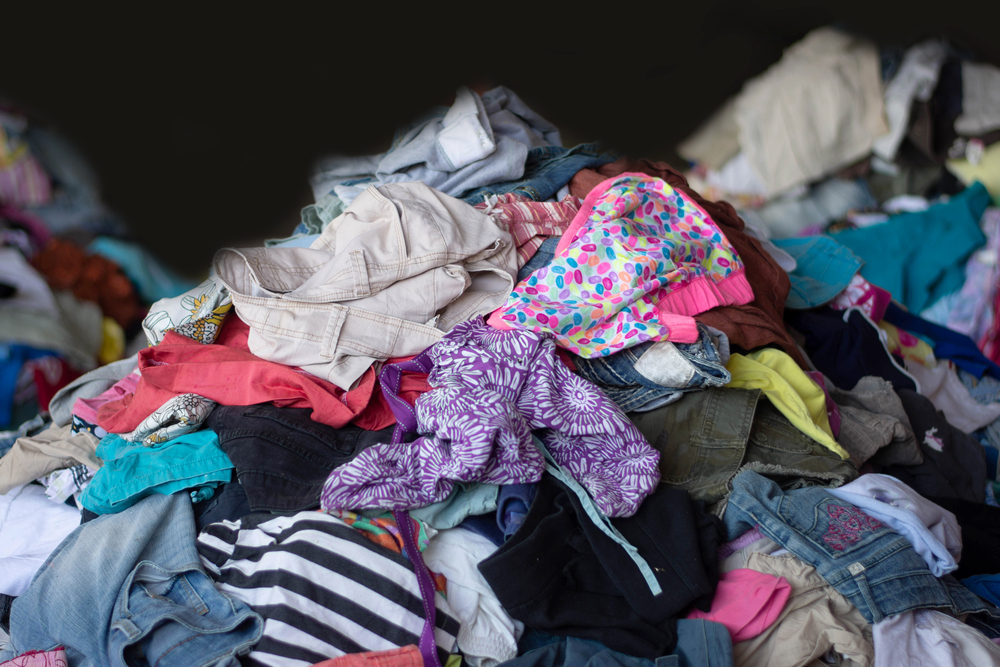
Neenawat Khenyothaa / Shutterstock

Editor’s Note: Textile recovery implementation will be featured in sessions at the 2027 Textile Recovery Summit, March 1-3 near Washington, D.C. Register now!

On a webinar Tuesday, panelists from the textile recycling space discussed the potential disruption to their industry as the international Basel Convention weighs changes to the way used garments are handled across borders.

“Recent developments under the Basel Convention could end up reshaping and destabilizing the textile circularity system as we know it, just as policymakers and industry are trying to strengthen it,” said Jessica Franken, vice president for government and external affairs with SMART, the Secondary Materials and Recycled Textiles Association. SMART co-hosted the webinar with Resource Recycling’s Textile Recovery Summit. It was entitled “Used Textiles in the Global Circular Economy: Research, Realities and the Basel Convention.”

Franken explained that the Basel Convention is an environmental treaty adopted in 1989 to regulate the international shipping of hazardous waste. The convention has 191 signatories worldwide, but the US isn’t one of them. Still, the treaty “matters enormously” to the US because most of its trading partners are signatories, said Franken.

Textiles are listed under Annex 9 in Basel, for non-hazardous waste that is outside the convention’s control. But the convention is studying whether to move textiles to a different level that would require prior informed consent (PIC) before shipping. That means the exporting country would have to notify the importing country, and in some cases the transit countries, and then those governments would need to consent before that shipment could proceed. So it would result in additional documentation and tracking requirements.

“In other words, PIC controls can make cross shipments slow and administratively burdensome in ways that can really grind a trade to a halt,” said Franken.

The Basel Convention parties are meeting in April 2027, at which point a decision on how to handle textile waste may be announced. Any decision could have a big impact on the textile reuse and recycling industry, said Franken, stifling a high-volume, low-value industry and even leading to bans or de facto bans in some countries on importing used clothes.

Panelists noted that the driver behind the Basel Convention’s work is the fashion industry’s growing footprint. “Textiles and clothing production use significant raw materials, water, energy, and a wide range of chemicals that can be problematic,” Franken said. And fast fashion, overproduction and shorter product lifespans are contributing to a glut of material worldwide.

Alan Wheeler, the CEO of the Textile Recycling Association in the UK, said, “realistically, about 85%-90% of all clothing ever produced does not get a second life, or does not at least find its way into our collection systems.”

In addition to the Basel Convention’s ongoing work, a number of governments have been taking aim at textile waste, from the European Union to California, with a range of extended producer responsibility, eco-design requirements, digital passports and other rules. The end result of these policies should be more garments collected, said Wheeler, with the question being what happens to them next?

Domestic markets in the US and Europe can usually only absorb about 20%-30% of the clothing that’s collected in those countries, said Franken. “So that really makes access to international markets where there is demand and need for quality secondhand clothing particularly important,” she said.

Wheeler agreed. “If those markets disappear, the materials don’t magically become recyclable in Europe,” he said.

Global exchange

Large shipments of donated clothing are thus routed to Latin America, Africa and Asia, in a global trade that saw 10.1 billion pounds moved in 2024, said Jennifer Wang, founder of Full Cycle Resource Consulting. Additional sorting often takes place at hubs in Guatemala and Pakistan, among other places, before garments reach end markets. Wang said any changes from the Basel Convention could disrupt the sorting models of the trade.

“Lower-grade textiles that aren’t able to be reused oftentimes are converted into things like industrial wiping cloths, fiber insulation, and other recycled products, meaning that very little of this material that’s being shipped ever ends up as true waste,” said Franken.

In fact, in new research, Wang found that only 1.3%-1.5% of the textile material sold into Tanzania was not sellable at all, and could therefore be considered waste. An additional 3.4%-3.5% of the material was sold as rags. The rest was reusable clothing of different grades. Wang found a similar result in Uganda.

Jobs and income

The international second-hand clothes market also creates critical jobs and income, said Marlvin Owusu, an executive member of the Ghana Used Clothing Dealers Association. In Ghana, the business supports two million people, he said, the majority of whom are women.

“Ghana is not an endpoint for unwanted clothing,” said Owusu. “It is part of a regional reuse and redistribution system.”

And that system provides good quality used clothes at reduced prices for millions of people in Ghana and beyond, said Owusu. In his country, the majority of people wear used clothes, he said. “That is why it is very important not to switch off the supply line.”

Apostle Teresiah Wairimu, the chairperson of the MCAK Mitumba Consortium Association of Kenya, agreed. The second-hand clothes trade supports 2 million jobs in her country, she said, which works out to 7.58 jobs across the supply chain for every ton of material imported.

 “Without mitumba (used clothes) there are people who will be walking buck naked,” said Wairimu.

Owusu added, “the evidence does not support the idea that imported second-hand clothing is predominantly waste.” Instead of going the PIC route, regulators should work to strengthen the circular system that already exists with used clothing, said Owusu.

Wairimu agreed, adding that the Basel Convention decision “needs to be evidence-based, data-driven and consistent with the realities of the used clothing value chain.” Regulators should pay particular attention to end-market countries and instead focus on upstream production, product design and consumption patterns, she said.

Franken said, “because textile to textile recycling does not yet exist at sufficient scale, the free flow of these goods across borders really does remain essential to being able to continue this as a circular economy.”

Tags: Industry GroupsTextiles
TweetShare
Brian Clark Howard

Brian Clark Howard

Brian Clark Howard is managing editor of Resource Recycling and an award-winning journalist with 25 years of experience. He is the co-author of several books and previously served as an editor and writer at The Hill, National Geographic, The Daily Green, E/The Environmental Magazine and The Daily Mail. He has covered a wide range of topics, from the environment to politics.

Related Posts

USFFI signs first film offtake deals

USFFI signs first film offtake deals

byAntoinette Smith
September 29, 2026

The brand-led group has moved more than 3 million pounds of flexible packaging from two California MRFs to reclaimers and...

Analysis: Undersupply of PCR is ‘stifling’ brand goals

US lawmakers urge protection of domestic RPET

byAntoinette Smith
September 25, 2026

In a letter to the US Trade Representative, five representatives asked the USTR to consider trade remedies and support verification...

Oregon state capitol building with state flag and blue sky.

NAW appeals Oregon EPR ruling

byStefanie Valentic
September 25, 2026

NAW is challenging an Oregon judge's ruling in favor of the state's extended producer responsibility law.

APR reports success for 2026 recycling tours 

APR reports success for 2026 recycling tours 

byAntoinette Smith
September 23, 2026

In May, more than 2,500 visitors toured 41 facilities in the US and Mexico, during APR's second annual Recycling in...

Recyclers reeling from NJ PCR extension

Recyclers reeling from NJ PCR extension

byAntoinette Smith
September 23, 2026

The recent three-year extension for exemptions to the state's PCR mandates elicited frustration and confusion among recyclers.

Textile EPR and the definition of recycling

Textile Exchange reports progress in production

byPaul Lane
September 22, 2026

The organization said the industry has made some sustainability progress, but there’s much room for improvement.

Load More
Next Post
SCS launches chem recycling standard

Certification scorecard — week of Sept. 28

2026 Buyers’ Guide

Equipment, services and technology suppliers serving the recycling industry.

Browse the Guide

More Posts

Oregon state capitol building with state flag and blue sky.

NAW appeals Oregon EPR ruling

September 25, 2026
Recyclers reeling from NJ PCR extension

Recyclers reeling from NJ PCR extension

September 23, 2026
Newsom nixes recycled content claims bill

Newsom nixes recycled content claims bill

September 28, 2026
Analysis: Undersupply of PCR is ‘stifling’ brand goals

US lawmakers urge protection of domestic RPET

September 25, 2026
Bin to Better gets students involved in reuse, recycling

Bin to Better gets students involved in reuse, recycling

September 24, 2026
Bipartisan reps introduce bill on recycling claims

House passes bill to ease lithium-ion battery storage rules

September 24, 2026
trash bags

Sorted: Should we use recycled trash bags?

September 28, 2026
Calif. Governor Gavin Newsom at podium.

Newsom signs battery EPR expansion, vetoes SB 54 fund bill

September 24, 2026

Who should pay for lithium-ion battery fire damage?

September 21, 2026
Diversion Dynamics: Policy needed to reach full charge for vape recycling

Disposable vapes banned in California

September 28, 2026
Load More

About & Publications

About Us

Staff

Archive

Magazines

Work With Us

Advertise
Jobs
Contact
Terms and Privacy

Newsletters

Get the latest recycling news and analysis delivered to your inbox every week. Stay ahead on industry trends, policy updates, and insights from programs, processors, and innovators.

Subscribe

Welcome Back!

Login to your account below

Forgotten Password?

Retrieve your password

Please enter your username or email address to reset your password.

Log In

Add New Playlist

No Result
View All Result
  • The Latest
  • Analysis
  • Recycling
  • E-Scrap
  • Plastics
  • Policy Now
  • Conferences
    • E-Scrap Conference
    • Plastics Recycling Conference
    • Resource Recycling Conference
    • Textiles Recovery Summit
  • Magazines
  • About Us
  • Advertise
  • Archive
  • Jobs
  • Staff
Subscribe
This website uses cookies. By continuing to use this website you are giving consent to cookies being used. Visit our Privacy and Cookie Policy.