Resource Recycling
  • The Latest
  • Analysis
    • All
    • Certification Scorecard
    • Industry Announcements
    • Opinion

    Who should pay for lithium-ion battery fire damage?

    America’s critical-materials buildout has a feedstock problem

    Certification scorecard – week of Sept. 14

    Canada Plastics Pact reports 2024 progress

    Trade tensions shift global mineral partnerships 

    Spin-off lets Linca focus on battery mineral recovery

    Critical mineral policy shift creates opportunity

    CommanderAI launches searchable hauler database

    Inside the Circle: Put AI to work for the people who do the work

  • Conferences
    • Resource Recycling Conference
    • Plastics Recycling Conference
    • E-Scrap: The Longevity Conference
    • Textiles Recovery Summit
  • Publications
    • E-Scrap News
    • Plastics Recycling Update
    • Policy Now
    • Resource Recycling
    • Other Topics
      • All Topics
      • Brand Owners
      • Critical Minerals
      • Glass
      • Grant Watch / RFPs
      • Markets
      • Organics
      • Packaging
      • Research
      • Technology
      • Textiles
Subscribe
No Result
View All Result
Resource Recycling
  • The Latest
  • Analysis
    • All
    • Certification Scorecard
    • Industry Announcements
    • Opinion

    Who should pay for lithium-ion battery fire damage?

    America’s critical-materials buildout has a feedstock problem

    Certification scorecard – week of Sept. 14

    Canada Plastics Pact reports 2024 progress

    Trade tensions shift global mineral partnerships 

    Spin-off lets Linca focus on battery mineral recovery

    Critical mineral policy shift creates opportunity

    CommanderAI launches searchable hauler database

    Inside the Circle: Put AI to work for the people who do the work

  • Conferences
    • Resource Recycling Conference
    • Plastics Recycling Conference
    • E-Scrap: The Longevity Conference
    • Textiles Recovery Summit
  • Publications
    • E-Scrap News
    • Plastics Recycling Update
    • Policy Now
    • Resource Recycling
    • Other Topics
      • All Topics
      • Brand Owners
      • Critical Minerals
      • Glass
      • Grant Watch / RFPs
      • Markets
      • Organics
      • Packaging
      • Research
      • Technology
      • Textiles
Subscribe
No Result
View All Result
Resource Recycling
No Result
View All Result
Home Plastics

Project probes recovered film market potential

byJared Paben
August 29, 2018
in Plastics
Project probes recovered film market potential

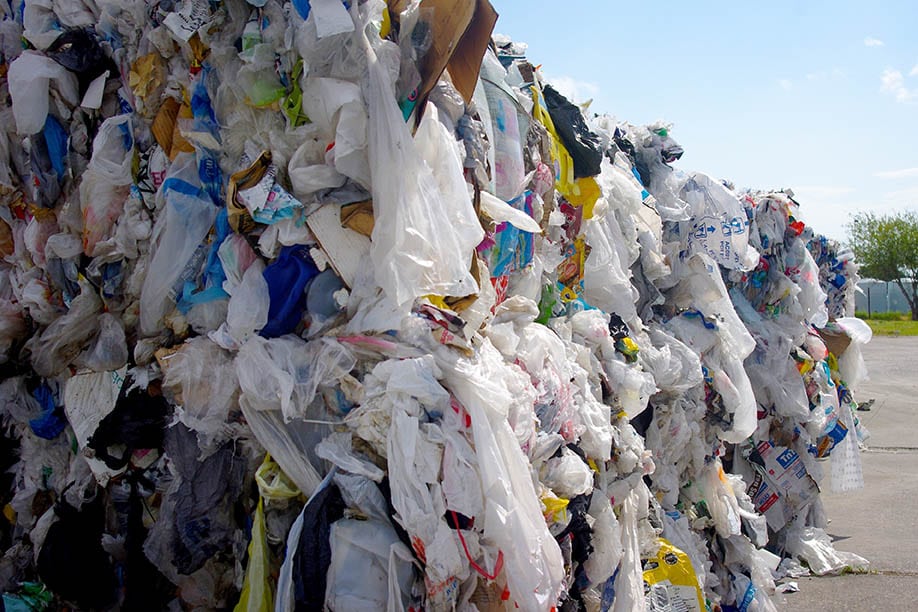
Film collected by retailers could be recycled into a number of additional product types, but contamination will likely stifle end-market potential for curbside material, a report concludes.

The Plastics Industry Association recently released the results of Phase I of a project to find new end markets for mixed PE film. Phase I consisted of obtaining samples of film, including both residential and commercial material, and processing and testing the plastic. The next steps, which have already begun, involve developing new end markets.

Major uses today for recovered PE film include lumber products and new films, usually dark-colored ones such as garbage bags. The project results indicated a number of other applications are within reach.

“Through our sample collection and evaluation during phase I, we were pleased to find that the sample material – even with some contamination – is very functional and can potentially be used in various end markets,” Kim Holmes, vice president of sustainability for the Plastics Industry Association, stated in a press release. “In fact, the quality of the materials we collected exceeded even our initial expectations and have already led to further exploration.”

Samples from retail drop-offs

In the project, which began in early 2017, stakeholders obtained samples of film from the following three sources:

  • Film from retail collections as part of the Wrap Recycling Action Program (WRAP), a national outreach campaign supporting film drop-off at stores.
  • Post-commercial film acquired by Petoskey Plastics
  • Film collected at the curb and sorted at a materials recovery facility (MRF), provided by Prime Plastics.

Samples of the film collected at stores were shipped to a facility run by plastics recycling equipment company Erema. Obvious contaminants were separated by hand, but the plastic wasn’t washed before it was fed into an Intarema 1108 TVE Plus recycling system for pre-processing, melting, filtering, degassing and pelletization.

The system ran a continuous melt filter with a 100-micron screen. The system can process 400 pounds per hour, but it ran at 225 pounds per hour for the trials because of contamination levels. The filtration system discharged nearly 78 pounds per hour of contamination, equating to a 34 percent contamination rate, the report states.

“Aside from the manual separation, no further value added (such as optical sorting or washing) steps were performed outside of the processing performed by this system,” according to the report. “The resulting pellets and performance exceeded expectations for such minimal pre-processing.”

A sample of pellets was then sent for in-depth testing to Noble Polymers, a custom compounder in Grand Rapids, Mich. that mainly works with polyolefins. Noble Polymers compared mechanical testing values from the recycled film collected in stores to a grade of LDPE currently used to make 90-gallon curbside carts.

“It was concluded that the values of the testing suggest this is a material that has potential in a variety of applications,” according to the Plastics Industry Association.

Testing other samples

For the project, Prime Recycling Solutions of Norwalk, Ohio supplied 10,000 pounds of mixed film, including film that had been positively sorted and negatively sorted at a MRF, as well as some material collected by stores.

The MRF sample was sent to Warren, Mich. recycling company Waste Free, which did extensive manual sorting before shredding, blending and densifying the film. It was so contaminated, the company didn’t even test the entire sample, the report notes.

A 150-pound sample was then transported to recycling equipment company Technical Processing and Engineering, Inc. (TPEI) of Lehighton, Pa. for pelletization. There, contamination caused more problems: During pelletization, contaminants clogged the screen, increasing pressure and quickly blowing the screen pack. In response, TPEI installed a continuous screen changer to handle the higher level of contamination and attempt to create a sample of pellets.

Separately, plastics recycling and film product maker Petoskey Plastics of Petoskey, Mich. provided pellets made from post-commercial sources. The pellets were sent to three companies for testing: TPEI working in conjunction with Series One, an Ortonville, Mich. engineering consulting company; Printpack, an Atlanta-based packaging manufacturer; and Pak-Sher, a Kilgore, Texas plastic product maker. TPEI/Series One forwarded samples to Noble Polymers for further testing. The companies processed the plastic and studied its properties, generating volumes of data.

After looking at all the results, a Plastics Industry Association workgroup leading the project decided to go forward testing end market applications for film collected at stores, the first of the three streams tested in Phase I. The MRF material’s contamination levels challenged the economic viability of processing it, the report concluded. And the workgroup felt the commercially generated film had been studied well enough to allow a benchmark for comparison with the retail-collected film.

Photo credit: PhilipR/Shutterstock

To receive the latest news and analysis about plastics recycling technologies, sign up now for our free monthly Plastics Recycling Update: Technology Edition e-newsletter.

 

Plastics Recycling Conference

Tags: Film & FlexiblesHDPEIndustry GroupsTechnology
TweetShare
Jared Paben

Jared Paben

Related Posts

Textile EPR and the definition of recycling

Textile Exchange reports progress in production

byPaul Lane
September 22, 2026

The organization said the industry has made some sustainability progress, but there’s much room for improvement.

ALPLA’s holistic approach to packaging design

ALPLA’s holistic approach to packaging design

byAntoinette Smith
September 18, 2026

The packaging and recycling company's North American design lead explains why recyclability goals can't exist in isolation.

Study assesses environmental cost of excess data storage

BAN paper says AI e-scrap estimates are low

byPaul Lane
September 17, 2026

The advocacy group said current estimates on the scrap resulting from data centers don’t account for the full picture of...

US packaging is evolving. The recycling system isn’t ready

US packaging is evolving. The recycling system isn’t ready

byAntoinette Smith
September 16, 2026

The second installment of the 2026 State of Recycling report from The Recycling Partnership indicates that lighter-weight packaging substrates have...

Google Pixel 6 phone

Google makes repairability part of design ethos

byBrian Clark Howard
September 16, 2026

The tech titan supports the right-to-repair movement in several key ways.

SB 54 plan for cartons, film draws warning

byStefanie Valentic
September 15, 2026

The new law's cartons and film targets could add 100,000 tons of plastic contamination to California's paper exports annually, a...

Load More
Next Post
Study digs into demand for recovered resin

Chinese tariffs on U.S. scrap plastics take effect

2026 Buyers’ Guide

Equipment, services and technology suppliers serving the recycling industry.

Browse the Guide

More Posts

Colorado’s EPR programs move from planning to practice

Colorado’s EPR programs move from planning to practice

September 17, 2026

SB 54 plan for cartons, film draws warning

September 15, 2026
Study assesses environmental cost of excess data storage

BAN paper says AI e-scrap estimates are low

September 17, 2026
Alpek closing Pennsylvania RPET plant

Alpek seizing on war-related opportunity 

July 27, 2026
US packaging is evolving. The recycling system isn’t ready

US packaging is evolving. The recycling system isn’t ready

September 16, 2026
New Jersey pushes back PCR mandate to 2030

New Jersey pushes back PCR mandate to 2030

September 10, 2026
Van filled with rolled carpeting for recycling or disposal.

California carpet recycling rate reaches 37%

September 17, 2026
Canada tariffs latest in new normal for RPET

Canada tariffs latest in new normal for RPET

September 11, 2026
Spin-off lets Linca focus on battery mineral recovery

Critical mineral policy shift creates opportunity

September 14, 2026

America’s critical-materials buildout has a feedstock problem

September 18, 2026
Load More

About & Publications

About Us

Staff

Archive

Magazines

Work With Us

Advertise
Jobs
Contact
Terms and Privacy

Newsletters

Get the latest recycling news and analysis delivered to your inbox every week. Stay ahead on industry trends, policy updates, and insights from programs, processors, and innovators.

Subscribe

Welcome Back!

Login to your account below

Forgotten Password?

Retrieve your password

Please enter your username or email address to reset your password.

Log In

Add New Playlist

No Result
View All Result
  • The Latest
  • Analysis
  • Recycling
  • E-Scrap
  • Plastics
  • Policy Now
  • Conferences
    • E-Scrap Conference
    • Plastics Recycling Conference
    • Resource Recycling Conference
    • Textiles Recovery Summit
  • Magazines
  • About Us
  • Advertise
  • Archive
  • Jobs
  • Staff
Subscribe
This website uses cookies. By continuing to use this website you are giving consent to cookies being used. Visit our Privacy and Cookie Policy.