
RES Polyflow’s Michael Dungan says fluctuating oil prices and developments in Asia will continue to affect pyrolysis companies, but he thinks a bigger issue may be a regulatory landscape that he believes is dated and detrimental to technology adoption.
Dungan is director of sales and marketing at RES Polyflow, a company based in Chagrin Falls, Ohio.
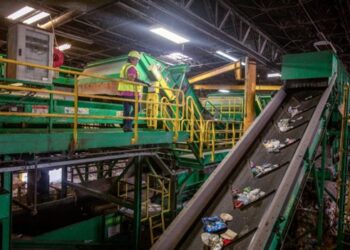
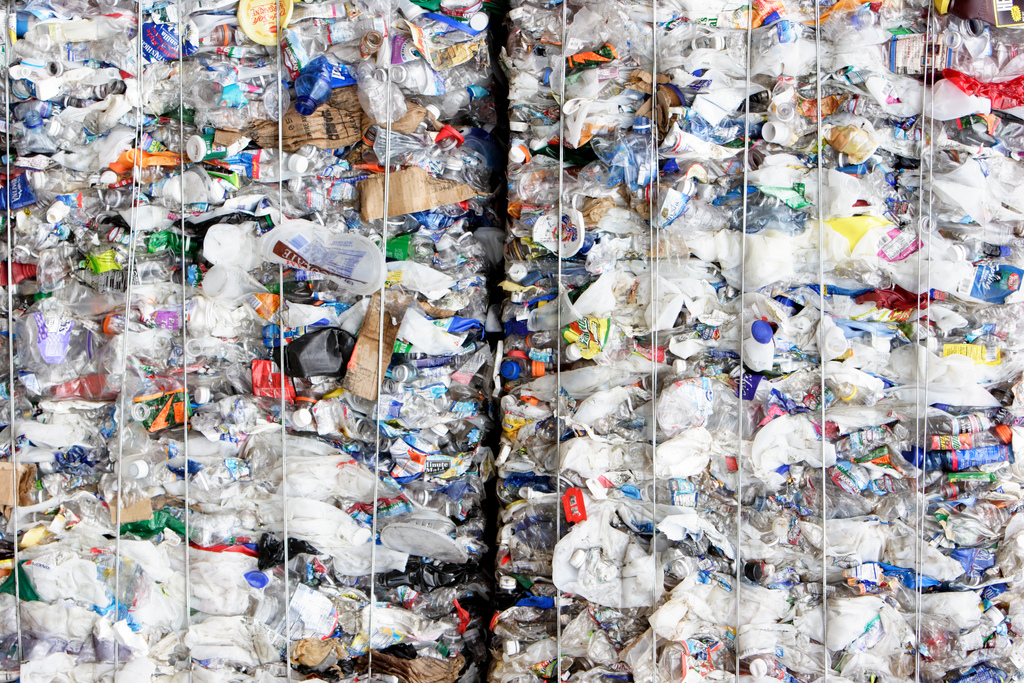
RES Polyflow has been working to commercialize its pyrolysis technology, and it hopes to break ground this year on its first facility, which will be located in northeast Indiana and will be capable of processing about 100,000 tons per year, Dungan said. Material will be sourced primarily from curbside recycling programs, although the company processes post-industrial plastics, as well.
“We tend to focus on the material that either has low value, is unstable as a market, or has no value at all,” Dungan said. “Our technology is well-suited to handle those types of streams.”
Plastics Recycling Update: What’s your take on China’s announcement that they’re going to ban just about all plastic imports by the end of the year?
Dungan: We haven’t formed an opinion as a corporate statement. It’s early, and being in the Midwest, we’re somewhat sheltered from that kind of shift. In our experience, it seems to affect the ports first, especially on the West Coast, before we show any kind of ripple in the Midwest.
We really haven’t sensed a change in the recycling industry in the Midwest, although a lot of people are talking about it primarily because of the news accounts and the recent announcements.
We’re an energy-recovery technology. We’re positioned as a manufacturer. We’re always interested in helping support the existing market, the existing recycling industry, and positioning plastics-to-fuel as a complement to existing recycling practices. And if we can help create or support markets that are already in existence through our technology coming on-line and getting going, we’re good with that.
I think you’re going to see a lot of questions around what kind of market pull for these low-value materials will be created within the U.S. if their primary export sources are reduced, rerouted, diverted or go away. The timing for energy-recovery technology such as ours seems to be good, if there’s a need for a new market or new disposition for low-value plastics scrap. A plastics-to-fuel technology such as ours is well-positioned to address that.
A plastics-to-fuel facility will take material that nobody wants and create something that everybody needs. Whatever the world economy and import-export market wants to do, I think we’re well situated to participate in a positive manner, complement current recycling, grow recycling rates in the U.S. and add a whole lot of jobs in the states in which we’re going to be processing.
Plastics-to-fuel could be an outlet for materials there’s no other way to handle.
True in a sense. Our largest competitor is landfills. Most of the stuff ends up in the landfill, especially when markets are questionable or unpredictable. We just become a different outlet for those streams, and hopefully a beneficial outlet because we’re repurposing. We’re not hiding it in a hole in the ground or storing it where it really doesn’t belong. I don’t think plastic’s the primary thing that should go in a landfill for economic and environmental reasons. So we’re positioned to help with that shift in the domestic markets if they occur.
Where is the plastics-to-fuel industry in its development?
It’s evolved pretty dramatically. We and two other companies self-organized and self-funded a small trade organization nearly five years ago, the Plastics-to-Fuel and Petrochemistry Alliance, part of the American Chemistry Council’s Plastics Division.
We have seen a number of developments at a macro level that has helped our technology members and affiliate members grow this channel and get to a stage of commercialization and birthing this industry together. Our focus has been on policy initiatives, whether on a state-by-state or federal level.
Having our value proposition and the energy-recovery benefits and the features of a plastics-to-fuel technology properly positioned in the marketplace, whether it’s a policy audience, a supply-based audience, permitting, customer audience, we spend a lot of time developing a lot of materials to talk through the features and benefits of plastics-to-fuel from economic, social and environmental studies.
We just completed two studies this year, one with Argonne National Lab that was published, as well as a recent study that was released on the emissions of plastics-to-fuel facilities when compared to other types of manufacturing, So we’re seeing a good base of information going forward into the marketplace, and that really helps with permitting decisions, siting decisions, attracting capital – that tends to be the largest focus for any of our industry partners, is attracting capital to grow and get established.
Oil prices of course are another factor often tied to plastics-to-fuel. Right now oil remains under $50 a barrel. How is that market affecting your company?
It certainly has an effect, because we’re making blendstocks for the transportation fuels industry as well as heavy hydrocarbon and waxes. So if you look at the diesel and gasoline markets, those are directly tied to the crude oil market indexes and trading, so there is a direct effect.
Obviously, when crude oil is trading at $90 a barrel, the profitability of a petroleum-producing facility is much higher than it may be at $30 like we touched on a couple of years ago. It does have an impact on us. We watch it carefully because we are tied to the petroleum markets. And it’s just one of those conditions that we can’t do much about but pay close attention to.
What are some other forces that impact the sector?
The challenges we can’t control would be energy pricing, and to some extent, a macroeconomic issue like National Sword or Green Fence, a beyond-our-borders kind of disruption or change.
The thing we can control that we’ve had some success with, which does impede progress to some extent, is the regulatory side. Many, if not most states in the U.S., really have not addressed or accommodated for innovation and cutting-edge technologies such as plastics-to-fuel. We’re saddled with waste regulations that are 20 and in some cases 25-30 years old. It’s difficult to begin a permitting process to establish a location when you’re treated no different than anybody else in the disposal industry.
That’s one of the efforts we’ve taken on through our plastics-to-fuel group with the ACC, is to begin to modernize the waste regulations state by state so these technologies are allowed to establish themselves, and blossom and bring innovation to the industry. We had recent success in the state of Florida with House Bill 335, which passed in May.
We hope to use that as a template for remaining states that have not codified in their solid waste regulations or statutes to acknowledge energy recovery and, specifically, plastics-to-fuel to allow locations to be permitted correctly and to allow these technologies to proliferate with very low barriers.
Plastics-to-fuel plants bring jobs. They bring positive local environmental impact. We take scrap out of the waste stream that may end up in the landfill, waterways or as litter and convert it into a local fuel that can be used by the local community.