





When trying to demonstrate the value of reusing electronics, Danish retailer Elgiganten decided to take the biggest swing possible in doing so.
The company, which operated in Denmark and Sweden, has been involved in numerous recycling and reuse initiatives since launching about 30 years ago. In trying to boost interest in repair and reuse across the Nordics, the company aligned with Hands2Ocean, a European environmental organization.
Among the work that group performs is the collection of discarded items from regional lakes and oceans. Hearing that those items include e-scrap was the “light bulb” moment for Tony Winkler, operating and sustainability manager for Elgiganten Sweden.
“We know that extending the life of products is one of the most effective ways to reduce waste and resource consumption, but it can sometimes be difficult to make those conversations resonate beyond the sustainability community,” he said. “What if we took on one of the toughest repair challenges imaginable and tried to restore products that had been at the bottom of the sea? Saltwater is one of electronics’ worst enemies. If a product recovered from the ocean can be given a second life, it sends a powerful message about the value that still exists in products many people would consider beyond saving.”
From that came the Treasure Collection, a project that developed after the two organizations began working together earlier this year, funneling some of the nearly 500 metric tons of e-scrap that Hands2Ocean has retrieved into new hands. Hands2Ocean employees recover e-scrap collected from waterways and, in conjunction with Elgigante, identify items that might have value and the repairability of those items. Recovering such items helps keep the electronics from dissolving or wearing away in the water, allowing their harmful ingredients to pollute the water and potentially poison marine life.
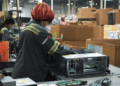
Through its Elcare workshop, Elgigante refurbishes items that can be reintroduced into the marketplace and sold as second-hand products; the company recycles what can’t be repaired. The partnership has been able to get everything from submerged iPhones to 50-year-old radios back into circulation.
Treasure Collection devices are sold at prices lower than the company’s standard refurbished items; an old iPhone might get SEK 800 ($78.56), for example. That’s actually at a loss, Winkler said, compared to other used items, once recovery and repair costs are factored in. Plus, Elgiganten covers those costs and donates all proceeds to Hands2Ocean.
But profit was never the point of the project.
“It was about showing what repair and refurbishment can achieve,” he said. “If a product recovered from the bottom of the sea can be given a second life, we hope it makes people think differently about the products they already have at home. If the project encourages more people to repair, reuse or recycle products correctly, then we believe it has served its purpose.”
A survey Engiganten commissioned reinforced the company’s belief that more can be done to get old electronics into new hands. The survey, which was done by Verian, found that 85% of Swedes kept old electronics in their homes they no longer used. And data from the UN Global E-waste Monitor indicates electronic recycling rates will hover around 20% through at least the end of the decade.
The program has proven popular — that radio sold within hours of going up for sale — and all signs point to the relationship continuing. There’s no way to control the inventory, so buyers have to keep checking in to assess their options; items currently up for sale include cell phones, vintage digital watches, a MacBook and an electric scooter.
The program accounts for a very small share of the devices Elgiganten works with, Winkler said, but the example he hopes it sets will make a splash in boosting people’s attitudes around reuse.
“The real opportunity is not on the bottom of the sea,” Winkler said. “It is in all the products sitting in drawers, garages and storage rooms despite still having value. If Treasure Collection
can make more people think twice before throwing something away, handing it in for recycling or replacing it with something new, then the project has achieved something important.”