Editor’s note: Battery recycling will be featured in sessions at the 2026 E-Scrap: The Longevity Conference in New Orleans October 26-28.
The criticisms surrounding lithium iron phosphate (LFP) batteries have circulated for some time.
Their range is limited.
They won’t last in the cold.
They aren’t worth recycling.
But yet, the technology’s presence continues to grow. LFP batteries accounted for 20% of the global lithium-based battery market in 2020. Six years later, that number has grown to 61% and could reach 70% in the near future, according to Benchmark Mineral Intelligence.
LFP batteries are gaining acceptance in EVs but have become mainstream in sectors including telecom systems, industrial automation and grid-level energy storage. Persistent Market Research recently found LFP to be the fastest-growing battery type segment, with more industries accepting them and recyclers starting to prepare for a wave of batteries that heretofore have had nominal recycling value.
“If I were a prognosticator on battery chemistries, I would have gone broke several years ago,” said Tony Dutzik, associate director and senior policy analyst with Frontier Group, a nonprofit research and policy organization.
But a combination of factors, among them manufacturing maturity and greater economies of scale, have created a perhaps-permanent place for LFP batteries, according to Eric Frederickson, vice president of operations for The Battery Network, a nonprofit recycling advocacy group.
“You need less plastic and interconnectors with them,” he said. “The whole thing in aggregate needs less (material). Now it makes more sense economically and in using them.”
Nurtured overseas
LFP chemistry was created in the United States in the 1990s, but the patents filed at the time didn’t cover China. The lack of minerals like nickel and cobalt made it economically attractive, but its lower energy density didn’t attract domestic developers that were concerned about the frequent charges that would be needed.
So, while US manufacturers focused on more traditional chemistries, the Chinese battery market went to work engineering weight off the battery pack, improving the degradation rate and otherwise making LFP batteries a viable choice, according to Steven DeCaluwe, associate professor and director of graduate studies at Colorado School of Mines.
Also key, according to Frederickson, was the fact that China didn’t worry about profitability at first.
“China didn’t wait for a market,” he said. “If China is allowing industry to run at a loss so no other markets can compete, then those other global markets dry up and go away.”
Those advances have turned heads. Ford CEO Jim Farley said he’s impressed by the “high quality” of Chinese EVs, opining that Chinese companies have enough production capacity to serve the entire North American market. A 100% tariff and federal bans on Chinese-connected software have essentially blocked these vehicles from the US market, but they hold 14% of the market share of Europe and make up Australia’s seven top-selling EV models.
Nearly all of the world’s LFP cathode material and battery cells (98%) are made in China, according to the International Energy Agency (IEA). Half of that is controlled by Contemporary Amperex Technology Co. Ltd. (CATL), which also holds more than a third of the global LFP market share.
“The rest of the world is playing catchup,” DeCaluwe said. “It remains to be seen whether anyone else can break into that market. It will take a nation willing to pay for a loss for a while to establish capability and then catch up.”
Trying to break through
A few companies in the US have started taking those steps. Tesla, which has used LFP batteries from CATL and other companies in some models, is ramping up production of LFP batteries this year at its Nevada facility. Its current LFP-powered offerings outperform nickel-based batteries in battery health tests.
Startup automaker Slate will feature LFP batteries in its low-cost electric trucks, which will be made in Indiana and should begin rolling out before year’s end.
And Ford continues to bring on employees to work at its BlueOval Battery Park Michigan, at which the automaker will make LFP batteries for its midsized Fathom pickup truck and other EVs. It licensed CATL technology as part of the effort.
Altering a battery’s cathode mix can help bring costs down and make the technology more feasible to incorporate, Frederickson said. But shifting attitudes within the industry also has gone a long way in convincing US manufacturers to go the LFP route.
“It’ll never have the energy density of nickel magnesium cobalt (NMC) batteries,” he said. “What industries are starting to realize is that the energy density that is only achievable with NMC is not needed. In a standard-range EV, if 200 miles is enough range, you can go with that.”
The movement extends beyond the automotive industry. APM Terminals Los Angeles and Orange EV recently expanded the fleet of LFP-powered terminal tractors to 60 units, making Pier 400 in the Port of Los Angeles the first to have a fully electrified drayage fleet.
Wildcat Discovery Technologies and EnergyX, meanwhile, announced a collaboration earlier this year to build a $230 million LFP cathode manufacturing facility in Hooks, Texas. The facility will open at an undetermined date with the ability to produce 15,000 metric tons of cathode material; future expansion capacity will be built in.
LFP chemistry has also helped close the electrical gap in some of California’s municipal grids, Frederickson said. LFP storage batteries have bolstered the state’s storage resources, which now exceed 21,000 megawatts, making the state’s battery fleet one of the largest in the world.
“The rise of data centers and grid-connected power isn’t something we expected five years ago,” he said. “That’s the biggest shift why LFP has come into dominance … These spikes in demand are being met by batteries. You don’t hear about brownouts in California.”
The ability to generate power from solar and other sources, and then sell it back into the grid when it’s needed, has created a reliable revenue stream for LFP users, he said.
“It’s profitable to invest in these facilities,” he said. “Nobody saw that 5-8 years ago, and that’s all LFP.”
Boosting recycling capabilities
Increased LFP battery production has done little to boost prices for the minerals they contain, making the recycling of them a losing financial proposition — in some cases, recyclers have to pay four figures to recycle an EV battery due to its size.
Gate fees such as this that recyclers have to pay are common when dealing with LFP batteries, Frederickson said, because there’s no viable way to make money from the minerals. Accounting for that cost as part of the vehicle sale process can help, with the chemistry’s lower production cost offsetting a potential fee to account for end-of-life disposal.
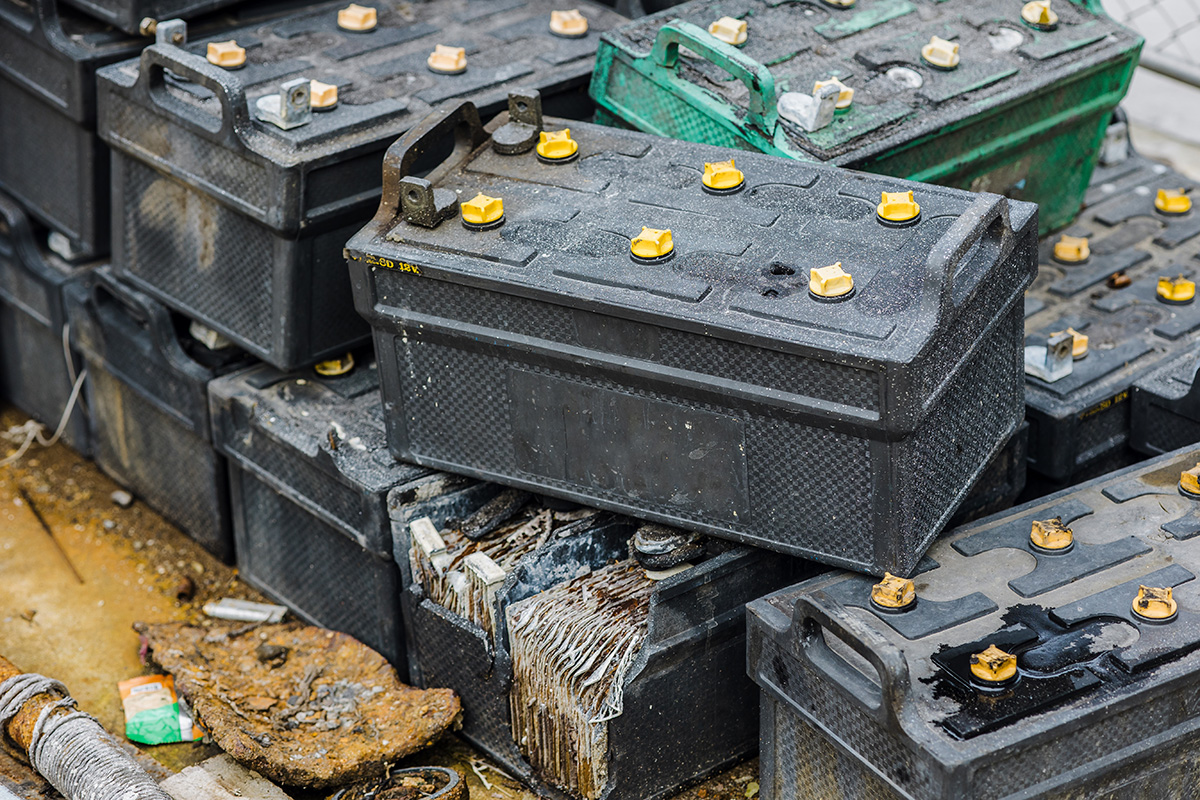
Recycling these batteries is important, experts agree, because EV batteries are hazardous materials that could contaminate landfills and present fire-related risks at processing facilities. But even when recycled, the high heat and chemicals needed in the process create environmental damage.
Despite the challenges, LFP recycling is on the upswing. Markets and Markets projects LFP to be the battery chemistry that accounts for the largest market share, in terms of value, between now and 2033; during that time, the total lithium-ion battery recycling market is expected to grow 15% per year, to $50 billion by 2033 globally. Researchers say the growing volume of batteries hitting the secondary market is among the driving factors for this.
Advancements in alternative LFP recycling methods may also prompt people to do so, including:
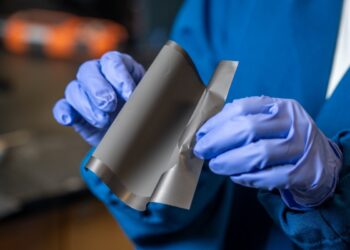
- Engineers from the University of California San Diego can upcycle LFP cathodes into lithium manganese iron phosphate battery material, which store more energy while reusing the original minerals.
- Chemists at the University of Wisconsin-Madison devised a low-energy, water-based process to get minerals from spent cathodes using electrodes.
- Huayou Recycling unveiled a “dual process and dual chemistry” recycling technology earlier this year that can dynamically deploy direct recycling and hydrometallurgical processing. It switched between processes based on battery cell degradation levels, reducing carbon outputs while optimizing raw material circulation in a scalable way.
- Jereh Group introduced an LFP cathode material regeneration solution earlier this summer that uses a dry physical process to cut processing costs by 40%; it also achieves 95% stripping efficiency and eliminates wastewater discharge.
Increased LFP production could also create a circular effect that leads to demand and price surges for the minerals in time, DeCaluwe said. More LFP batteries could make the demand for iron, as one example, exceed the volume needed for the steel industry, shorting supply and creating more desirable recycling conditions for processors.
“The idea no one’s going to want the inherent materials aren’t valuable is a relative statement,” said DeCaluwe, who stresses the number of moving targets in the marketplace that make projections like these imperfect. “It’s a little bit of a chicken and egg situation right now.”
But enhancing the LFP recycling infrastructure will be difficult without more advancement, Frederickson said. Current recycling technologies often prioritize nickel, cobalt and copper over lithium, leaving more of that mineral behind.
“It’s economically challenging to have good circularity for LFP batteries,” he said. “It’s part of a systemwide disadvantage.”
The future of LFP
Technological advancements across the board have further accelerated adoption of LFP chemistry. Epsilon Advanced Materials recently unveiled its Gen 3.0 LFP cathode, which has improved discharge capacity and electrode density. Companies such as CATL, meanwhile, have enhanced their LFP batteries by “manganese doping,” adding in manganese to boost energy density by 15%-20%.
But that addition may eventually lead to downright substitution. General Motors is converting a Tennessee battery cell manufacturing facility to scale LFP production. But the automaker is looking at lithium manganese-rich (LMR) battery chemistry for future vehicles due to its superior energy density (around 33% more than LFP) and cheaper production price.
Sodium-ion batteries, meanwhile, provide another option. Their reliance upon abundant minerals lowers the cost and relieves some supply chain issues, and they perform better in low temperatures than LFP batteries. But they have a shorter life span and don’t discharge steadily.
As critical mineral prices increase, the IEA forecasts continued but narrowing supply gaps for copper and lithium. That means technical innovation alone can’t be relied upon to fill in all the gaps in need for battery-powered technology, regardless of how much LFP chemistry advances.
Dutzik said a holistic approach will be best to meet future demand, with policymakers helping across the mining, recycling and processing sectors to ensure viability.
“The challenge is, do recycled materials compete economically with virgin materials?” he said. “Advances in batteries are helpful, but they are not a silver bullet.”
Another assist could come, according to Frederickson, if players across the Western manufacturing supply chain could resurrect what he called their atrophied components. China remains far ahead in high-quality LFP manufacturing, despite some Western advances, so boosting facilities while recruiting and training more skilled machine operators could help the US and Europe catch up.
That could mean putting structures in place that aren’t viable for a decade.
“It’s going to take investment across sectors,” he said.