Resource Recycling
  • The Latest
  • Analysis
    • All
    • Certification Scorecard
    • Industry Announcements
    • Opinion
    CompuCycle brings e-plastic recycling upgrade online

    Quantum expands e-plastics recovery

    Certification Scorecard — Week of May 4, 2026

    Building a cleaner future through digital transformation

    Q1 earnings confirm wave of ITAD decommissioning

    Sundry Photography / Shutterstock

    Iron Mountain puts ITAD at the center of its growth

    Industry announcements for January 2026

    Industry announcements for May 2026

    Apple store

    Apple leads on inputs, faces questions on ITAD

  • Conferences
    • Resource Recycling Conference
    • Plastics Recycling Conference
    • E-Scrap: The Longevity Conference
    • Textiles Recovery Summit
  • Publications
    • E-Scrap News
    • Plastics Recycling Update
    • Policy Now
    • Resource Recycling
    • Other Topics
      • Brand Owners
      • Critical Minerals
      • Glass
      • Grant Watch
      • Markets
      • Organics
      • Packaging
      • Research
      • Technology
      • Textiles
      • All Topics
Subscribe
No Result
View All Result
Resource Recycling
  • The Latest
  • Analysis
    • All
    • Certification Scorecard
    • Industry Announcements
    • Opinion
    CompuCycle brings e-plastic recycling upgrade online

    Quantum expands e-plastics recovery

    Certification Scorecard — Week of May 4, 2026

    Building a cleaner future through digital transformation

    Q1 earnings confirm wave of ITAD decommissioning

    Sundry Photography / Shutterstock

    Iron Mountain puts ITAD at the center of its growth

    Industry announcements for January 2026

    Industry announcements for May 2026

    Apple store

    Apple leads on inputs, faces questions on ITAD

  • Conferences
    • Resource Recycling Conference
    • Plastics Recycling Conference
    • E-Scrap: The Longevity Conference
    • Textiles Recovery Summit
  • Publications
    • E-Scrap News
    • Plastics Recycling Update
    • Policy Now
    • Resource Recycling
    • Other Topics
      • Brand Owners
      • Critical Minerals
      • Glass
      • Grant Watch
      • Markets
      • Organics
      • Packaging
      • Research
      • Technology
      • Textiles
      • All Topics
Subscribe
No Result
View All Result
Resource Recycling
No Result
View All Result
Home E-Scrap

Australia battery recycling sector could reach A$6.9bn by 2050

byScott Snowden
March 20, 2026
in E-Scrap
Australia battery recycling sector could reach A$6.9bn by 2050

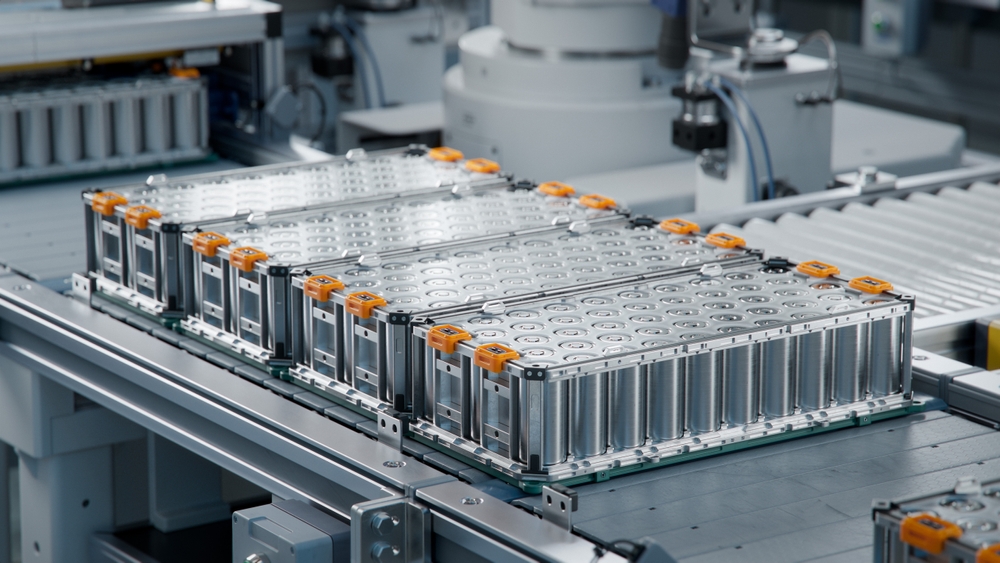
A li-on battery for EV or hybrid vehicle. | IM Imagery / Shutterstock

Australia’s battery materials recovery industry already contributes more than A$2 billion (US $1.41 billion) to the national economy and could expand sharply as lithium-ion batteries reach the end of their useful life in growing numbers across the energy and transportation sectors.

A new industry profile commissioned by the Australian Association for the Battery Recycling Industry (ABRI) and prepared by Positive Economics Advisory estimates the sector currently contributes $2.1 billion to the Australian economy and supports 19,450 jobs. According to the report, the industry could grow to $6.9 billion and support more than 34,600 jobs by 2050 as battery use expands across manufacturing equipment, electric vehicles and stationary energy storage systems.

The report was presented March 12 at Parliament House in Canberra during an industry showcase hosted by the association that brought together parliamentarians, policy advisers and representatives from across the battery supply chain.

Simon Linge, chair of the ABRI and chief executive officer of the Australian-based recycling company Livium, said the study is intended to help policymakers and other stakeholders better understand the scale and direction of Australia’s battery materials recovery sector.

Linge said the study forms part of the association’s effort to reshape policy discussions by highlighting the economic scale of the battery recycling industry. He added that battery recycling has historically been viewed primarily through an environmental lens but is increasingly being discussed in terms of materials supply and industrial capability.

“This is not actually an ESG [environmental, social and governance] story. It is an element of the story,” Linge said. “It’s actually also about metals recovery and critical minerals recovery.”

Rising battery volumes

The report describes battery recycling as a form of “urban mining,” referring to the recovery of materials such as lithium, nickel and cobalt from batteries that have reached the end of their service life. Those materials can be returned to supply chains and used in battery manufacturing and other industrial applications.

Linge said the rapid expansion of electrified technologies will drive a steep rise in end-of-life lithium battery volumes over the coming decades. He estimated that roughly 5,000 metric tons of large format lithium-ion batteries reach end of life in Australia each year today. That figure could grow substantially as electric vehicles and large-scale energy storage systems become more common.

“By 2035 that’s 100,000 tons,” Linge said, adding, “By 2040 it’s 500,000 tons.”

Those volumes represent both a waste management challenge and a potential supply of recoverable materials that could reenter battery manufacturing supply chains.

The report also points to Australia’s long established lead battery recycling system as an example of how effective collection and recovery infrastructure can be developed when policy frameworks and industry systems are in place.

“About 95% of lead acid batteries in Australia are captured for recycling,” Linge said.

Lithium-ion batteries are expected to eventually surpass lead batteries in total volumes as electrification expands, making the development of collection and processing systems increasingly important.

At present much of Australia’s lithium battery recycling industry focuses on pre-processing, the stage where batteries are dismantled and materials such as steel, copper and aluminum are separated before the remaining cathode and anode materials are concentrated into a product known as black mass. That material typically undergoes further processing overseas because Australia does not yet have sufficient volumes to support large-scale domestic refining.

“We don’t have enough scale in Australia to justify then going to the next step of processing that black mass,” Linge said. He added the industry expects that capability could emerge within the next decade as battery volumes increase and smaller scale processing technologies develop.

“We are firmly of the view that within the next 10 years we will be able to build that capability in Australia,” he said.

Industry calls for policy framework

Linge said the report is intended to help inform policy discussions about how Australia should manage the rising flow of end-of-life batteries while supporting the development of domestic recycling infrastructure.

The ABRI is urging governments to consider measures such as extended producer responsibility (EPR), which would require companies that place batteries on the market to take responsibility for their collection and recycling.

“What we’re asking for is the right policy settings,” Linge said. Without effective collection systems and regulatory frameworks, batteries could be discarded in landfills, stored indefinitely or exported outside formal recycling channels, he said.

“If we don’t have feedstock, if we don’t have those batteries, then you don’t have a chance of an industry standing up,” Linge noted.


Tags: Critical MineralsIndustry GroupsResearch
TweetShare
Scott Snowden

Scott Snowden

Scott has been a reporter for over 25 years, covering a diverse range of subjects from sub-atomic cold fusion physics to scuba diving off the Great Barrier Reef. He's now deeply invested in the world of recycling, green tech and environmental preservation.

Related Posts

APR, industry groups testify on overcapacity

APR, industry groups testify on overcapacity

byAntoinette Smith
May 8, 2026

Steve Alexander, CEO of APR, pointed to China as driving global oversupply despite fluctuating PET imports to the US and...

Lawsuits hover days after SB 54 approval

Lawsuits hover days after SB 54 approval

byStefanie Valentic
May 6, 2026

NRDC and Californians Against Waste are suing CalRecycle over finalized EPR regulations they say unlawfully allow chemical recycling and other...

Lithium-ion battery recycler to build New York facility

Why battery EPR doesn’t have a packaging problem

byStefanie Valentic
May 4, 2026

While packaging EPR fights injunctions, battery EPR has achieved a mostly harmonized legal framework across nearly every state that has...

Electronics are the fire risk battery EPR keeps missing

Electronics are the fire risk battery EPR keeps missing

byStefanie Valentic
May 4, 2026

Most battery EPR frameworks don't cover what's actually igniting in collection trucks.

New version of California EPR regulations released

CalRecycle approves SB 54 regulations

byStefanie Valentic
May 2, 2026

CalRecycle approved permanent regulations under SB 54, the state's landmark packaging EPR law. The rules took effect immediately upon filing...

Five trends shaping PCR packaging to 2031

bySmithers editorial
April 29, 2026

Growing steadily but falling short of legislative demands, the global market for PCR plastic packaging is at a crossroads.

Load More
Next Post
In My Opinion: Bring consumer trust to refurb markets

Record $6.4B in trade-ins as older phones drive market

More Posts

New version of California EPR regulations released

CalRecycle approves SB 54 regulations

May 2, 2026
Lawsuits hover days after SB 54 approval

Lawsuits hover days after SB 54 approval

May 6, 2026

Origin Materials to shut down, sell PET cap design

May 6, 2026
Texas plant in limbo after Eastman loses DOE grant

Eastman cites RPET adoption for growth

May 5, 2026
Plastic Ingenuity to use PureCycle PP for coffee lids

Plastic Ingenuity to use PureCycle PP for coffee lids

April 30, 2026
Fiber producers push for June price increases

Fiber producers push for June price increases

May 5, 2026
Electronics are the fire risk battery EPR keeps missing

Electronics are the fire risk battery EPR keeps missing

May 4, 2026
Study quantifies lithium battery threat to infrastructure

Battery fires remain elevated in early 2026: report

May 1, 2026
Lithium-ion battery recycler to build New York facility

Why battery EPR doesn’t have a packaging problem

May 4, 2026
Recycling analysis pinpoints gaps in New York data

New York packaging EPR bill gets nearly 150 amendments

May 1, 2026
Load More

About & Publications

About Us

Staff

Archive

Magazine

Work With Us

Advertise
Jobs
Contact
Terms and Privacy

Newsletter

Get the latest recycling news and analysis delivered to your inbox every week. Stay ahead on industry trends, policy updates, and insights from programs, processors, and innovators.

Subscribe

Welcome Back!

Login to your account below

Forgotten Password?

Retrieve your password

Please enter your username or email address to reset your password.

Log In

Add New Playlist

No Result
View All Result
  • The Latest
  • Analysis
  • Recycling
  • E-Scrap
  • Plastics
  • Policy Now
  • Conferences
    • E-Scrap Conference
    • Plastics Recycling Conference
    • Resource Recycling Conference
    • Textiles Recovery Summit
  • Magazine
  • About Us
  • Advertise
  • Archive
  • Jobs
  • Staff
Subscribe
This website uses cookies. By continuing to use this website you are giving consent to cookies being used. Visit our Privacy and Cookie Policy.