




Resource Recycling
  • The Latest
  • Analysis
    • All
    • Certification Scorecard
    • Industry Announcements
    • Opinion

    Certification Scorecard — Week of June 8, 2026

    ITAD is moving past its adolescent phase: beyond end-of-life

    Rainforest

    Inside the Circle: What the rainforest can teach us about EPR

    Closeup of a printed circuitboard

    Hardware demand puts new focus on parts harvesting

    Rare look inside the world’s largest plastics recycler

    Mass balance matters: Why different rules can lead to different outcomes 

    Certification Scorecard — Week of June 1, 2026

  • Conferences
    • Resource Recycling Conference
    • Plastics Recycling Conference
    • E-Scrap: The Longevity Conference
    • Textiles Recovery Summit
  • Publications
    • E-Scrap News
    • Plastics Recycling Update
    • Policy Now
    • Resource Recycling
    • Other Topics
      • All Topics
      • Brand Owners
      • Critical Minerals
      • Glass
      • Grant Watch / RFPs
      • Markets
      • Organics
      • Packaging
      • Research
      • Technology
      • Textiles
Subscribe
No Result
View All Result
Resource Recycling
  • The Latest
  • Analysis
    • All
    • Certification Scorecard
    • Industry Announcements
    • Opinion

    Certification Scorecard — Week of June 8, 2026

    ITAD is moving past its adolescent phase: beyond end-of-life

    Rainforest

    Inside the Circle: What the rainforest can teach us about EPR

    Closeup of a printed circuitboard

    Hardware demand puts new focus on parts harvesting

    Rare look inside the world’s largest plastics recycler

    Mass balance matters: Why different rules can lead to different outcomes 

    Certification Scorecard — Week of June 1, 2026

  • Conferences
    • Resource Recycling Conference
    • Plastics Recycling Conference
    • E-Scrap: The Longevity Conference
    • Textiles Recovery Summit
  • Publications
    • E-Scrap News
    • Plastics Recycling Update
    • Policy Now
    • Resource Recycling
    • Other Topics
      • All Topics
      • Brand Owners
      • Critical Minerals
      • Glass
      • Grant Watch / RFPs
      • Markets
      • Organics
      • Packaging
      • Research
      • Technology
      • Textiles
Subscribe
No Result
View All Result
Resource Recycling
No Result
View All Result
Home E-Scrap

E-scrap export pause urged to keep rare earth scrap in US

byScott Snowden
March 11, 2026
in E-Scrap
E-scrap export pause urged to keep rare earth scrap in US

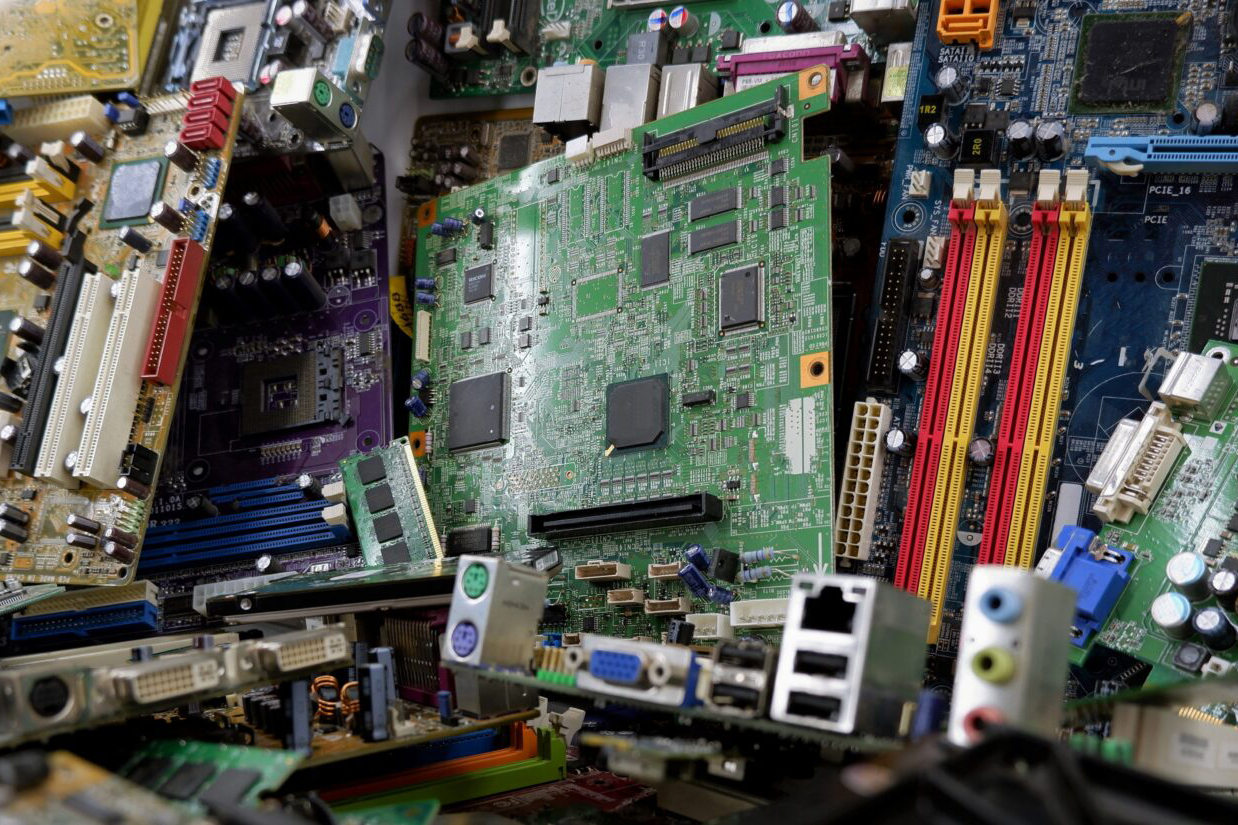
A CFR report and March 9 panel urged an innovation-led US critical minerals strategy, from ‘urban mining’ and recycling to new finance tools, as speakers warned of China leverage. | ingibitor/shutterstock

A Council on Foreign Relations (CFR) report released in February argues the United States should treat critical minerals as an innovation race rather than a mining contest, warning that conventional projects alone will not move fast enough to blunt China’s leverage over key supply chains.

The report, “Leapfrogging China’s Critical Minerals Dominance,” calls for a strategy that pairs traditional mining and processing with faster-to-deploy approaches, including materials engineering, recovery from legacy mine tailings and industrial byproducts, and expanded recycling of end-of-life electronics. At a CFR event Monday, Assistant Secretary of Energy Audrey Robertson described a reorganization inside the Department of Energy aimed at consolidating the department’s work across that pipeline.

“What we did was bring together mining, processing, refining, pilot scale, R&D and commercialization into one office,” Robertson said, adding that the consolidated entity is now the Office of Critical Minerals and Energy Innovation.

Robertson framed the challenge as spanning the full value chain, from extraction technology to magnets and said the administration is trying to compress the timeline. “This administration has gone on Trump time to solve this problem and that means faster than the speed of light,” she said.

Federal push for minerals innovation

The report’s authors, CFR senior fellow Heidi Crebo-Rediker and Silverado Policy Accelerator’s Mahnaz Khan, argue innovation offers a route to reduce exposure to chokepoints that will remain vulnerable even if new mines and refineries come online. Crebo-Rediker told the audience the goal is additive, not a substitute for conventional supply development, describing innovation as “an additional prong” alongside a strategy focused on traditional mining, processing and manufacturing.

Recycling and recovery drew repeated attention during the discussion, including the export of battery scrap and other feedstocks that speakers said can flow back into Asian supply chains. Robertson described “urban mining” as a near-term opportunity that still runs into permitting and infrastructure barriers. She pointed to the handling of black mass, the shredded lithium-ion battery material that contains metals such as lithium, cobalt and nickel.

“We already have fairly sophisticated aggregation techniques for Black Mass, what we would call it, but they get loaded onto barges and sent over to Asia,” she said, adding that processing remains “chemically intensive, water intensive, power intensive.” Even so, she predicted momentum. “I think you will see significant gains in the output from recycled black mass and material in the coming 12 months.”

Speakers also stressed that the bottleneck is not limited to ores and chemical separation. During a portion of audience Q&A, Jonah Glick-Unterman, chief of staff at magnet producer Vulcan Elements, said equipment constraints could slow efforts to build a domestic supply chain because much of the specialized machinery used to manufacture magnets is produced overseas.

Glick-Unterman added that while China produces most of the world’s magnets, “they make virtually 100% of the equipment.” Robertson said machinery gaps are on the department’s radar. “So absolutely, the equipment, not just for magnets, but for the entire supply chain is on our investment map 100%,” she said.

Innovation and financing challenges emerge

A panel that followed widened the focus to financing and the constraints that can stall new technologies between lab validation and commercial deployment. Nathan Ratlidge, founder and CEO of Alta Resource Technologies, said supply risks extend beyond mines and refineries to the broader web of inputs needed to build and operate facilities. “By depth, I mean there’s a whole supply chain problem,” he said. “Where are your parts coming from? Where’s your sulfuric acid coming from? Where’s your exotic acid coming from?”

Ratlidge also warned the timeline will be unforgiving. “There are break glass moments,” he said, adding, “There are 90 days of resources left in some facilities for critical supply chains.” He argued innovation can drive speed and cost improvement, pointing to the shale boom as a parallel. “The same opportunity exists in mining today,” he said, adding, “Speed is key.”

Sarah Sewall, executive vice president of national innovation strategy at In-Q-Tel, described the organization’s Compass fund as an attempt to invest in technologies that private markets may overlook relative to national security needs. “Compass was founded on the premise that the private sector is great at what it does, but it pursues profit,” she said. “Profit is not necessarily the same thing as what you need in the national interest.”

Khan said China’s policy direction reinforces the urgency of building alternatives, warning that export controls and market behavior can shift quickly. She said Beijing has historically responded to emerging competitors by flooding global markets with cheaper supply that can undercut new producers. “We know China’s playbook,” she said. “China’s playbook is that once a country scales a certain critical mineral, they start dumping rare earth magnets, or start dumping critical minerals and rare earth magnets.”

Robertson said she views success as building an innovation pipeline that supports domestic manufacturing over time, even if the work remains unfinished by the end of her tenure. “So when I leave here, we probably won’t be done baking the cake, but it will be nearing the oven,” she said.


Tags: Markets
TweetShare
Scott Snowden

Scott Snowden

Scott has been a reporter for over 25 years, covering a diverse range of subjects from sub-atomic cold fusion physics to scuba diving off the Great Barrier Reef. He's now deeply invested in the world of recycling, green tech and environmental preservation.

Related Posts

Aluminum can bale close up.

Aluminum scrap exports face scrutiny under HB 9161

byStefanie Valentic
June 9, 2026

A new House bill would direct the US International Trade Commission to investigate whether US aluminum scrap exports to adversarial...

War, not demand driving polymer pricing

War, not demand driving polymer pricing

byAntoinette Smith
June 2, 2026

While prices for recycled commodities are tracking rises in virgin markets, few transactions are occurring, said an ICIS analyst.

Machinex

Longview mill tragedy raises broader questions for fiber, recycling sectors

byKeith Loria
May 29, 2026

A deadly explosion at Nippon Dynawave Packaging’s Longview, Washington plant prompts new questions for the pulp, paper and packaging industries.

EPR rules take shape in Oregon, as first test

Oregon OKs end-market verification from CAA

byStefanie Valentic
May 20, 2026

The state's Department of Environmental Quality has given the stamp of approval on CAA's Responsible End Markets program plan amendment.

Aurubis smelter pipe system and chimney.

Aurubis sends positive signal for metals recovery markets

byDavid Daoud
May 18, 2026

The company’s performance is often seen as a bellwether for downstream appetite for complex electronic scrap and industrial recycling feedstock.

Bottle bill backers see opportunity for action

PET collapse exposes gaps in US recycling infrastructure

byStefanie Valentic
May 15, 2026

Joaquin Mariel, Circular Services president, broke down why recycling infrastructure is so hard to scale and used PET's rapid market...

Load More
Next Post
Greenway now takes e-scrap from Midwest businesses

Greenway now takes e-scrap from Midwest businesses

More Posts

Recycling industry addresses Beyond Plastics report

Recycling industry addresses Beyond Plastics report

May 26, 2026
House resolution aims to make recyclability central to product design

NY EPR bill fails to advance after third try

June 8, 2026
CalRecycle withdraws proposed regs for SB 54

Oceana, NRDC, CAW sue CalRecycle over SB 54 regs

June 5, 2026
Various PET thermoform containers.

Thermoform recovery soars, PCR content falls

June 10, 2026
Rare look inside the world’s largest plastics recycler

Mass balance matters: Why different rules can lead to different outcomes 

June 5, 2026
Circular Materials to supply PlasCred chem recycling plant

Circular Materials to supply PlasCred chem recycling plant

June 4, 2026

Three-bill package aims to revamp Michigan’s bottle return system

June 9, 2026
Rainforest

Inside the Circle: What the rainforest can teach us about EPR

June 8, 2026

Battery fires still a major risk to recyclers: report

June 9, 2026
How electronics legislation fared this legislative season

NY sends repairability labeling bill to governor

June 8, 2026
Load More

About & Publications

About Us

Staff

Archive

Magazine

Work With Us

Advertise
Jobs
Contact
Terms and Privacy

Newsletter

Get the latest recycling news and analysis delivered to your inbox every week. Stay ahead on industry trends, policy updates, and insights from programs, processors, and innovators.

Subscribe

Welcome Back!

Login to your account below

Forgotten Password?

Retrieve your password

Please enter your username or email address to reset your password.

Log In

Add New Playlist

No Result
View All Result
  • The Latest
  • Analysis
  • Recycling
  • E-Scrap
  • Plastics
  • Policy Now
  • Conferences
    • E-Scrap Conference
    • Plastics Recycling Conference
    • Resource Recycling Conference
    • Textiles Recovery Summit
  • Magazine
  • About Us
  • Advertise
  • Archive
  • Jobs
  • Staff
Subscribe
This website uses cookies. By continuing to use this website you are giving consent to cookies being used. Visit our Privacy and Cookie Policy.