




Blancco has introduced a new tool aimed at tightening one of the more persistent gaps in ITAD operations: the handoff between certified data erasure and operating system reinstallation.
The product, called Blancco Asset Reimaging, integrates Windows OS reinstallation directly into Blancco’s existing data erasure workflow, allowing ITAD providers to rebuild devices immediately after sanitization within the same automated process rather than routing them to separate imaging or deployment tools.
Blancco says the approach is designed to reduce handling time, improve consistency in rebuild quality and simplify buyer-side verification by providing consolidated documentation showing both certified data erasure and Windows OS installation.
Pressure from the secondary market
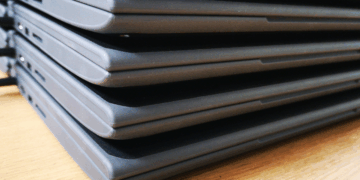
The launch comes as resale dynamics for used laptops continue to evolve, with secondary market buyers placing greater emphasis on turnaround time, documentation and consistency instead of accepting wide variability in refurbished inventory. At the same time, ITADs are processing large volumes of returned corporate devices from refresh cycles and office reconfigurations, straining traditional plant-floor workflows that were designed around separate erasure, grading, and rebuild stages.
“ITADs are all about efficiency. They’re trying to squeeze seconds out of processes, and AI and automation have the ability to save hours or days out of processes,” said Russ Ernst, chief technology officer at Blancco.
“ITADs are being asked to move devices faster, but with more scrutiny around how those devices are handled and prepared for resale,” Ernst said, noting that this pressure has exposed friction between erasure and rebuild steps that were never designed to work together.
Historically, many ITADs have relied on standalone imaging tools or manual processes to reinstall operating systems after erasure, creating separate audit trails and quality checkpoints that add time and increase the risk of inconsistencies at higher volumes.
What the new workflow changes
Asset Reimaging does not replace Blancco’s core data erasure software; it extends the erasure process to include Windows OS reinstallation immediately after sanitization, using the same automation framework and reporting structure. Blancco says the tool generates a single tamper-resistant report covering both erasure and OS rebuild, which the company believes will appeal to buyers and compliance teams seeking clearer documentation of device handling.
“Today we’re uniting disparate processes into a single end-to-end process,” Ernst said. “You touch it once when the device comes in, and at the end of the line you have a re-imaged machine.”
The company also points to reduced downstream failures, such as rebuild errors or quality assurance issues, as a potential benefit of rebuilding devices earlier and more consistently in the process. Ernst said large ITADs have described the integrated workflow as “a breath of fresh air,” questioning why they should keep moving units “onto a cart and onto a shelf” to be re-imaged later when those steps can be collapsed into a single run.
While OS reinstallation itself is not new to ITAD operations, the tighter integration into certified erasure workflows reflects a broader industry trend toward software-driven process optimization rather than labor-based throughput gains.
Scope and limitations
The new tool is designed primarily for ITADs and refurbishers processing Windows laptops and desktops at scale, not as an enterprise redeployment solution. It also does not eliminate the need for proper Windows licensing and resale compliance, which remain the responsibility of the ITAD or refurbisher. Ernst emphasized that the technology originated with an ITAD customer that is a Microsoft Authorized Refurbisher and that Asset Reimaging “falls directly within the accepted rules” for how Windows operating systems can be reused and remarketed, including use of digital product keys to ensure devices are properly licensed before resale.
On the commercial side, Blancco has reworked its licensing so that reimaging is consumed as an event within its broader ITAD subscription tiers, alongside erasure and diagnostics. For existing “better” and “best” platform customers, Asset Reimaging is effectively an additional use case for event volumes they have already purchased, rather than a completely separate SKU.
Blancco has previously published case studies highlighting use of its erasure and diagnostics tools by large ITAD operators. Given the product’s recent launch, the company has not yet released customer case studies specific to the new reimaging workflow. Adoption rates, pricing and how much value ITADs with less standardized operations can realistically extract from a more tightly coupled process are yet to be seen.
That leaves open questions around adoption rates, pricing and how much value ITADs with less standardized operations can realistically extract from a more tightly coupled process.
More broadly, the launch underscores how ITAD software vendors are expanding beyond point solutions toward end-to-end workflow orchestration.
Blancco’s Intelligent Business Routing engine, which underpins the new capability, allows ITADs to push decision-making about cut lines, diagnostics depth and reimaging criteria into configurable rules rather than leaving those calls to line workers or temporary staff, Ernst noted. As resale values fluctuate and compliance expectations rise, ITAD margins are increasingly influenced by process design and automation rather than incremental labor savings.
Whether Blancco’s approach becomes a model for wider adoption remains to be seen, but collapsing traditionally separate steps into a single audited workflow illustrates how the operational conversation inside ITAD facilities is changing. For an industry long shaped by physical logistics and manual handling, software integration is becoming a central competitive variable.