



Resource Recycling
  • The Latest
  • Analysis
    • All
    • Certification Scorecard
    • Industry Announcements
    • Opinion
    EPR fees are a market signal. Here’s what they’re telling you.

    EPR fees are a market signal. Here’s what they’re telling you.

    Wolframite ore, the primary ore of tungsten from Altai, Russia

    Tungsten scrap export controls draw industry attention

    Certification Scorecard — Week of April 6, 2026

    Closed Loop Partners acquires Sutter Metals, connecting electronics disposition to metals recovery

    Certification Scorecard — Week of March 30, 2026

    Industry announcements for January 2026

    Industry announcements for April 2026

    Certification scorecard – Week of March 23, 2026

    Certification Scorecard – Week of March 16, 2026

    Groups identify recovered plastics users in the Northeast

    Bale pricing for recycled plastics diverges

  • Conferences
  • Publications

    Other Topics

    Textiles
    Organics
    Packaging
    Glass
    Brand Owners

    Metals
    Technology
    Research
    Markets
    Grant Watch

    All Topics

Subscribe
No Result
View All Result
Resource Recycling
  • The Latest
  • Analysis
    • All
    • Certification Scorecard
    • Industry Announcements
    • Opinion
    EPR fees are a market signal. Here’s what they’re telling you.

    EPR fees are a market signal. Here’s what they’re telling you.

    Wolframite ore, the primary ore of tungsten from Altai, Russia

    Tungsten scrap export controls draw industry attention

    Certification Scorecard — Week of April 6, 2026

    Closed Loop Partners acquires Sutter Metals, connecting electronics disposition to metals recovery

    Certification Scorecard — Week of March 30, 2026

    Industry announcements for January 2026

    Industry announcements for April 2026

    Certification scorecard – Week of March 23, 2026

    Certification Scorecard – Week of March 16, 2026

    Groups identify recovered plastics users in the Northeast

    Bale pricing for recycled plastics diverges

  • Conferences
  • Publications

    Other Topics

    Textiles
    Organics
    Packaging
    Glass
    Brand Owners

    Metals
    Technology
    Research
    Markets
    Grant Watch

    All Topics

Subscribe
No Result
View All Result
Resource Recycling
No Result
View All Result
Home E-Scrap

Federal program seeks to ‘defragment’ e-scrap sector

Colin StaubbyColin Staub
March 14, 2024
in E-Scrap
Federal program seeks to ‘defragment’ e-scrap sector

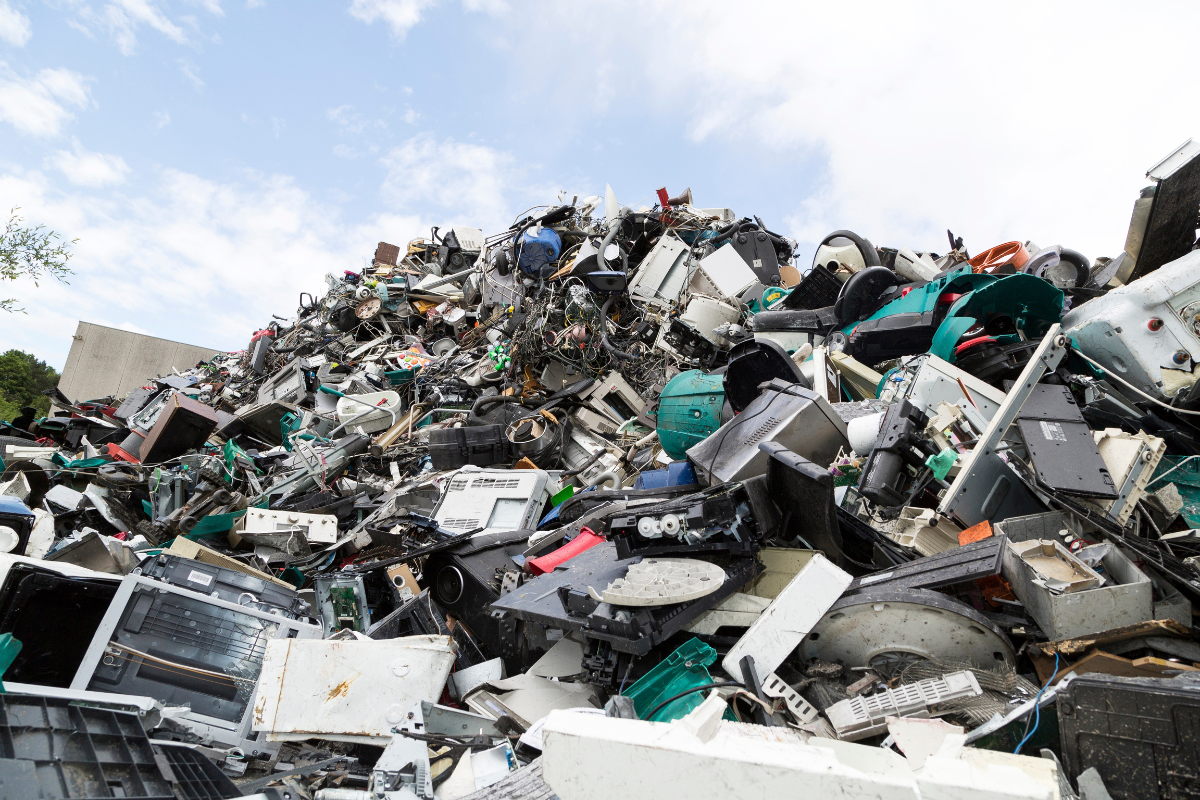
A technology manager with the U.S. Department of Energy said improving e-scrap management fits squarely within the federal government’s material sourcing and climate goals. That’s why the agency has launched a new funding and technical assistance opportunity targeting electronics recovery.

The Energy department on March 6 announced the Electronics Scrap Materials Recycling Prize, or E-SCRAP. It’s a competition for a broad range of applicants connected to the electronics recycling industry, with multiple phases highlighting different stages of project implementation.

Jeremy Mehta, technology manager within the department’s Advanced Materials and Manufacturing Technologies Office, said the department has invested in a number of e-scrap recovery-related projects over the past decade, particularly in the separation and material extraction stage. For example, the department is a funding partner of the REMADE Institute, which supports research and development related to recycling, reuse and remanufacturing. Other government branches including the U.S. military have also funded such efforts. 

The E-SCRAP prize aims to build on that work and connect it to other segments of the end-of-life electronics sector.

“We see this prize as being an effective tool to bridge some of the different players that exist along the value chain, from collection to sorting, to concentration, to preprocessing, to actual separation and extraction,” Mehta told E-Scrap News.

Validating and benchmarking the output material, and ultimately getting it back into new electronics to replace virgin material, are further areas of interest, Mehta added.

The department believes building connections between these diverse parts of the electronics recovery sector will highlight opportunities to optimize processes, share information and overall improve the economics of recovering, preparing and reusing metals in electronic devices.

“It’s a fragmented value chain,” Mehta said. “And we’re trying to defragment that.”

Prize comes against ‘critical materials’ backdrop

The federal government has narrowed in on electronics recovery in numerous ways in recent years, almost all tied to an interest in securing much-needed feedstocks. For example, in 2021 the Biden administration advised that the federal government should encourage design for recyclability in consumer electronics and support technologies that recover rare earth magnets from hard drives. His administration also pushed for increased government support of the domestic recycling industry.

The needed feedstocks have been dubbed critical materials, and their association with e-scrap has brought congressional interest in electronics recovery. The Trump administration in 2017 issued an executive order that led to the creation of a critical minerals list in 2018, and the Energy Act of 2020 further defined that term and a larger category of critical materials. Both lists are regularly updated, with the most recent assessment published in July 2023.

Critical materials are defined by the government as non-fuel minerals, elements, substances or other materials that, among other criteria, have a “high risk of supply chain disruption” and serve “an essential function in one or more energy technologies, including technologies that produce, transmit, store, and conserve energy.”

The most recent 2023 list includes a category the department calls the “Electric Eighteen,” many of which are key materials for e-scrap processors: aluminum, cobalt, copper, dysprosium, electrical steel, fluorine, gallium, iridium, lithium, magnesium, natural graphite, neodymium, nickel, platinum, praseodymium, silicon, silicon carbide and terbium.

Mehta noted a typical cell phone, for example, contains 13 of those 18 materials. Because they are so prevalent in electronic devices, the prize is open to projects involved in recycling a broad range of devices.

“The way we’re looking at e-scrap through the lens of this prize is essentially anything that is powered by electricity,” Mehta said.

Prize open to broad range of applicants

The prize has three phases, with the first focused on incubation-stage projects. The department will choose 10 competitors from the applicant pool, and each will receive $50,000 in cash and $30,000 in analysis and support from a national laboratory. During this phase, selected competitors “will propose solutions that have the potential to substantially increase the amount of recovered critical materials from electronic waste and used in U.S. manufacturing,” according to the program.

The second phase will focus on prototype projects. It’s another open application process, so even projects that aren’t selected for the incubation phase can apply again. During this stage, “competitors will prototype their innovation and begin collecting and/or generating data that can be used to optimize technoeconomic strategy and life cycle impacts between partners along the recycling value chain,” the program states.

The third phase is a demonstration, where competitors will implement what they’ve come up with and propose ways to scale it up.

Mehta says the prize would be suitable for applicants from many backgrounds, including but not limited to e-scrap processors, end users and researchers.

The involvement of e-scrap companies as competitors would bring a boost to the program in the form of industry knowledge.

“Established recyclers are a key component to this, because they understand what it takes to move the materials through the sorting step or the concentration step or the preprocessing step,” Mehta said. 

Applications for phase 1 of the prize are due in September. The department will hold two webinars discussing the program on March 27 and June 18. To learn more, visit DOE’s E-SCRAP website.
Tags: Critical MineralsResearch
TweetShare
Colin Staub

Colin Staub

Colin Staub was a reporter and associate editor at Resource Recycling until August 2025.

Related Posts

German demo plant targets lithium recovery from battery scrap

byScott Snowden
April 10, 2026

Tozero has opened a demo plant processing 1,500 metric tons of battery scrap yearly, recovering lithium, graphite and nickel-cobalt to...

Wolframite ore, the primary ore of tungsten from Altai, Russia

Tungsten scrap export controls draw industry attention

byDavid Daoud
April 9, 2026

Businesses that rely on tungsten are urging the U.S. Department of Commerce to consider export controls on tungsten scrap.

Rice researchers use lemon juice to boost battery recycling

byScott Snowden
April 9, 2026

Rice researchers reported a battery recycling process that uses plasma and mild solvents to recover most metals from black mass...

Trafigura signs $1.1b deal for recycled battery metals

byScott Snowden
April 8, 2026

Trafigura entered the agreement to expand access to recycled critical materials, supporting efforts to build more resilient battery supply chains...

Recycled copper output climbs as market shows surplus

byScott Snowden
April 6, 2026

Secondary copper production rose in January, with scrap-driven gains in China helping push global output higher as exchange inventories surged...

Closed Loop Partners acquires Sutter Metals, connecting electronics disposition to metals recovery

byDavid Daoud
April 2, 2026

The acquisition completes a deliberate chain from enterprise device collection through disposition to raw material recovery, positioning PE capital to...

Load More
Next Post
Boliden kept recycled material use steady

Boliden kept recycled material use steady

More Posts

Wineries help create model for film recycling

Wineries help create model for film recycling

April 7, 2026
With RPET in crisis, focus turns to solutions

With RPET in crisis, focus turns to solutions

April 2, 2026

Trafigura signs $1.1b deal for recycled battery metals

April 8, 2026
End markets, policy key to RPET viability

End markets, policy key to RPET viability

April 8, 2026
EPR fees are a market signal. Here’s what they’re telling you.

EPR fees are a market signal. Here’s what they’re telling you.

April 10, 2026
Wolframite ore, the primary ore of tungsten from Altai, Russia

Tungsten scrap export controls draw industry attention

April 9, 2026
Oregon’s Recycling Modernization Act faces injunction

Why EPR’s biggest obstacle might not be legislation

April 6, 2026
PCA closing Richmond plant

PCA closing Richmond plant

April 2, 2026

Apparel retailer organization challenges SB 707 textile PRO selection

April 2, 2026

Independents complement primary PRO in state EPR

April 6, 2026
Load More

About & Publications

About Us

Staff

Archive

Magazine

Work With Us

Advertise
Jobs
Contact
Terms and Privacy

Newsletter

Get the latest recycling news and analysis delivered to your inbox every week. Stay ahead on industry trends, policy updates, and insights from programs, processors, and innovators.

Subscribe

Welcome Back!

Login to your account below

Forgotten Password?

Retrieve your password

Please enter your username or email address to reset your password.

Log In

Add New Playlist

No Result
View All Result
  • The Latest
  • Analysis
  • Recycling
  • E-Scrap
  • Plastics
  • Policy Now
  • Conferences
    • E-Scrap Conference
    • Plastics Recycling Conference
    • Resource Recycling Conference
    • Textiles Recovery Summit
  • Magazine
  • About Us
  • Advertise
  • Archive
  • Jobs
  • Staff
Subscribe
This website uses cookies. By continuing to use this website you are giving consent to cookies being used. Visit our Privacy and Cookie Policy.