





Resource Recycling
  • The Latest
  • Analysis
    • All
    • Certification Scorecard
    • Industry Announcements
    • Opinion
    Apple Watch on product box.

    Wearables are coming and ITAD isn’t ready

    Certification Scorecard — Week of April 13, 2026

    EV Battery Pack - Sergii Chernov-Shutterstock

    Redwood, Rivian deal fuels US infrastructure plans

    Bloom ESG and e-Stewards roll out critical metals metric

    Colorado regulators suggest mid-range EPR scenario

    Why collaboration on plastic waste still matters

    Battery recycler Ascend Elements files for bankruptcy

    Battery recycler Ascend Elements files for bankruptcy

    EPR fees are a market signal. Here’s what they’re telling you.

    EPR fees are a market signal. Here’s what they’re telling you.

    Wolframite ore, the primary ore of tungsten from Altai, Russia

    Tungsten scrap export controls draw industry attention

    Certification Scorecard — Week of April 6, 2026

  • Conferences
  • Publications

    Other Topics

    Textiles
    Organics
    Packaging
    Glass
    Brand Owners

    Metals
    Technology
    Research
    Markets
    Grant Watch

    All Topics

Subscribe
No Result
View All Result
Resource Recycling
  • The Latest
  • Analysis
    • All
    • Certification Scorecard
    • Industry Announcements
    • Opinion
    Apple Watch on product box.

    Wearables are coming and ITAD isn’t ready

    Certification Scorecard — Week of April 13, 2026

    EV Battery Pack - Sergii Chernov-Shutterstock

    Redwood, Rivian deal fuels US infrastructure plans

    Bloom ESG and e-Stewards roll out critical metals metric

    Colorado regulators suggest mid-range EPR scenario

    Why collaboration on plastic waste still matters

    Battery recycler Ascend Elements files for bankruptcy

    Battery recycler Ascend Elements files for bankruptcy

    EPR fees are a market signal. Here’s what they’re telling you.

    EPR fees are a market signal. Here’s what they’re telling you.

    Wolframite ore, the primary ore of tungsten from Altai, Russia

    Tungsten scrap export controls draw industry attention

    Certification Scorecard — Week of April 6, 2026

  • Conferences
  • Publications

    Other Topics

    Textiles
    Organics
    Packaging
    Glass
    Brand Owners

    Metals
    Technology
    Research
    Markets
    Grant Watch

    All Topics

Subscribe
No Result
View All Result
Resource Recycling
No Result
View All Result
Home E-Scrap

How China caused a global e-plastics dilemma

Bobby ElliottbyBobby Elliott
December 14, 2017
in E-Scrap
How China caused a global e-plastics dilemma

With the value of e-plastics plummeting and a major export market crumbling, North American firms are scrambling to identify ways to manage the material.

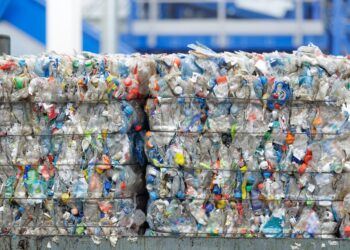
Plastics from electronics have always been a tricky material to manage. Facing minimal domestic demand, sortation and contamination challenges and longstanding environmental concerns regarding flame retardants, processors of all shapes and sizes have come to rely on the export market.

“Pretty close to 100 percent of consumer-grade plastic from our industry was going to China.  It’s just too contaminated for domestic processors,” Jeff Gloyd, vice president of marketing and sales at URT, recently told E-Scrap News.

But all that is changing – and changing quickly.

China’s National Sword initiative

Throughout 2017, China has delivered multiple announcements about new import restrictions, which together have become known to many in the industry as the National Sword campaign. China’s steps have included crackdowns on imports of “illegal waste,” future bans of imports of many recyclables, tightened allowable contamination standards and restrictions on issuing import permits.

Causing major disruptions in the global recycling market, the steps have also cut off a critical pipeline for e-plastic. A slowing of e-plastic shipments to China began as early as last winter.

“China can no longer take e-plastic,” Jim Fei, the president of brokerage firm Baycrest International, told E-Scrap News. “We have not moved any e-plastic to China since the middle of last month.”

Baycrest International is not alone. In a Nov. 8 newsletter, Wisconsin-based Cascade Asset Management noted China had “shut its borders to nearly all recycled plastic,” forcing the firm to explore alternatives to recycling, including sending e-plastics to waste-to-energy plants.

Steve Wong, the executive president of the China Scrap Plastic Association (CSPA), has also been keeping close tabs on the enforcement action. According to a November newsletter from Wong, Chinese agents had already arrested 259 suspects in 2017 believed to be smuggling waste, including plastics, into the country. Wong said customs officials “will continue to exercise unrelenting action … going forward.”

Some firms, including URT, say they’re still able to send some shredded e-plastic to China, but all firms interviewed for this article noted baled e-plastic loads are no longer making it into the country.

FCM Recycling, one of the few North American firms actively recycling e-plastic, has noticed a “clear shift in the market” since China has stepped up enforcement, said Andrew Rubin, company president.

“We are now facing considerable less competition for baled and flame retardant materials that were originally heading for Asia,” Rubin said, noting mixed e-plastic is now valueless “if you are able to export the product at all.”

‘Basically garbage’

The value of e-plastic has taken a considerable hit in 2017. According to Duane Beckett, the CEO of New York-based Sunnking, mixed e-plastic is now “basically garbage” due to China’s restrictions.

“Sunnking has definitely felt the pressure with regard to plastics,” Beckett told E-Scrap News. “There is no movement for [mixed plastics].”

Fei with Baycrest International also noted the price of e-plastics has “dropped quite a bit since the National Sword initiative and import ban.” And while this has hampered the movability of an already low-to-no-value material, it hasn’t stopped it entirely.

One way Beckett, Fei and others said this is happening is through Chinese firms moving elsewhere in Asia to keep the flow of North American e-plastic alive.

“What we’ve seen is a number of companies in China have quickly moved processing capabilities into Malaysia and a couple other countries, so that’s where the baled plastic is going,” URT’s Gloyd said.

Fei has been able to do the same, but noted, “overall, it’s a very challenging market.”

Adina Adler, the senior director of government relations and international affairs at the Institute of Scrap Recycling Industries (ISRI), said she “was not surprised” to hear of Chinese firms moving elsewhere. According to Adler, this has occurred to handle other recyclable materials affected by China’s restrictions.

The uncertain future of e-plastic

China’s actions will likely have lasting impacts on the global recycling market.

Wong from the CSPA said in November that China was preparing to ban imports of all plastic scraps “by [the] end of 2018,” but noted “certain forms of plastic scraps, such as washed flakes, [could still be] allowed for import in 2018.”

Many firms are indeed beginning to consider the long-term implications of National Sword. In its November newsletter, Cascade Asset Management noted it was “actively working on long-term solutions” and a few firms told E-Scrap News the industry needed to focus on innovation.

Sunnking’s Beckett, a vocal proponent of domestic sortation and management to create a stronger market for e-plastics, said he’s seen some progress lately. “We have seen companies invest in new sorting techniques, such as sink/float tanks, to create a better product for themselves,” Beckett said.

URT’s Gloyd agreed that investments are going to be needed in the U.S. to improve the quality and value of domestic e-plastic. He said companies are fretting the prospect of needing to landfill the material in the event the entire overseas market erodes.

“What happens when someone turns on the lights in Malaysia and says, ‘Wait a second, what’s going on here?'” Gloyd said. “Companies in our position really need to start looking at how we can make sure we generate material that’s clean enough, and separated enough, to have value either domestically or internationally.”


 

Tags: AsiaE-PlasticsMarkets

TweetShare
Bobby Elliott

Bobby Elliott

Bobby Elliott worked with Resource Recycling, Inc. from 2013 to 2021.

Related Posts

Volatility reshapes outlook for US metals businesses

byScott Snowden
April 15, 2026

Panelists at the ReMA conference in Las Vegas said tariffs, reshoring and geopolitical tension are remaking trade flows, lifting US...

NERC launches hub to promote PCR demand 

byAntoinette Smith
April 15, 2026

The Northeast Recycling Council's PCR Material Demand Hub offers resources for government procurement, material- and product-specific resources, and certification and...

Industry group: Help us find the plastic bale volumes we need

PET bales sink further as other grades firm 

byRecyclingMarkets.net Staff
April 15, 2026

Pricing for HDPE and PP bales rose again, while PET bales remained low, film grades have steadied, and paper and...

Lead battery recycling market set for steady growth

byScott Snowden
April 14, 2026

The global lead battery recycling market is projected to grow steadily through 2034, supported by regulation, automotive replacement cycles and...

GFL acquires SECURE Waste for $6.4bn

byStefanie Valentic
April 13, 2026

GFL Environmental has agreed to acquire SECURE Waste Infrastructure Corp. in a $6.4 billion deal that expands the waste hauler's...

Trafigura signs $1.1b deal for recycled battery metals

byScott Snowden
April 8, 2026

Trafigura entered the agreement to expand access to recycled critical materials, supporting efforts to build more resilient battery supply chains...

Load More
Next Post

Dust up: Processors settle cases over shredder byproduct

Leading the Charge in Safe Battery Recycling
Sponsored

Leading the Charge in Safe Battery Recycling

byThe Battery Network
April 13, 2026

We’re connecting people, brands, and communities through one nationwide network built to make battery recycling safer, simpler, and more accessible...

Read moreDetails

More Posts

EPR fees are a market signal. Here’s what they’re telling you.

EPR fees are a market signal. Here’s what they’re telling you.

April 10, 2026

Recycling Partnership CEO stepping down

April 15, 2026
Battery recycler Ascend Elements files for bankruptcy

Battery recycler Ascend Elements files for bankruptcy

April 13, 2026
Wolframite ore, the primary ore of tungsten from Altai, Russia

Tungsten scrap export controls draw industry attention

April 9, 2026

WM opens new $60m MRF in Indy

April 10, 2026
Industry group: Help us find the plastic bale volumes we need

PET bales sink further as other grades firm 

April 15, 2026

GFL acquires SECURE Waste for $6.4bn

April 13, 2026
Colorado regulators suggest mid-range EPR scenario

Why collaboration on plastic waste still matters

April 13, 2026
Solarcycle starts up Georgia recycling plant

S3399 signals a shift in how states are tackling solar panel waste

April 6, 2026

Amazon, DOE partner on critical materials recovery

April 13, 2026
Load More

About & Publications

About Us

Staff

Archive

Magazine

Work With Us

Advertise
Jobs
Contact
Terms and Privacy

Newsletter

Get the latest recycling news and analysis delivered to your inbox every week. Stay ahead on industry trends, policy updates, and insights from programs, processors, and innovators.

Subscribe

Welcome Back!

Login to your account below

Forgotten Password?

Retrieve your password

Please enter your username or email address to reset your password.

Log In

Add New Playlist

No Result
View All Result
  • The Latest
  • Analysis
  • Recycling
  • E-Scrap
  • Plastics
  • Policy Now
  • Conferences
    • E-Scrap Conference
    • Plastics Recycling Conference
    • Resource Recycling Conference
    • Textiles Recovery Summit
  • Magazine
  • About Us
  • Advertise
  • Archive
  • Jobs
  • Staff
Subscribe
This website uses cookies. By continuing to use this website you are giving consent to cookies being used. Visit our Privacy and Cookie Policy.