



This story originally appeared in the September 2016 issue of E-Scrap News.Subscribe today for access to all print content.
Like most aspects of life, operating in the e-scrap world is more complex than it might first appear. And it’s becoming more complicated for many companies in the market as they try to define a workable business model.
Today, there is a deep focus on the environmental responsibility associated with electronic recycling companies, and many operators built their businesses on the principle of handling material in an environmentally conscientious way.
However, being a recycler that is focused on commodity recovery without any refurbishment or reuse has become difficult. Over the past few years, commodity prices have softened and precious-metal reclaim efforts have declined. Therefore, as any savvy business owner would do, e-scrap leaders have looked into innovative ways to maximize their revenue and profits from the products they receive.
For many, the path forward involves transitioning to become an ITAD (IT asset disposition) service company rather than a pure accumulator of end-of-life electronics that are destined for commodity recovery. While that shift represents a smart long-term financial move for many operators, successfully entering ITAD takes careful planning and an understanding of some key points. In this article, we’ll aim to guide you through the process.
Meeting customer expectations
Before investigating new contracts or changing the makeup of an operation, ITAD hopefuls should recognize that if they want to actually acquire higher value equipment, they will likely need additional working capital and have systems in place to meet the requirements of their future clients.
Hospitals, offices and other companies that plan to roll off their higher value assets expect to use a service provider that is certified to internationally recognized standards, such as R2, e-Stewards, NAID, RIOS, ISO 9001, ISO 14001 and OHSAS 18001. Clients expect to be protected from illegal exportation, pollution liability and potential data breaches, to name just a few of the many concerns on the minds of enterprise decision-makers.
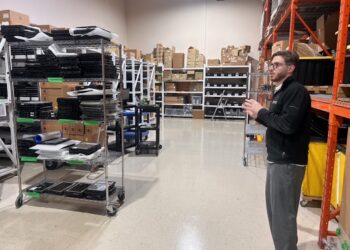
In addition, once reusable and refurbishable equipment is acquired, the service provider needs to be sure it has a reliable equipment sales process in place. There are two primary sales paths an ITAD service provider can choose to maximize its investment in acquiring reusable electronics: the wholesale model and the direct-sale model.
In both models, profitability is the cornerstone, but profits can only come if there is an understanding of a recovered product’s marketability and value. This understanding must be at the core of every process within the company or it will not be successful.
Understanding the major brands and models within each line of equipment as well as having a firm grasp on which generations of products still carry value will play a large role in determining the overall value. It’s also imperative to be able to accurately assess the condition of incoming equipment.
However, there is one attribute that trumps all else: quantity. Even though an individual piece of equipment may not carry much value on its own, having large quantities of an item can tip the profitability scales toward remarketing.
ITAD companies selling direct to consumers will need to spend time listing products on online marketplaces.
We like to use a simple equation when training our team on this point: the net value of an item multiplied by quantity equals net revenue. That math may seem obvious, but it shows the power of having lots of one type of asset, and it’s a key point that is often overlooked by newer ITAD firms.
The benefits of bulk
Once it has been determined that a product has reusable potential, then the ITAD-focused company must determine whether to pursue a wholesale or direct-sale approach to remarketing.
First, let’s discuss the wholesale model, which is recommended for those players first starting out in ITAD. In this strategy, equipment is acquired, value-assessed and inventoried. In order to comply with the major electronics recycling certification standards, the company must test the equipment for functionality. This basic test does not require skilled technicians most of the time. However, it’s important to have a reliable process in place. Wholesale buyers will increase their offers if it is confirmed the equipment is working and in good condition. They will tend to offer less if the condition or functionality is unknown.
Now that the equipment is fully catalogued and the condition has been noted, lists can be sent to wholesale buyers. There are typically two types of wholesale buyers. The first is a broker type that has relationships with other large refurbishers or other large buyers in markets that are not easily accessible. The second kind of wholesale buyer is a professional refurbisher that sells direct to end users (and also services and supports them). Both types wholesale buying partners expect the quality to be exactly as described and will likely request a credit memo or refund for items that don’t meet the specifications described. Wholesale buyers tend to specialize in certain lines of products, so it is important to find reliable buyers within each line of product.
Finding wholesale buyers may be a better option than selling equipment directly to consumers for a variety of reasons. The wholesale route opens up the possibility of bulk sales to a single customer, and it allows the ITAD company to have a variety of products in different conditions. Wholesaling also translates to fewer fees, lower shipping costs, no loading of operating systems, and limited responsibility for after-sale customer service.
However, the process also carries downsides, including lower margins (wholesale pricing), struggles to find good buyers for all types of equipment and the need to hold onto product longer to acquire bulk lots.
Mastering marketplaces and margins
On the other end of the spectrum is the direct-sale model. This path demands a great deal more infrastructure and operational change, but it carries with it the hopes of greater margin.
To be successful in direct-sale, the company essentially must become a professional refurbisher, which typically requires thorough planning, personnel resource adjustments, software access and significant capital investment.
When selling direct to the end user, full functionality must be tested and affirmed, and the asset in question must have very few or no aesthetic flaws. It is important to completely test and clean the product right away to determine if it can be resold.
After testing and cleaning, the operator encounters the value-add step, which is critical to maximizing profits. Many times the equipment doesn’t come configured the way the end user would prefer, so updates or add-ons must be implemented. In the case of computers, for example, significant value and marketability is added when an operating system is loaded. That’s why many companies remarketing material join the Microsoft Registered Refurbisher program to put legally licensed software on the machines.
Once the product is ready, the next challenge awaits – finding a buyer. Understanding the differences between the various marketplaces is critical. Key differences exist between eBay, Amazon, Newegg and a company-owned e-commerce site. Each option has its own unique buyers, benefits and downsides, and the ITAD company must determine what marketplace is the right fit for different pieces of equipment.
There will be cost involved to list your equipment, but that must be fairly weighed against the level of exposure the items will have through different platforms. It can be a headache to manage and push listings to several platforms. Seeking out and utilizing software that manages those platforms is well worth it. However, after comparing the cost, time and resources used to list to multiple marketplaces with an all-inclusive software solution, the company may find itself choosing the simplicity of just listing in one spot.
A common challenge when selling online or direct to the end user is the image that comes with the word “refurbished.” In the past, many consumers assumed refurbished electronics were at one time broken or faced other issues. However, today there is a strong movement toward using refurbished equipment as more and more people look to be environmentally responsible in their consumption patterns. In addition, many buyers are drawn to the cost savings that come through choosing refurbished.
Additional processing steps in the direct-sale strategy include managing inventory and fulfillment, and such steps should always be included when determining the product’s market value. Packaging the equipment and inventorying it prior to sale is best managed with some type of inventory software. And keep in mind most companies overlook the costs that come in packaging and shipping goods. When selling direct to the end user, many orders tend to be small, and sometimes the shipping and packaging cost can be 20 to 30 percent of the item’s actual selling price. If selling on multiple platforms, it is critical to utilize shipping software that reports tracking numbers and calculates shipping costs automatically.
Finally, there’s the post-sale customer service to keep in mind. Although the direct-to-user profit margin may initially seem attractive, end users’ expectations for customer service can take a toll on unprepared companies. The various marketplaces demand strong customer service and can be unforgiving if the company does not live up to expectations.
In closing, becoming an ITAD service provider can be a daunting task, but if taken in stages and alongside the right partners, increased profitability is likely to follow.
Chris Ko is co-owner and managing partner of ER2 and Revive IT and can be contacted at chris@er2.com. Emily Gonzales is director of partner experience at ER2 and Revive IT and can be contacted at emily@er2.com.
ER2 is a full service ITAD company with locations in Phoenix and Memphis, Tenn. that caters to Fortune 1000 companies and provides asset recovery and end-of-life management while being the conduit to making a positive impact in the community through its technology access programs. ER2 remarkets its refurbished product through its sister company, Revive IT.