Chip harvesting has grown from a Taiwanese factory-floor workaround into a global business, but the US is barely in the game. Here’s why recovering chips from e-scrap matters now, which chips are worth pulling, and how they’re removed, refurbished and tested.
Overview of the chip refurbishment market
Chip recycling originated with the boom of Taiwan’s electronics industry in the 1980s.
In the 1980s, Taiwan was the hub of assembly, production and testing for Asia’s electronics industry. During the production process, many chips were rejected — either due to problems with the circuit boards or defects in the chips themselves. Since chips were extremely expensive, discarding them was a waste. Consequently, Taiwan’s electronics assembly industry sought ways to salvage and reuse these chips, and gradually, chip refurbishment technology emerged.
Today, the chip recycling market has expanded into a $100 million annual business. In China alone, nearly 200,000 people are employed in this sector; in Malaysia, there are over 20,000; and in the Philippines, there are nearly 1,000. These are the primary chip recycling hubs, and recently, chip recycling production facilities have been springing up like mushrooms after rain in Hong Kong as well.
In the United States, the industry is still in its infancy. Although I began promoting this technology when I came to the US 10 years ago, it remains in its early stages today, with significant opportunities and potential for growth.
The importance of chip harvesting
Harvesting chips is a crucial endeavor in this era of rapid AI development.
First: It helps address the chip shortage. AI equipment, in particular, requires substantial memory and NAND. DRAM and NAND are currently in extremely short supply, causing chip prices to quadruple compared to two years ago. There is an urgent need for refurbished chips to fill this gap.
Second: It serves as a lifeline when chip supplies are cut off. Since chips are used in machines and equipment designed for long-term use, these devices often remain functional despite a single chip failure. However, original manufacturers won’t produce chips just for five or ten units, making it a waste to scrap equipment that’s still in working order simply because of a single faulty chip. If the chips from these decommissioned devices could be recycled and reused to repair older equipment that’s still in decent machines and equipment, that would be truly significant.
Third: Energy conservation and emissions reduction. According to statistics, producing a single chip emits at least 2 kg of carbon dioxide. If a chip is salvaged through refurbishment and put back into use, it can reduce carbon dioxide emissions by 2 kg compared to manufacturing a new one. This makes a significant contribution to climate protection and, of course, saves a great deal of electricity. On average, producing a single chip requires 100KWh of electricity. So if 100 million chips were refurbished in a year, that would amount to a savings of 10GWh of electricity.
Fourth: Increasing revenue and profits leads to less landfill waste. In the United States, 75% of the electronic scrap generated each year ends up in landfills. Although there are many laws and bans in place, they are often not effectively enforced in practice.
However, if we start recycling these circuit boards from electronic waste now and efficiently recover the chips on them, we can increase profits in the electronics recycling industry. When the recycling industry makes money by recovering these circuit boards, chips, and rare earth elements, it will naturally work hard to recycle them — which, in turn, reduces the problem of electronic scrap being landfilled.
Which chips should be harvested?
Deciding which chips to recycle requires consideration from several angles. One is your recycling cost — specifically, what tools you have available to recover the chips. The lower your chip recovery cost, the more varieties of chips you can recycle.
Another factor is your value-added processing capability. If you simply cut the chips off the boards, your profit margin will be relatively thin. However, if you process the chips — testing and packaging them — before selling them, you can achieve a significantly higher profit margin.
Generally, the value of refurbished chips ranges from 20% to 60–70% of the value of new chips.
Common methods for removing chips
The most common methods for extracting chips on the printed circuit board range from the simplest — using a hair dryer to heat the chip and then prying it off with tweezers — to using robots to blow hot air onto the chip, and further to using a reflow oven to vibrate the chip loose or pick it up with a gripper.
The higher your level of automation, the lower your costs, and the more you can recover chips with lower unit prices. If your automation level is low and your labor costs are high, you won’t be able to recover chips with lower market value, because your labor costs will exceed the value of the chips themselves.
Which chips are primarily recycled?
First are memory chips, such as DRAM and NAND. These two categories account for over 90% of the revenue in the chip recycling industry. The main brands include the following: SAMSUNG, SK HYNIX, MICRON, NANYA, WINBOND, SANDISK, INTEL, CYPRESS, TOSHIBA, KINGSTON, MXIC, SPANSION
Second are processors. The most common are processors from Intel and AMD, and of course, this now also includes GPUs manufactured by NVIDIA.
When it comes to processors, there’s one thing to keep in mind: whether they’re locked or not. For example, some motherboard manufacturers encrypt the CPU when they manufacture these motherboards, so not all CPUs can be recycled and reused. The same goes for GPUs. For instance, Lenovo started locking CPUs from the 4th generation onward, Dell from the 5th generation onward, and HP from the 8th generation onward.
Once locked, they can no longer be reused and become scrap — it’s not worth refurbishing them.
The third category is FPGAs. The most well-known FPGA brands are Xilinx, Broadcom, Altera, Tesla and Microchip — these five major brands have a very wide range of applications.
However, the same issue applies: a significant portion of them are locked, and the patterns are relatively harder to predict, so decisions must be made on a case-by-case basis.
Fourth: Southbridge chips. Southbridge chips are designed to assist the CPU in executing its commands; essentially, wherever there’s a CPU, there’s a Southbridge chip paired with it. Southbridge chips are very common, but the same issue applies: nearly 30% of the latest Southbridge chips are locked, so their value is also determined on a case-by-case basis; if they are locked, they have no resale value.
No. 5: Logic chips. There are many manufacturers of logic chips (the most commonly known brands are Intel and AMD) and their values vary widely. Some of the more well-known manufacturers include the following: TI (Texas Instruments), Freescale, Analog Devices, STMicroelectronics, NXP, PLX, Infineon
No. 6: Communication chips. This category includes Wi-Fi chips, Bluetooth chips, communication chips found in routers, and optical communication chips. The most common brands include the following: MediaTek (Crab), Broadcom, IDT, Ambarella, u-blox, Genum, Qualcomm, Finisar
How to process harvested chips
There are two main systems for processing harvested chips
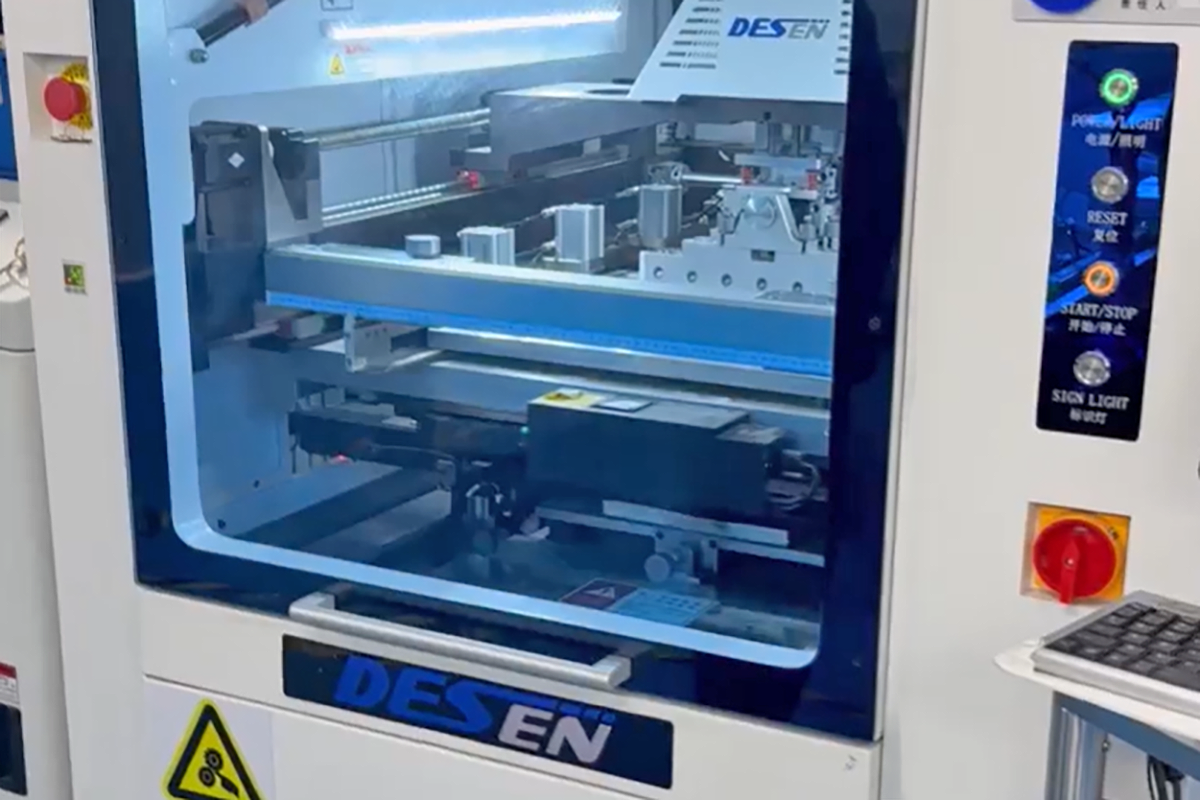
Stencil printing: The stencil printing system handles large volumes but has inconsistent quality; in China, Malaysia and the Philippines, stencil printing is exclusively used for chip refurbishment.
Laser reball: Laser reball bonding offers high quality but the machine is costly; chips produced this way can approach the quality of the original chips, but the output quantity is low. However, one advantage is that it can increase output through automation; its labor costs are actually not very high.
How to inspect the quality of harvested chips
There are three main methods for inspecting the quality of recycled chips
The first method is simulation: This involves removing the circuit board from the device, creating a socket at the location of the chip to be tested, and then placing the ball-mounted chip into this socket before powering on the system. Powering on the motherboard simulates the machine’s operation; if it boots up and functions normally, it indicates that the chip is functional. This is known as the simulation method. The simulation method is primarily used to test components such as CPUs and FPGAs. Of course, this method can also be used to test DRAM and NAND, but relatively speaking, the testing speed is slower.
The second method: eMMC testing: The eMMC testing method, commonly known as a “programmer,” primarily involves writing a simulated program to the chip to run it and erase the original data. Because it performs both data writing and erasure functions, it is called a programmer. The eMMC testing method is primarily used to test eMMC chips.
Third: K1. IDT, K2 Test: This is primarily a testing method for NAND chips in solid-state drives (SSDs). In the K1 step, the chip’s original data is first erased, and then the software to be tested is loaded onto it.
The IDT step involves running the test software at a high temperature of 100 degrees to observe whether the chip responds normally under these high-temperature and high-pressure conditions, whether it leaks current, or whether it ceases to function.
K2 is the final step, where the chip runs the test software one last time to obtain the test results. These results are then read out, and the chips are sorted into good and defective categories — or, in other words, a grading process is applied.
Finally, I would like to emphasize that chip recycling is extremely important, but data security must also be given careful attention. Currently, it can be said that of the data-containing chips removed in the United States, many are not securely and effectively erased there. Many are shipped to the Philippines, Malaysia, Indonesia and Hong Kong, and prior to that, the data has not always been responsibly erased.
If this issue is not resolved, then the huge profits generated by chip harvesting will come at the expense of customer data security.