



Inside the Circle is a monthly column on circular economy trends transforming source reduction and recycling.
Oregon has become the first of the new generation of packaging EPR states to establish producer fee schedules. California is following with its own fee structures and implementation process. For the first time, companies are beginning to understand what EPR will actually cost.
For many, the numbers come as a surprise.
Producer responsibility organizations, regulators, municipalities, recyclers, packaging companies, consumer brands and retailers are all discovering the extraordinary complexity of assigning fair costs across thousands of packaging formats, hundreds of material combinations, and virtually every consumer product sold in the marketplace.
Publicly, implementation appears orderly. Privately, there is understandable uncertainty.
That should surprise no one. We are attempting something no jurisdiction has ever implemented at this scale.
Some realities are unlikely to change. Society is no longer willing to externalize large portions of packaging’s end-of-life costs onto taxpayers, local governments, future generations and the environment. Those costs have always existed. We simply chose not to include them in product prices. Internalizing them inevitably increases costs.
Accepting that reality, however, is not the same as accepting unnecessary costs. Quite the opposite.
California’s affordability crisis is real. So is its waste crisis. Policies that dramatically increase consumer costs without delivering proportional environmental benefits will eventually lose public support. Policies that preserve today’s costs by postponing environmental improvement simply shift larger costs onto future generations. Neither path is sustainable.
So the practical question facing everyone now holding a fee schedule is not whether EPR should exist. It is how to make it cost less and accomplish more.
Put every package where it performs best
Not every package belongs in the same recovery program.
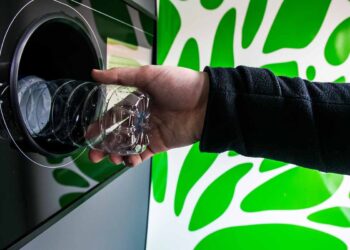
California already operates one of North America’s most successful deposit-return systems for beverage containers. CalRecycle reports the program recovered 74% of PET beverage bottles and 61% of glass beverage containers in 2025 — roughly double the rates achieved by non-deposit curbside systems across the country.
That raises an obvious question. Why should these containers remain subject primarily to packaging EPR?
Moving PET and glass beverage containers fully into the CRV system could simultaneously increase recycling rates, lower collection costs per container, produce cleaner material streams, expand supplies of high-quality recycled PET and glass, and reduce overall EPR costs.
Just as importantly, it would allow EPR resources to focus where they are needed most: films, flexible packaging, multi-material structures and other products that genuinely require new collection methods, better package design and continued technological innovation.
Success will come not from forcing every package into one system, but from placing every package into the recovery system where it performs best.
Treat the fee schedule as a design signal
EPR may become the strongest incentive packaging designers have ever received to rethink decades of accumulated design decisions.
Every package now invites new questions. Can unnecessary material be eliminated? Can labels, sleeves, adhesives, pigments, closures and barrier layers be redesigned to improve recovery? Can complex multi-material structures be simplified? Can concentrates, refill systems, reusable packaging, resale models and bulk distribution reduce packaging altogether? Can products themselves be redesigned to require less packaging?
The companies that answer these questions first will reduce both environmental impacts and long-term producer costs.
For decades, packaging engineers optimized manufacturing efficiency, transportation, merchandising and product protection. Now another design criterion has entered the equation: total system cost, including recovery.
That is precisely what EPR was intended to encourage. And the least expensive package to recover is often the one that was never produced.
Let the recovery technologies compete
Perhaps the greatest danger facing EPR implementation is the temptation to declare winners before innovation has finished.
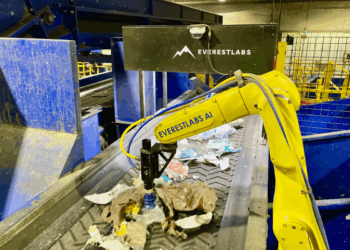
Mechanical recycling is indispensable today and will continue improving. Biological recycling is advancing rapidly and may ultimately transform how many materials are recovered. Chemical recycling is also advancing rapidly and, for some materials, may prove the most environmentally and economically effective solution available.
No one yet knows exactly where each technology will perform best.
Public policy should encourage innovation across the full portfolio of recovery technologies while insisting upon measurable environmental performance. Each should be free to demonstrate where it creates the greatest environmental value at the lowest overall societal cost — judged by recovery rates, emissions and economics rather than by ideological preference.
The decisions that matter now
The next chapter of packaging EPR will not be written primarily by legislatures. It will be written by thousands of implementation decisions made over the next several years.
Those decisions will determine packaging design, investment, recycling infrastructure, affordability and environmental performance for decades to come.
Collection systems, recycling technologies, producer fees, package design and end markets should be optimized together. The greatest environmental and economic gains will come from improving the performance of the entire circular system rather than any single component.
The battles that produced packaging EPR are largely behind us, pending litigation notwithstanding. The work that matters now is making it succeed — accepting what cannot realistically be changed, improving what can, and having the wisdom to know the difference.