





Editor’s note: Battery safety and legislation will be featured in sessions at the 2026 E-Scrap: The Longevity Conference Oct. 26-28 in New Orleans.
A successful pilot program run with Cirba Solutions has seen General Motors (GM) develop a more sustainable electric vehicle (EV) battery. This and other moves around EV batteries come amid continued global growth in the market.
The companies united to develop GM’s first EV batteries made with cathode active material (CAM) containing 100% recycled nickel, cobalt and manganese. The process created recycled minerals that met the same standards and performed as well as virgin materials.
The closed-loop process involves Charlotte-based Cirba processing 80 end-of-life EV batteries GM sent to Cirba’s Ohio facility. The battery packs were disassembled there and the materials within processed into black mass. Cirba had to further treat the black mass so that the nickel, cobalt and other minerals met EV performance and quality standards.
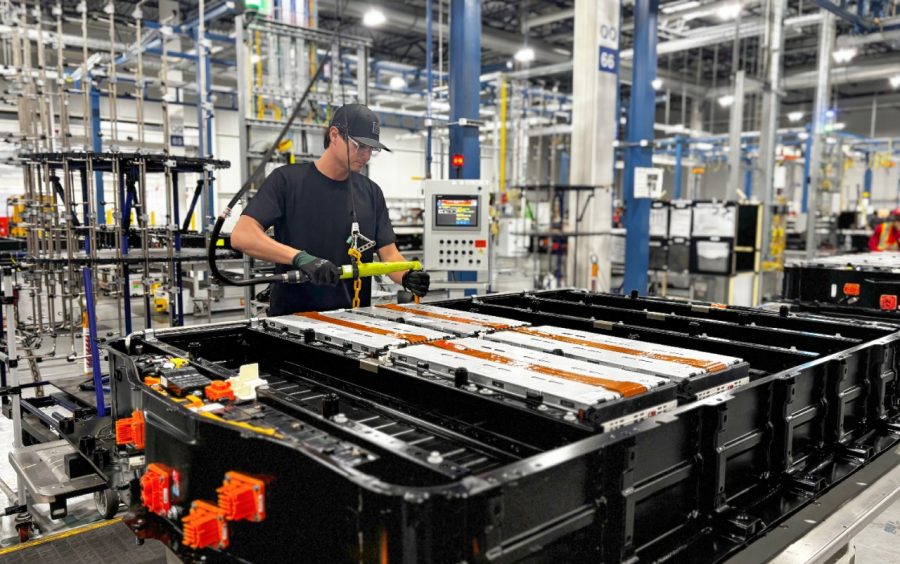
The result: more than 12 metric tons of new CAM. That CAM was sent to Ultium Cells, a joint venture involving GM and LG Energy Solution, to create EV battery cells. GM teams use those cells in battery modules and packs. The first EVs using these batteries rolled off the assembly lines of GM’s Factory Zero EV facility in Michigan and Spring Hill assembly center in Tennessee, which is being upgraded to scale lithium iron phosphate-based EV battery production.
“This pilot shows that the value of an EV battery can extend well beyond its first life – and that strong partnerships across the battery ecosystem are essential to building a more circular, resilient future for battery technology,” said Melissa Flaherty, GM’s director of sustainable EV battery ecosystem.
The move could also lower the price for EV batteries, which typically make up 30%-40% of an EV’s total cost. GM said recycling processes such as the one Cirba uses in this process can recover up to 95% of the nickel, cobalt and manganese from used batteries, as well as 80% of the lithium. This gives automakers easier, cheaper access to the minerals they need.
“Raw materials are among the largest cost drivers in battery cells, so recovering and reusing them can help support lower-cost batteries over time, reduce reliance on newly extracted materials and strengthen supply chain resilience,” Flaherty said.
More demand, more supply
Leadership for both companies say the move will enhance domestic supply chains, a cause championed by the federal government through several recent legislative actions. The International Energy Agency estimates nearly 14 million EV batteries will reach end of life around the world by 2040, creating a glut of materials that can’t be used as originally intended.
“Battery recycling is an important, intersecting component across the battery supply chain, and this program effectively demonstrates the value that recycling end-of-life batteries brings to creating a closed-loop supply of critical minerals,” said David Klanecky, Cirba president and CEO of Cirba Solutions.
As the amount of used materials is expected to grow, so is the demand for EVs and the minerals needed to make them. A recent report from Mordor Intelligence projects the global lithium carbonate market to grow from 1.41 million lithium carbonate equivalent (LCE) tons this year to 3.93 million LCE tons by 2031, sparked by a surge in LFP cathode production. The global battery electrolyte market, meanwhile, is expected to grow from its current $12.22 billion to $50.98 billion by 2034. That’s being caused in large part by an increase in EV battery demand, according to Maximize Market Research, which led the study.
All of this has GM and other automakers looking to meet anticipated needs:
- Porsche has been working on a similar battery recycling program with German company Cylib; production should start in 2028.
- Toyota opened its Toyota Battery Center of North American in Michigan last week, a 30,000-square-foot facility meant to serve as the company’s hub of innovation for battery sourcing, applications and recycling.
- Ford strengthened its licensing and supply ties with Chinese EV battery manufacturer CATL.
- Volkswagen and Chinese battery maker Gotion High-Tech are looking to spend nearly $4 billion to build EV battery plants in Europe and Morocco.
- Redwood Materials will convert used Rivian EV batteries into energy storage for Rivian’s Illinois factory.
These advancements will have an impact across the EV value chain, Flaherty said.
“This pilot demonstrates a pathway for using recovered battery materials in new cells and supports our larger goal of exploring ways to reduce the carbon footprint of battery materials and costs to consumers,” she said.
GM models featuring these batteries include the Cadillac Lyriq, Chevrolet Silverado EV Trail Boss and GMC Sierra EV AT4.