Editor’s note: This story has been updated to include CalRecycle comments about PP rates
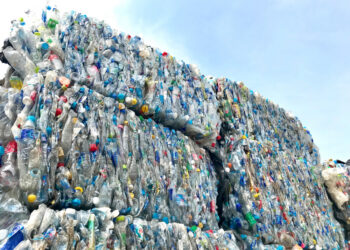
A California bill to increase payments to in-state PET reclaimers passed unanimously out of the Senate Environmental Quality Committee this week, and is headed for the Senate Appropriations Committee.
Recently amended on the Senate floor to focus on the Plastic Market Development Payment Program, AB 1149 (Jackson):
- Increases the payment from $150/ton to $300/ton for reclaimers that process PET collected in California and is washed and processed into flake, pellet, or sheet, and made available for manufacturing within the state.
- Caps annual spending at $35 million for these payments.
- Extends the program by two years, to expire July 1, 2029
- Takes effect as soon as Gov. Gavin Newsom signs it, rather than waiting for the standard start date of Jan. 1, and applies to PET collected from Oct. 1, 2025
A CalRecycle spokesperson told Plastics Recycling Update that the agency meets regularly with Plastic Market Development Payment (PMDP) participants and other interested parties to understand market conditions and other industry challenges.
While the PMDP changes would provide immediate market-based support for the state’s recycling system during volatility, the May revised budget proposed longer term remedies including a new grant program to fund infrastructure improvements including optical sorters and advanced processing systems.
The agency used stakeholder feedback to develop the proposal, which the spokesperson said includes “historic levels of investment” and an extension of the PMDP program.
They added that because reclaimers also expressed interest in infrastructure improvement grants, the May proposal included $15 million in grant money specifically for reclaimer infrastructure improvements, as well as $100 million for the existing processor grant program.
If enacted, the May budget proposal would become effective July 1.
Beverage container recovery rates published
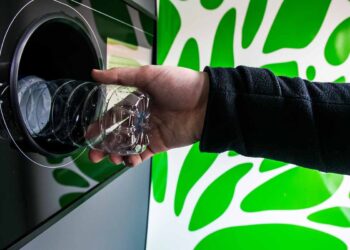
In 2025, California recycled 28.6 billion beverage containers, representing 71% of the containers sold in the state, according to CalRecycle’s most recent biannual report on its deposit return system.
The recycling rates for aluminum and glass containers rose on the year. And while the rate for PET containers was flat, it was 8 points higher than the 13-year low of 66% that was reported in 2021.
The PP container recycling rate rose by 40 points on the year. A CalRecycle spokesperson said, “In 2025 sales of PP beverage containers dropped while returns stayed about the same, which caused the recycling rate to jump.”
In addition, the PP redemption rate was reported as 120%. The spokesperson said “the rate formula outlined in the law requires CalRecycle to consider postfilled PP material (non-CRV containers like pickle or peanut butter jars). This differs from the recycling rate calculation and can result in a redemption rate greater than 100%.”
They added that because PP beverage containers represent less than one-third of collected containers, recycling centers and material recovery centers may delay processing them until they have a full shipment. For this reason, reported sales and collections do not always align, which can cause fluctuations in annual rates, the agency said.
“CalRecycle is reviewing PP redemption data to confirm its accuracy and will publish revisions if necessary. Because PP is a smaller category, larger fluctuations can occur. For this reason, CalRecycle reviews unusual PP results when they appear while prioritizing analytical resources to higher-volume material types,” the spokesperson said.
| Container material | Recycling rate | % Change from 2024 | Containers recycled |
| Aluminum | 73% | +2 | 7,793,021,888 |
| Glass | 61% | +1 | 1,836,899,744 |
| PET | 74% | 0 | 10,505,657,210 |
| HDPE | 54% | -8 | 104,948,494 |
| PVC | 0% | -3 | 2,368 |
| LDPE | 3% | +1 | 84,688 |
| PP | 92% | +40 | 6,316,237 |
| PS | 22% | 0 | 49,100,961 |
| Other | 2% | -3 | 2,905,635 |