



Resource Recycling
  • The Latest
  • Analysis
    • All
    • Certification Scorecard
    • Industry Announcements
    • Opinion
    Apple Watch on product box.

    Wearables are coming and ITAD isn’t ready

    Certification Scorecard — Week of April 13, 2026

    EV Battery Pack - Sergii Chernov-Shutterstock

    Redwood, Rivian deal fuels US infrastructure plans

    Bloom ESG and e-Stewards roll out critical metals metric

    Colorado regulators suggest mid-range EPR scenario

    Why collaboration on plastic waste still matters

    Battery recycler Ascend Elements files for bankruptcy

    Battery recycler Ascend Elements files for bankruptcy

    EPR fees are a market signal. Here’s what they’re telling you.

    EPR fees are a market signal. Here’s what they’re telling you.

    Wolframite ore, the primary ore of tungsten from Altai, Russia

    Tungsten scrap export controls draw industry attention

    Certification Scorecard — Week of April 6, 2026

  • Conferences
  • Publications

    Other Topics

    Textiles
    Organics
    Packaging
    Glass
    Brand Owners

    Metals
    Technology
    Research
    Markets
    Grant Watch

    All Topics

Subscribe
No Result
View All Result
Resource Recycling
  • The Latest
  • Analysis
    • All
    • Certification Scorecard
    • Industry Announcements
    • Opinion
    Apple Watch on product box.

    Wearables are coming and ITAD isn’t ready

    Certification Scorecard — Week of April 13, 2026

    EV Battery Pack - Sergii Chernov-Shutterstock

    Redwood, Rivian deal fuels US infrastructure plans

    Bloom ESG and e-Stewards roll out critical metals metric

    Colorado regulators suggest mid-range EPR scenario

    Why collaboration on plastic waste still matters

    Battery recycler Ascend Elements files for bankruptcy

    Battery recycler Ascend Elements files for bankruptcy

    EPR fees are a market signal. Here’s what they’re telling you.

    EPR fees are a market signal. Here’s what they’re telling you.

    Wolframite ore, the primary ore of tungsten from Altai, Russia

    Tungsten scrap export controls draw industry attention

    Certification Scorecard — Week of April 6, 2026

  • Conferences
  • Publications

    Other Topics

    Textiles
    Organics
    Packaging
    Glass
    Brand Owners

    Metals
    Technology
    Research
    Markets
    Grant Watch

    All Topics

Subscribe
No Result
View All Result
Resource Recycling
No Result
View All Result
Home Analysis Opinion

In My Opinion: What the last 20 years have taught me

byLen Christopher, chief operating officer, Leadpoint Business Services
February 25, 2020
in Opinion

The last 20 years have brought many changes to the waste and recycling industry, all of which I’ve watched through the eyes of Leadpoint Business Services. We are a specialty workforce company that helps recyclers take the chaos out of MRF operations and maximize the productivity of their operation.

Len Christopher

Some of the shifts I’ve seen have been predictable and manageable, while others have shaken our industry to its core, the most significant of course being China’s ban on importing foreign recycling.

China’s “National Sword” policy and its effect on commodity prices is an important and regular topic among those of us in the recycling business. China is a recent change that deserves ongoing discussion, but not here.

I want to set China aside to look further back in time and talk about three other changes in our industry and what they’ve taught me and the Leadpoint team over the last two decades.

People

Simply put, it’s harder to find people to work in MRFs today than it was 20 years ago. I see two factors at play here.

The first is economics: Unemployment is low, jobs are plentiful and there are more options for general laborers than there were even five years ago.

Second is demographics: Working in a MRF is difficult, and my experience is that younger people don’t want these jobs. They don’t want to work as hard as their older counterparts and older workers are leaving the workforce or choosing jobs that are better suited to their aging bodies. And for both groups, safety is a growing issue.

What I’ve learned is that we need to treat our sorters, line leads and managers differently than we did when we started Leadpoint in 2000. We have had to adjust our recruiting practices to attract people with computer skills. We’ve had to change our employment proposition to make our jobs a more attractive job choice than other options out there.

Today, Leadpoint’s sorters are full-time employees. We offer them a career path, ongoing safety training and benefits. We’ve significantly reduced turnover and improved productivity at the MRFs we support. And, a stable workforce has meant a safer workforce.

Technology

The notion of robots and artificial intelligence in MRFs was in its infancy 20 years ago. Today, technology and machinery are getting smarter and more efficient every day, which is great for our industry.

As an employer, Leadpoint is keenly interested in the role of robots and AI in America’s MRFs. Rather than foreseeing the demise of humans at work in MRFs, I firmly believe that there will always be a role for people in recycling plants, but what those people do will change.

Today, we have employees who run machines with a tablet instead of a control panel. We are able to collect data on sorters’ performance down to the individual level and make it available to our customers through an app, in real time, which allows us to do a better job of managing productivity, downtime and quality.

I’ve also watched how technology has changed the material that comes into our customers’ facilities. Twenty years ago, people didn’t have smartphones. They got their news and advertising on paper and drove to the mall to do their shopping. Now, there’s less newspaper, more junk mail and mixed paper, and a lot more brown boxes. MRF infrastructure has had to change to keep up.

Since Leadpoint started, a lot of municipalities that were running multiple-stream programs have shifted to single stream … and vice versa. Such program changes have required operating changes inside the MRF for our employees, from scheduling hours and days to retraining people on the sort line. We have to be nimble partners to our customers and attentive managers of our employees. I expect program adjustments to continue into the current decade.

Consumers

I believe people truly want to do the right thing when it comes to recycling and protecting the environment, that they prefer turning their garbage into something new and useful rather than sending it to a landfill. I had great hopes 20 years ago that conscientious recycling would become the norm.

But recycling is confusing, with a lack of standards in the packaging industry, recycling programs that vary by location and even multiple programs within the same community. When I formed Leadpoint, I thought people would learn and understand how and what to recycle. I watched municipalities work hard to create effective recycling programs.

Over time, I’ve seen the opposite. Lack of education has created more and more challenges in getting clean material. Rising costs have been difficult to pass onto consumers, who naturally want to pay less for services, not more. And skepticism about what actually gets recycled has increased.

That’s why I’m excited to see more and more curbside bin audit programs instituted and increased funding behind initiatives that put the recycling ball back in the consumer’s court. For example, Leadpoint started working with the city of Atlanta on a bin audit program in 2019. We’ve seen good improvement in that market and look forward to similar results in other communities.

The future

The Leadpoint team and I are bullish on recycling and excited about the future. I know we will have to continuously adjust our business to meet the needs of America’s workforce. I know that technology will become more pervasive in the operation of every MRF we support. And I trust that consumers will not give up on recycling but, instead, will learn and adjust their behavior and do the right thing with their waste.

Len Christopher is chief operating officer of Leadpoint Business Services, where he directs the company’s work to improve the productivity, efficiency and profitability of each customer’s plant.

The views and opinions expressed are those of the author and do not imply endorsement by Resource Recycling, Inc. If you have a subject you wish to cover in an op-ed, please send a short proposal to [email protected] for consideration.


2020 Resource Recycling Conference

TweetShare
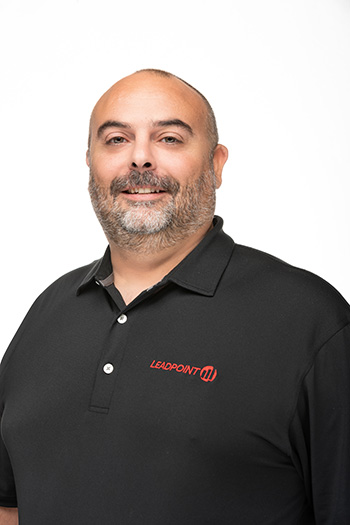
Len Christopher, chief operating officer, Leadpoint Business Services

Len Christopher, chief operating officer, Leadpoint Business Services

Related Posts

Towfiqu ahamed barbhuiya

Before the Bin: Breaking down food date labeling

byStefanie Valentic
April 20, 2026

You've probably done it. You open the fridge, spot the "sell by" date on a perfectly good carton of milk,...

Hawaii trials asphalt made with plastic debris and nets

Hawaii trials asphalt made with plastic debris and nets

byScott Snowden
April 20, 2026

Researchers at Hawaiʻi Pacific University test asphalt made with fishing nets and plastic debris, with early results showing no increase...

Data erasure firm expands wearable device capabilities

Apple hits 30% recycled content, debuts new recovery tech

byStefanie Valentic
April 17, 2026

Apple hit a record 30% recycled content across all 2025 products while debuting two new recovery technologies it's now sharing...

COM2 joins TERRA network as solar recycling expands 

byScott Snowden
April 17, 2026

TERRA has added COM2 Recycling Solutions to its certified network, widening its reach in solar panel, plastics, CRT glass and...

CPG Henkel raises PCR targets for 2030

byAntoinette Smith
April 16, 2026

Despite falling slightly short of 2025 goals, the Germany-based consumer brand aims to increase the share of recycled plastic in...

AI surge, dealmaking reshape  ITAD industry 

byScott Snowden
April 16, 2026

ITAD industry representatives spoke at the ReMA conference in Las Vegas about how AI tools, data center demand and consolidation...

Load More
Next Post

Range of stakeholders offer up industry analysis

More Posts

Recycling Partnership CEO stepping down

April 15, 2026
Battery recycler Ascend Elements files for bankruptcy

Battery recycler Ascend Elements files for bankruptcy

April 13, 2026
EPR fees are a market signal. Here’s what they’re telling you.

EPR fees are a market signal. Here’s what they’re telling you.

April 10, 2026
Industry group: Help us find the plastic bale volumes we need

PET bales sink further as other grades firm 

April 15, 2026

Bloom ESG and e-Stewards roll out critical metals metric

April 15, 2026

WM opens new $60m MRF in Indy

April 10, 2026

GFL acquires SECURE Waste for $6.4bn

April 13, 2026
Solarcycle starts up Georgia recycling plant

S3399 signals a shift in how states are tackling solar panel waste

April 6, 2026
Colorado regulators suggest mid-range EPR scenario

Why collaboration on plastic waste still matters

April 13, 2026

Matium raises $8m, adds buyer financing

April 14, 2026
Load More

About & Publications

About Us

Staff

Archive

Magazine

Work With Us

Advertise
Jobs
Contact
Terms and Privacy

Newsletter

Get the latest recycling news and analysis delivered to your inbox every week. Stay ahead on industry trends, policy updates, and insights from programs, processors, and innovators.

Subscribe

Welcome Back!

Login to your account below

Forgotten Password?

Retrieve your password

Please enter your username or email address to reset your password.

Log In

Add New Playlist

No Result
View All Result
  • The Latest
  • Analysis
  • Recycling
  • E-Scrap
  • Plastics
  • Policy Now
  • Conferences
    • E-Scrap Conference
    • Plastics Recycling Conference
    • Resource Recycling Conference
    • Textiles Recovery Summit
  • Magazine
  • About Us
  • Advertise
  • Archive
  • Jobs
  • Staff
Subscribe
This website uses cookies. By continuing to use this website you are giving consent to cookies being used. Visit our Privacy and Cookie Policy.